Handwashing cuts the spread of foodborne illness by nearly 50%, according to the CDC — yet most outdoor events, construction sites, and emergency setups have zero permanent plumbing. That gap is exactly what a portable sink trailer is built to fill.
Whether you’re running a 5,000-person festival, managing an OSHA-regulated jobsite, or coordinating disaster relief, a mobile handwashing trailer delivers clean running water, soap, and proper waste capture — anywhere a tow vehicle can go. In this guide, we break down the 8 features that matter most when renting one, plus expert tips, common mistakes, and answers to the questions clients ask us every week.
Where Portable Sink Trailers Are Used
Permanent plumbing is rare in the environments that need handwashing the most. Common use cases include:
- Construction zones — required under OSHA 1926.51 for crews of 20+
- Outdoor festivals & concerts — often mandated by local health departments
- Food trucks & catering events — typically required by health code for food handlers
- Disaster relief & emergency response — Red Cross and FEMA deployments
- Weddings & private events — anywhere guests share food
- Film sets & remote worksites — long shoots with no facilities
Without a dedicated handwashing solution, pathogens like E. coli and norovirus spread fast — and so do regulatory penalties. A self-contained sink trailer eliminates both problems in a single tow.
The 8 Features That Matter Most
1. Multi-Station Handwashing Capacity
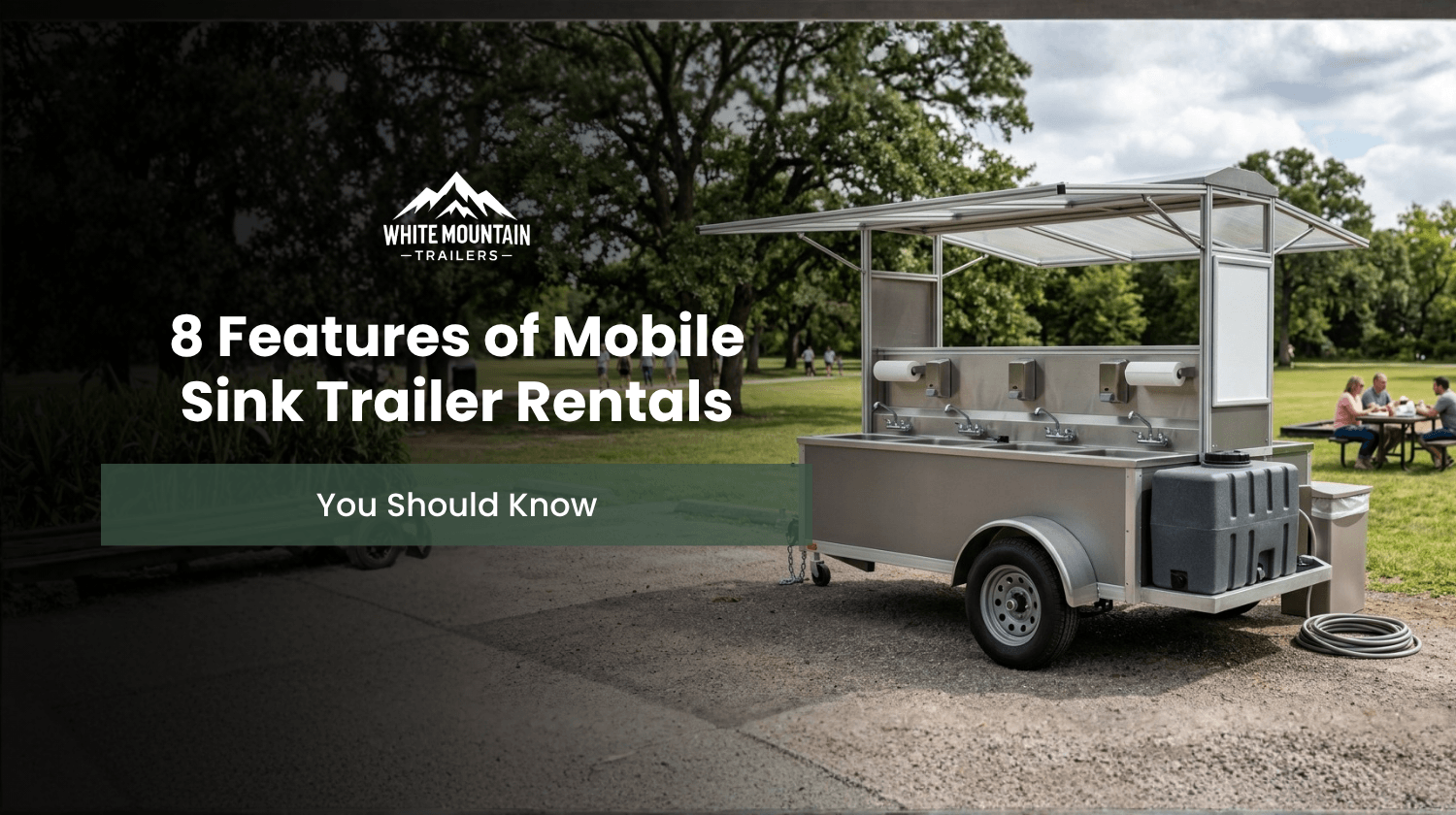
Most rental units offer 2 to 6 sink stations in a single trailer, allowing simultaneous handwashing for high-traffic environments. A 4-station unit can serve roughly 200–300 users per hour without bottlenecks.
Best for:
- Festivals with 1,000+ attendees
- Construction crews of 25+ workers
- Catering operations during peak meal service
2. Self-Contained Water & Waste System
A quality portable sink trailer runs entirely off-grid thanks to:
- Fresh-water tank — typically 50 to 200 gallons
- Grey-water holding tank — sized to match or exceed fresh capacity
- Onboard 12V pump with battery backup
- Quick-fill garden hose connection for refills
This independence is what separates a true sanitation trailer from a glorified bucket-and-spigot setup.
3. Touchless, Hygienic Operation
Modern units include touch-free fixtures that meet post-pandemic hygiene expectations:
- Foot-pedal water activation
- Sensor-based faucets
- Automatic soap and sanitizer dispensers
- Hands-free paper towel dispensing
Touchless operation reduces cross-contamination by an estimated 70–80% versus manual fixtures, according to NSF research.
4. All-Weather Outdoor Construction
Quality trailers are built for -10°F to 110°F operating ranges, with:
- Insulated water lines and freeze protection
- UV-stabilized exterior panels
- Sealed electrical components (GFCI-protected)
- Heavy-duty axle and DOT-approved tires
This is what makes them reliable for everything from January construction in Minnesota to August music festivals in Phoenix.
5. Fast Setup & Towable Mobility
Most portable sink trailers can be delivered, leveled, and operational in under 30 minutes. Key mobility features:
- Standard 2″ ball-hitch coupling (towable by half-ton pickup)
- Stabilizer jacks for level placement
- DOT-compliant lighting and signage
- Compact footprint (typically 5×8 to 6×12 feet)
Same-day and next-day delivery is standard for most rental providers.
6. OSHA & Health-Code Compliance for Construction
For commercial jobsites, a portable sink trailer isn’t a nice-to-have — it’s the law. OSHA 1926.51 requires accessible handwashing for any crew working with hazardous materials, and many states require it for crews of 20+.
A compliant unit provides:
- Hot and cold (or tepid) water
- Soap and single-use towels
- Adequate drainage
- ADA-accessible options on request
Skipping this can mean fines of $15,000+ per violation.
7. Built-In Hygiene Accessories
A full-service trailer comes pre-stocked with everything users need:
Liquid soap dispensers (refillable)
- Paper towel holders or air dryers
- Hand sanitizer stations
- Mirrors at each station
- LED interior lighting for night use
- Optional baby-changing tables on family-event units
8. High-Capacity Performance for Long Events
Flow rate and tank sizing are what separate a weekend-festival-grade trailer from a half-day-only unit. Look for:
- 0.5 gallons per minute (GPM) flow rate (the EPA-recommended efficient standard)
- Tank capacity sized for 8+ hours between refills at peak load
- Continuous-duty pump rated for the rental period
A properly sized trailer should run a full event day without a refill — ask your provider to confirm the math based on your expected user count.
How a Portable Sink Trailer Works: Step-by-Step
Step 1 — Delivery & Placement (15 min): The trailer arrives on-site and is positioned for crowd flow and refill access.
Step 2 — Leveling & Setup (10 min): Stabilizer jacks deploy, tanks are filled, and the pump is primed.
Step 3 — Activation (5 min): Faucets, soap, and sanitizer dispensers are tested and stocked.
Step 4 — User Operation: Guests or workers wash hands; usage is automatic and unsupervised.
Step 5 — Service & Pickup: The provider returns to refill water, pump grey-water, restock supplies, and ultimately retrieve the unit.
Expert Tips for Choosing the Right Unit
- Right-size for crowd capacity. Plan for 1 sink per 75 expected users at peak hour.
- Insist on touchless fixtures — especially for food-service and healthcare-adjacent events.
- Verify tank capacity matches your event length. Ask for the GPM × hours × users math.
- Choose climate-rated models if temps will dip below 35°F or exceed 95°F.
- Place units near food prep, restrooms, and entry/exit points — not in dead corners.
- Confirm refill and pump-out schedules are included in your rental agreement.
For more on event sanitation planning, see our event sanitation planning guide (internal link).
Common Mistakes to Avoid
- Undersizing — A 2-station unit at a 2,000-person festival creates 30-minute lines.
- Poor placement — Tucked-away locations get ignored; central placement gets used.
- Skipping refill planning — Running dry mid-event is the #1 complaint with cheap providers.
- Ignoring ADA requirements — Many jurisdictions require at least one accessible station.
- Forgetting power needs — Some units need a 110V hookup for heaters or lighting.
FAQ’s
How much does a portable sink trailer rental cost?
Daily rentals typically run $150–$400 per day for a 2–4 station unit, with weekly rates of $600–$1,500. Long-term construction rentals are usually quoted monthly. Pricing varies by region, tank size, and whether refills are included.
How many people can one trailer serve?
A 4-station unit comfortably supports 200–300 users per hour at peak. For all-day events, plan on roughly 75 users per sink to avoid bottlenecks.
Do portable sink trailers need electricity?
Most run on internal 12V battery + pump systems and require no external power. Heated units, lighted units, or larger commercial trailers may require a standard 110V outlet or generator.
How long does the water last?
A typical 100-gallon fresh-water tank serves 8–10 hours of moderate use before needing a refill. Heavy-traffic events should schedule mid-event refills.
Are they OSHA-compliant for construction sites?
Yes — quality units meet OSHA 1926.51 requirements when stocked with soap, towels, and tepid water. Always confirm compliance with your specific provider before deploying.
Can they be used in winter?
Insulated, heated models operate down to -10°F. Standard summer units should be winterized or swapped out below freezing.
Ready to Book a Portable Sink Trailer?
If you’re planning an event, breaking ground on a jobsite, or coordinating emergency response, a portable sink trailer is the fastest, most compliant way to deliver clean handwashing anywhere.