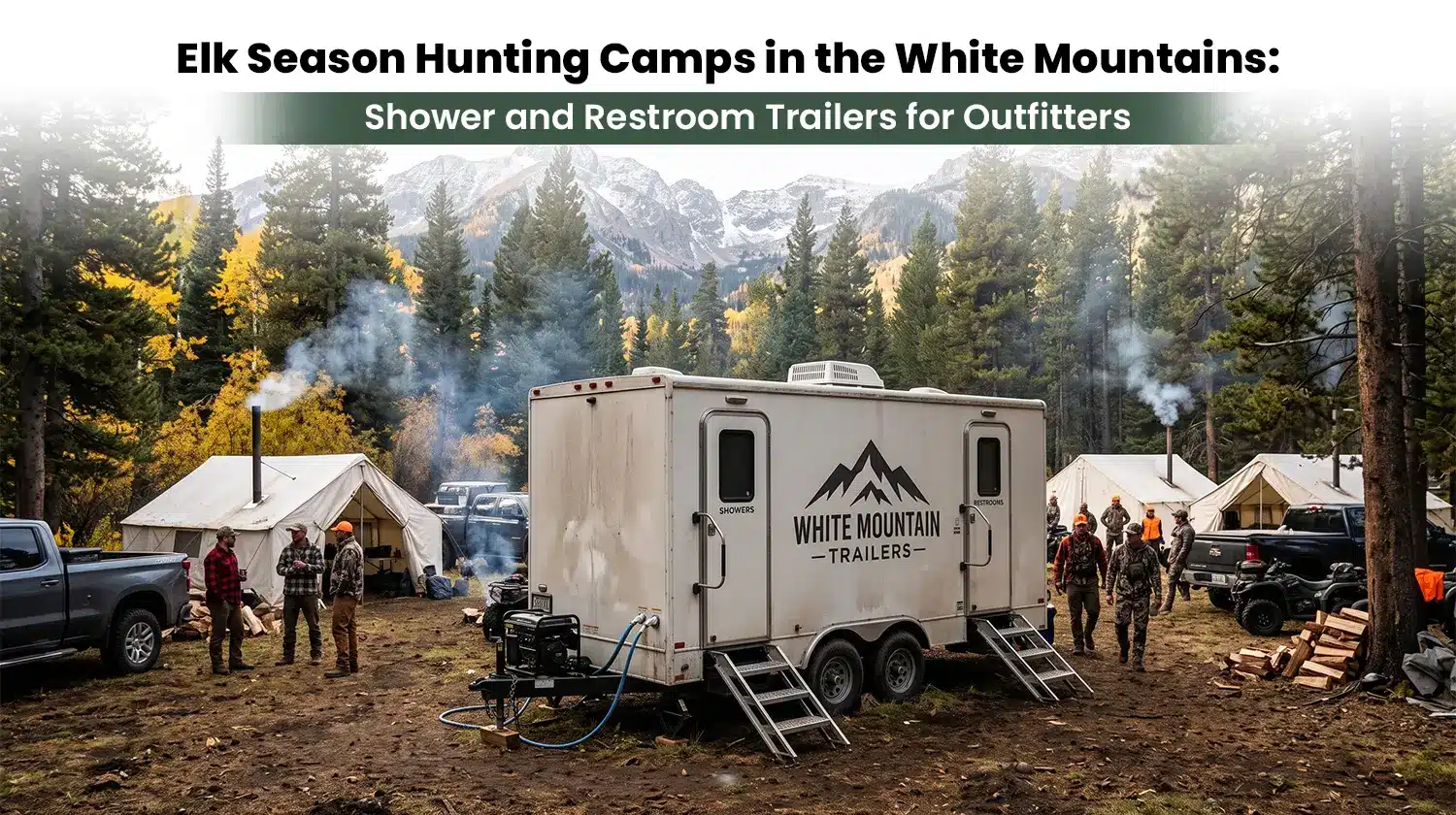
An outfitter running a private camp near Alpine told us the thing clients mention most in their reviews isn’t the bull they harvested. It’s the hot shower at the end of a ten-hour day. He’d spent years perfecting his guides, his horses, and his meals, and then watched a client write that the camp bathroom situation was the only thing that kept the trip from five stars. After that season, sanitation moved from the bottom of his planning list to the top.
That story repeats across hunting country. Guests booking a guided elk hunt in the White Mountains are paying for a full experience, from the scouting to the camp itself. The hunt is hard on purpose, so the camp is where clients expect to recover. Shower and restroom trailers for outfitters aren’t a luxury add-on. They’re one of the quickest ways to raise the standard of a camp without rebuilding it, and they fit the way elk season actually runs in Arizona’s high country.
Key Takeaways
- Arizona’s elk seasons stretch from September archery hunts through late bull and antlerless hunts that can run into December, so camp conditions range from mild fall days to freezing nights at high elevation.
- Units around Springerville and Alpine sit between roughly 7,000 and 9,200 feet in the Apache-Sitgreaves National Forest, where cold-weather planning matters from late fall onward.
- Guided hunts commonly run 7 to 14 days, which means camp sanitation has to hold up over a full week or more of daily use.
- Shower demand clusters before dawn and after dark, so capacity should follow the hunting schedule rather than total headcount alone.
- Self-contained trailers that don’t need external hookups suit remote forest and ranch camps where power and water aren’t available.
Why Camp Facilities Matter to an Outfitter’s Business
A guided elk hunt is a premium product. Outfitters in the White Mountains offer anything from canvas wall tents and camper trailers to cabins and lodging, depending on location and what each client expects. Clients often pay thousands of dollars for a week-long hunt, and the quality of camp life is part of what they’re buying. Word of mouth drives rebooking and referrals in this industry, and comfort is one of the most repeated themes in how hunters describe a good outfitter.
Sanitation is also one of the few camp upgrades that benefits every client equally. A better meal helps at dinner. A good restroom and a hot shower help all day, for every person in camp, including guides and camp staff who work longer hours than anyone.
Elk Season Is Longer and Colder Than Most Outfitters Plan For
Arizona’s elk calendar isn’t a single window. Archery hunts open in mid-September during the rut, general bull seasons follow in late September and again in late November, and antlerless hunts run through much of the fall and into December. Units 1 and 27 near Springerville and Alpine are among the best known in the state, and they sit at elevations where temperatures can swing from comfortable days to hard freezes at night.
That range changes what a camp needs. A trailer that works perfectly in September can struggle once overnight lows drop well below freezing. Our guide to how restroom and shower trailers hold up in Arizona winter explains what freeze protection actually involves, which matters for any camp running into November and December.
Restroom Trailers vs. Vault and Portable Toilets at Camp
Many remote camps rely on a single vault toilet or a few portable units, and that works until a camp fills up with clients, guides, and cooks all sharing the same space. Portable toilets at hunting camps tend to be uncomfortable in cold weather, hard to keep clean through a long hunt, and a common complaint in client feedback.
A portable restroom trailer gives guests private stalls, flushing toilets, running water for handwashing, and lighting, which matters when people are heading out in the dark before sunrise and returning after sunset. Compact 2-stall units suit smaller camps, while larger models fit lodges and multi-client operations.
Shower Trailers: The Upgrade Clients Notice Most
After a long day of glassing, stalking, and packing out heavy gear, a hot shower changes how a hunter feels about the whole trip. Portable shower trailers give outfitters a private, climate-considerate way to offer real showers in the field, without needing a lodge or a plumbed bathhouse.
Plan around how the day actually flows. Showers are in highest demand in the evening after hunters return and again, to a lesser degree, early in the morning. A camp with ten clients and four guides generally needs more shower capacity than the headcount alone suggests, because everyone wants to clean up in the same two-hour window. Staggering clients by hunting party, and adding enough stations to keep wait times short, makes a big difference.
Remote Camps Need Self-Contained Setups
Many White Mountain hunting camps sit on forest roads or private ranch land without power, water, or sewer. Trailers built to run self-contained, with onboard fresh water and waste tanks plus generator or solar power options, are designed for exactly that situation. We cover how this works in more detail in our guide to trailers for RV parks and off-grid communities.
The tradeoff is that self-contained operation has finite limits on water, fuel, and tank capacity. A week-long hunt with a full camp needs a realistic refill and servicing schedule built in from the start. Our guide to restroom trailer holding tanks and waste disposal explains how tank capacity and pump-out timing work together, which helps when you’re estimating needs for a 7 or 14-day hunt.
Access Roads and Placement in Hunting Country
Getting a trailer into a hunting camp isn’t the same as delivering to a paved lot. Forest roads can be narrow, steep, rutted, or soft after rain or early snow, and the camp pad needs to be reasonably level and stable. Our delivery and setup logistics guide for remote job sites covers what a site needs to have ready, and nearly everything in it applies to a hunting camp as well. Sending photos of your access road and camp layout ahead of time is the easiest way to avoid delivery-day surprises.
Camp location rules also matter. Dispersed camping on National Forest land in the White Mountains generally follows stay limits of up to 14 days within a 30-day period and requires camping at least 100 feet from water sources. Outfitters operating on public land should confirm what their permit allows for trailer placement and stay length, and private ranch camps will have their own landowner terms.
Planning Trailers Around the Hunting Calendar
Book early. Elk hunts are drawn and scheduled months in advance, and outfitters tend to fill their dates well before the season opens. Your sanitation plan should be locked in on the same timeline as your client bookings, especially for September archery and the busy late bull seasons in November. Late-season camps should confirm cold-weather capability before booking.
Questions to Ask Before You Book
- How long is each hunt, and how many clients, guides, and staff will be in camp at one time?
- Is our camp fully off-grid, or do we have any usable power and water?
- Will we still be running in November or December, when freeze protection matters?
- Can a delivery truck and trailer reach our camp, and is the pad level and stable?
- What servicing and refill schedule fits a 7 or 14-day hunt?
- Do our permit or landowner terms limit trailer placement or stay length?
Do outfitters really use shower and restroom trailers at elk camps?
Yes, and increasingly so. Many outfitters offer wall tents, camper trailers, or cabins, and adding restroom and shower trailers is one of the most direct ways to improve the client experience without rebuilding camp.
Can a shower trailer work at a camp with no power or water?
Yes. Self-contained trailers carry onboard water tanks and can run on a generator or optional solar power. Capacity is limited by tank size and fuel, so a refill and servicing schedule should be planned for the length of the hunt.
How many showers does a hunting camp need?
It depends on the number of clients, guides, and staff, and on how the day is structured. Because most showers happen in the same evening window, plan capacity around that peak rather than just the total headcount.
Will a trailer survive late-season cold in the White Mountains?
Standard units can struggle in sustained freezing temperatures, so confirm cold-weather capability before booking for November and December hunts. Freeze protection depends on the unit’s insulation, heating, and tank setup.
How far ahead should an outfitter book trailers for elk season?
As early as your hunt dates are set. Elk hunting dates are booked well in advance, and early booking protects availability, especially for September archery and late bull seasons.
Planning an Elk Camp in the White Mountains?
The best outfitters know the camp is part of the hunt. Reliable restrooms and hot showers turn a rugged week into a trip clients recommend.
White Mountain Trailers has supported camps, events, and job sites across Northern Arizona, from Flagstaff to Pinetop-Lakeside, for two generations, and we’ll help you match the right restroom and shower setup to your camp, your schedule, and your season.
Call 928-358-8404 or visit wmtrailers.com to plan your hunting camp facilities, or contact our team directly.


