A contractor in Snowflake ran three crews across two active sites last summer. Both sites relied on standard portable toilets — the kind that get serviced once a week, if the schedule holds. By July, workers were driving off-site on breaks just to find a clean bathroom. Productivity slipped. Complaints piled up. And the contractor was still paying a rental invoice every month for equipment nobody wanted to use.
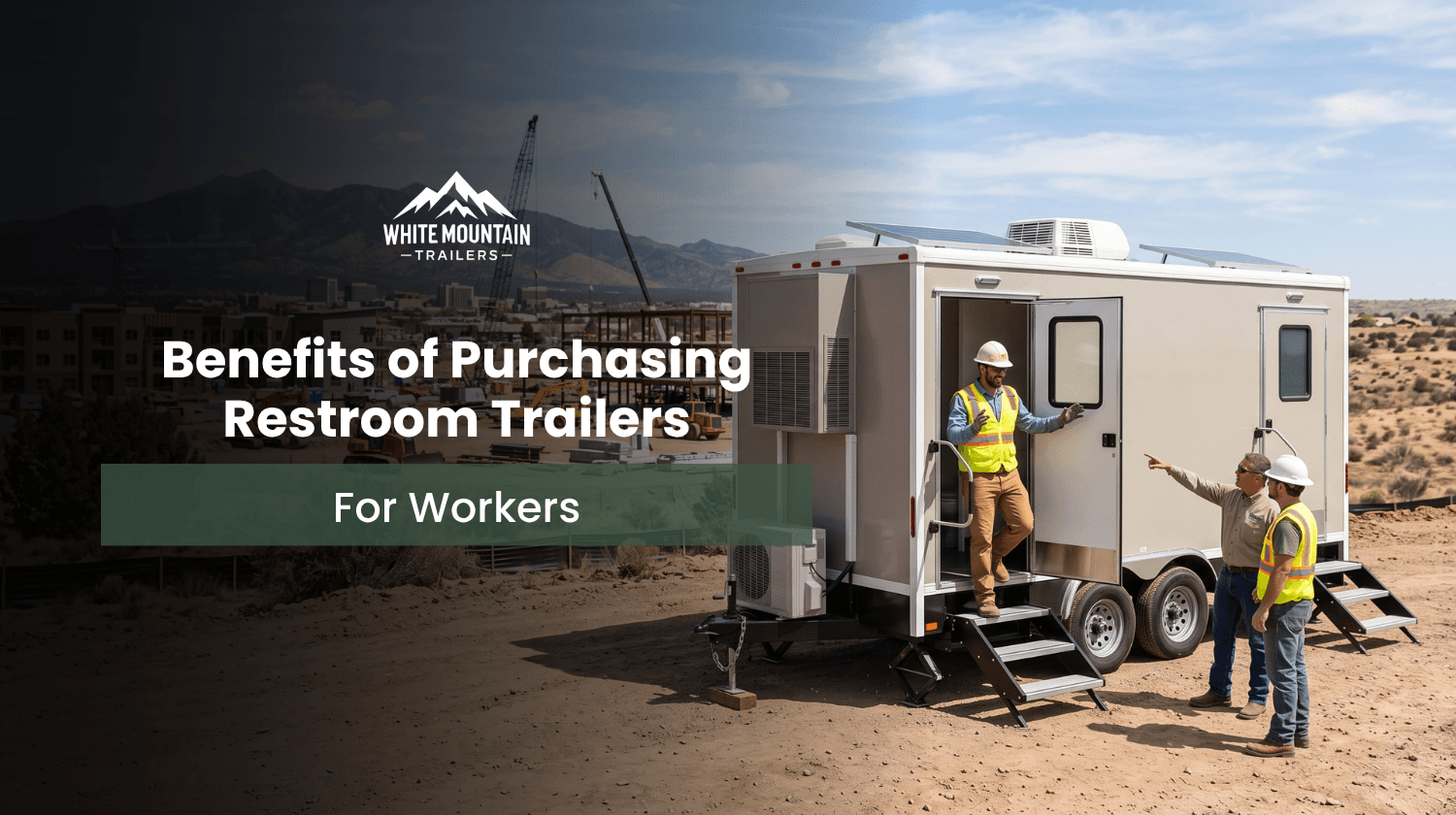
That’s the story restroom trailers are built to prevent. Unlike standard portable toilets, restroom trailers offer flushing units, running water, climate control, and real privacy — closer to a proper facility than a plastic box. For contractors weighing rental against ownership, purchasing a restroom trailer often pencils out as the smarter long-term move.
Here’s why more Northern Arizona contractors are choosing to buy.
Why Worker Sanitation Is a Bigger Deal Than It Looks
Job site restrooms aren’t a side issue — they’re tied directly to compliance, retention, and daily productivity.
OSHA requires accessible, sanitary facilities on every job site. Standard portable toilets technically meet the minimum, but frequent breakdowns, poor servicing, and lack of running water create compliance risk fast. A restroom trailer with sinks and proper ventilation keeps you solidly inside the requirement instead of scraping by on the edge of it.
Workers notice, and it affects performance. Clean, private facilities aren’t a luxury to your crew — they’re a baseline expectation. Sites with poor restroom conditions see more break time lost to workers traveling off-site and more turnover among workers who have other job options.
Multi-crew and long-duration sites amplify the problem. A single week of unreliable servicing on a 50-person site creates dozens of complaints and hours of lost time. The larger the crew, the more a bad restroom setup costs you.
The Case for Buying Instead of Renting
Renting makes sense for a short job. But for contractors running crews year-round, purchasing a restroom trailer usually wins on cost and control.
You stop paying recurring rental fees. Monthly rental costs add up fast across multiple sites and multiple seasons. A purchased trailer is a one-time capital cost that you use project after project, with no ongoing invoices.
You control servicing and condition. With a rental unit, you’re dependent on someone else’s maintenance schedule. When you own the trailer, you decide when it gets cleaned, stocked, and serviced — no waiting on a third-party technician to show up.
You get a unit built for your actual job. A purchased trailer can be configured for your typical crew size, site conditions, and power setup, rather than whatever generic unit happens to be available for rent that month.
It’s a depreciable asset. As capital equipment, a purchased restroom trailer can offer tax advantages that a recurring rental expense doesn’t.
What to Look for in a Purchased Restroom Trailer
Not every trailer is built the same way. Depending on your crew size and site type, look for:
- Flushing toilets and sinks with running water — the biggest upgrade over standard portable units
- Climate control — matters for both summer heat and winter cold across Northern Arizona job sites
- ADA-compliant access — ramps and doorway width that meet accessibility requirements, even for temporary structures
- Durable, weather-resistant construction — built to hold up to wind, dust, and repeated relocation
- Waste tank capacity matched to crew size — undersized tanks mean more frequent servicing and more downtime
You don’t need every feature on every job. A 10-person crew on a short project has different needs than a 100-person crew on a highway build. The right specification depends on crew size, project length, and how often the trailer will move between sites.
Where Restroom Trailers Make the Biggest Difference
Ownership pays off fastest on:
- Multi-site operations running crews across several active projects at once
- Long-duration builds — highway, bridge, and utility work that runs for months or years
- Large-crew sites where a single unreliable restroom setup affects dozens of workers
- Remote sites where off-site facilities aren’t a realistic option for a break
If your business fits any of these patterns, the math tends to favor buying over renting within the first year or two of use.
Plan for the Long Run, Not Just the Next Job
A restroom trailer isn’t just a compliance checkbox. It’s infrastructure that affects how your crew feels about coming to work every day — and how much time gets lost to something that should never slow a project down.
White Mountain Trailers has been building and renting job site trailers for Northern Arizona contractors — from Flagstaff to Pinetop-Lakeside — for two generations. We’ll help you figure out whether renting or buying makes sense for your crew size, project timeline, and site conditions.
Call 928-532-2434 or visit wmtrailers.com to talk through what your site needs.