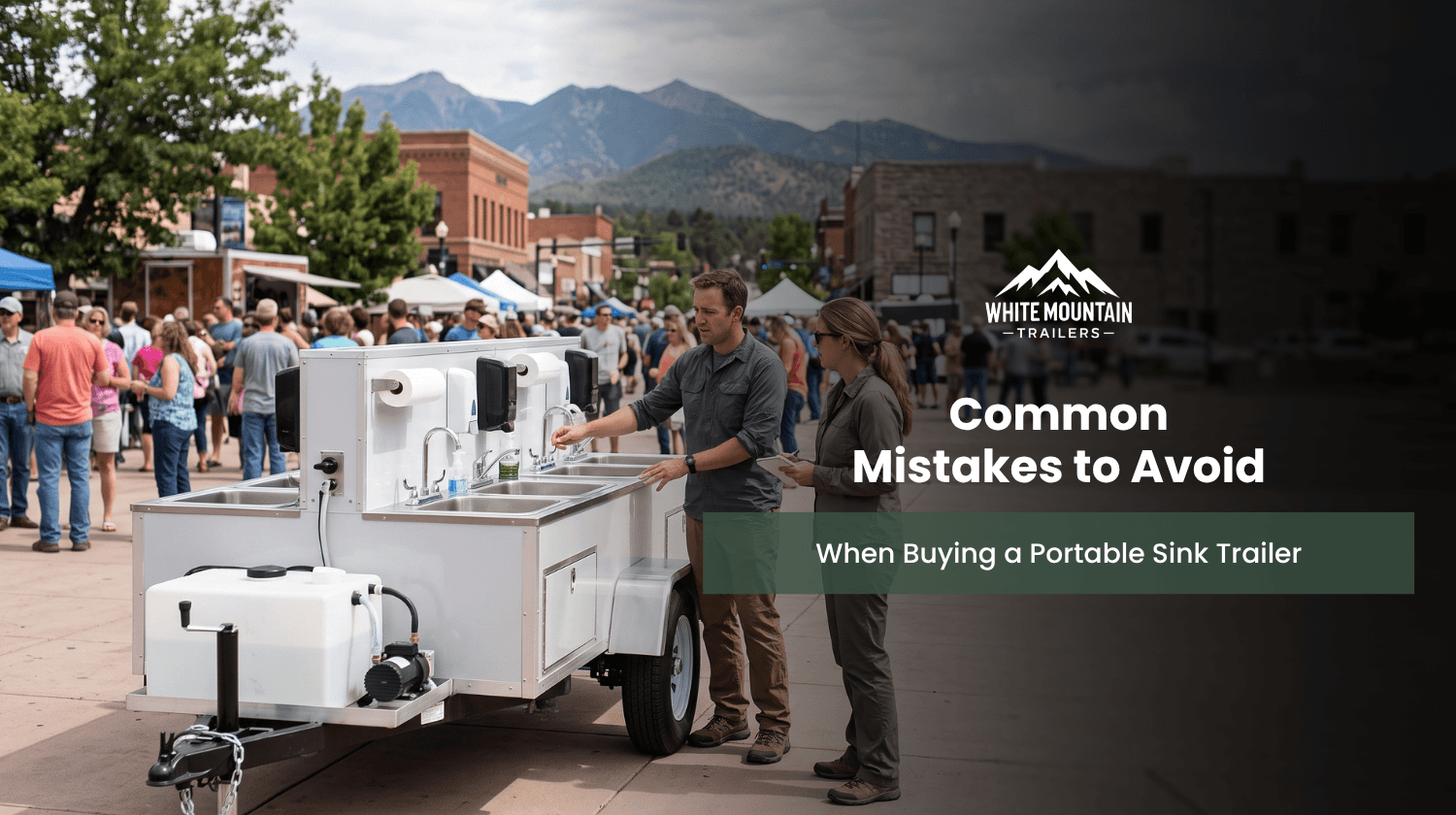
A food truck operator in Pinetop-Lakeside bought a sink trailer off a classified ad the week before her busiest festival of the season. It looked fine in the photos. On site, the fresh water tank held barely enough for a lunch rush, the pump kept tripping the breaker, and the county health inspector flagged it before she’d served a single plate. She spent the weekend running buckets from a garden hose instead of running her business.
That’s the risk with a portable sink trailer — it looks like a simple purchase until it isn’t. The wrong unit doesn’t just underperform; it can shut down an event, fail an inspection, or need replacing within a season. For food vendors, caterers, and job site operators, buying the right trailer the first time matters more than buying it fast.
Here’s where most buyers go wrong, and how to avoid the same mistakes.
Why This Purchase Is Easy to Get Wrong
A sink trailer looks straightforward — tanks, pumps, basins — which is exactly why people underthink it.
Health codes vary more than buyers expect. Most jurisdictions require a minimum number of compartments, specific water temperatures, and defined wastewater capacity for mobile food service. A trailer that’s fine in one county can fail inspection in the next.
The unit gets judged the day it matters most. Nobody stress-tests a sink trailer on a slow Tuesday. It gets discovered on a packed festival weekend or a 100-person job site, which is the worst time to learn it’s undersized.
Cheap and fast usually means a rebuild later. A trailer bought purely on price often needs a new pump, tank, or plumbing job within the first year — at which point the “deal” wasn’t one.
The Mistakes That Cost Buyers the Most
Most problems trace back to the same handful of decisions made too quickly.
Skipping local health code research. Every buyer assumes their trailer meets code until an inspector says otherwise. Compartment count, hot water temperature minimums, and hand-wash station requirements should be confirmed with your local health department before you buy, not after.
Undersizing the water tanks. A freshwater tank that looks generous on paper often runs dry halfway through a real service day. Match tank capacity to your actual hourly usage, not the trailer’s rated maximum.
Ignoring the plumbing and pump quality. Basins and tanks are easy to inspect; pumps and fittings aren’t. A weak pump means low water pressure exactly when you need it most, and cheap fittings are the most common source of leaks and breakdowns.
Buying based on price instead of total cost. A cheaper trailer with a failing pump or undersized tank costs more once you factor in service calls, lost operating days, and early replacement. Compare units on lifespan and reliability, not just the sticker price.
Overlooking climate and site conditions. A trailer without insulated lines or freeze protection is a liability in Northern Arizona winters, and one without adequate ventilation struggles in summer heat. Match the build to where you’ll actually use it.
Not planning for waste tank capacity. Wastewater fills up faster than most buyers expect, especially on high-volume days. An undersized waste tank means mid-shift dumps or a trailer pulled from service at the worst possible time.
What to Verify Before You Buy
Before signing on a portable sink trailer, confirm:
- Compartment count and configuration match your local health code
- The hot water system reaches and holds the required temperature
- Fresh water and waste tank sizes are matched to your actual daily usage, not just rated capacity
- Pump and plumbing components are commercial-grade, not builder-basic
- Climate protection — insulation, ventilation — fits your operating season
- Trailer construction can handle repeated towing and relocation without damage
Skipping any one of these tends to surface at the worst possible moment — mid-shift, mid-inspection, or mid-event.
Who Feels These Mistakes the Most
Getting this wrong hits hardest for:
- Food trucks and mobile vendors who can’t afford a failed health inspection on event day
- Caterers running multiple events per week, where downtime means turning down bookings
- Job sites needing handwashing compliance for large or rotating crews
- Seasonal operators who need a unit built for both summer heat and winter cold
If your operation fits any of these, the extra time spent verifying a trailer before purchase pays for itself the first time it prevents a bad day.
Plan for the Season You’re Actually Running
A portable sink trailer isn’t just plumbing on wheels. It’s the piece of equipment standing between you and a passed inspection, a smooth event, or a compliant job site — and the mistakes above are exactly what turn it into the opposite.
White Mountain Trailers has been building and renting job site and mobile vendor trailers for Northern Arizona operators — from Flagstaff to Pinetop-Lakeside — for two generations. We’ll help you figure out the right tank sizing, plumbing setup, and build for your business before you buy.
Call 928-532-2434 or visit wmtrailers.com to talk through what your operation needs.