When disasters strike, response time, coordination, and on-site resources determine how effectively lives and property are protected. Earthquakes, floods, wildfires, and large-scale accidents often overwhelm local infrastructure, making rapid deployment solutions essential. An emergency response trailer has become a critical asset for agencies, nonprofits, and private contractors working in crisis environments.
These mobile units bring command centers, medical support, sanitation, and communication capabilities directly to the scene. By delivering self-contained functionality where it is needed most, they help teams act faster, work more efficiently, and maintain safer conditions during chaotic situations.
What Is an Emergency Response Trailer?
A mobile, towable unit equipped with specialized tools and facilities designed for disaster relief and incident management. These trailers are built to operate in challenging environments where permanent infrastructure may be damaged or unavailable.
Common configurations include:
- Command and control units
- Medical support trailers
- Sanitation and hygiene trailers
- Communication hubs
- Equipment and supply carriers
Because they are portable and customizable, organizations can deploy these units within hours instead of waiting days for fixed installations.
Why Disaster Management Needs Mobile Solutions
Disaster zones present unique operational challenges. Roads may be blocked, utilities down, and safe buildings unavailable. Traditional response methods often struggle to keep pace with the urgency of these situations.
An emergency response trailer solves several critical problems:
- Infrastructure failure in affected areas
- Need for rapid deployment
- Limited access to essential resources
- Coordination gaps among teams
This flexibility makes it a cornerstone of modern emergency planning.
Key Ways Emergency Trailers Improve Operations
1. Faster Deployment and Immediate Readiness
Speed is everything during the first 24–72 hours of a disaster. A well-equipped unit is designed for quick mobilization, allowing teams to establish operational capability almost immediately upon arrival.
Because these trailers are pre-equipped and self-contained, responders avoid delays associated with setting up temporary structures or sourcing equipment separately. Many units feature plug-and-play systems that shorten the time between arrival and active response.
2. Mobile Command and Control
Effective disaster management depends on clear communication and centralized coordination. A mobile command center trailer provides a secure hub where incident commanders can monitor conditions, direct teams, and communicate with partner agencies.
Inside a typical unit, you may find:
- Multi-screen monitoring stations
- Radio and satellite communication systems
- Situation mapping displays
- Planning workstations
- Climate-controlled workspace
With a dedicated command environment, decision-makers maintain situational awareness even when local facilities are compromised.
3. Improved On-Site Communication
In many disasters, cellular networks and internet service become unreliable or completely unavailable. An emergency response trailer helps restore connectivity and keeps response teams linked in the field.
These units often include:
- Satellite uplink systems
- Two-way radio networks
- Mobile Wi-Fi capability
- Interoperability equipment for multi-agency use
Reliable communication reduces confusion, prevents duplicated efforts, and supports coordinated rescue operations.
4. Enhanced Medical Support in the Field
Medical capabilities in disaster zones can quickly become overwhelmed. An emergency relief trailer brings treatment capability directly to affected areas, helping teams stabilize patients faster.
Mobile medical units may provide:
- Triage stations
- Basic treatment bays
- Medical supply storage
- Refrigeration for medications
- Handwashing and sanitation facilities
By treating patients closer to the incident site, responders can reduce transport delays and improve survival outcomes.
5. Better Sanitation and Hygiene
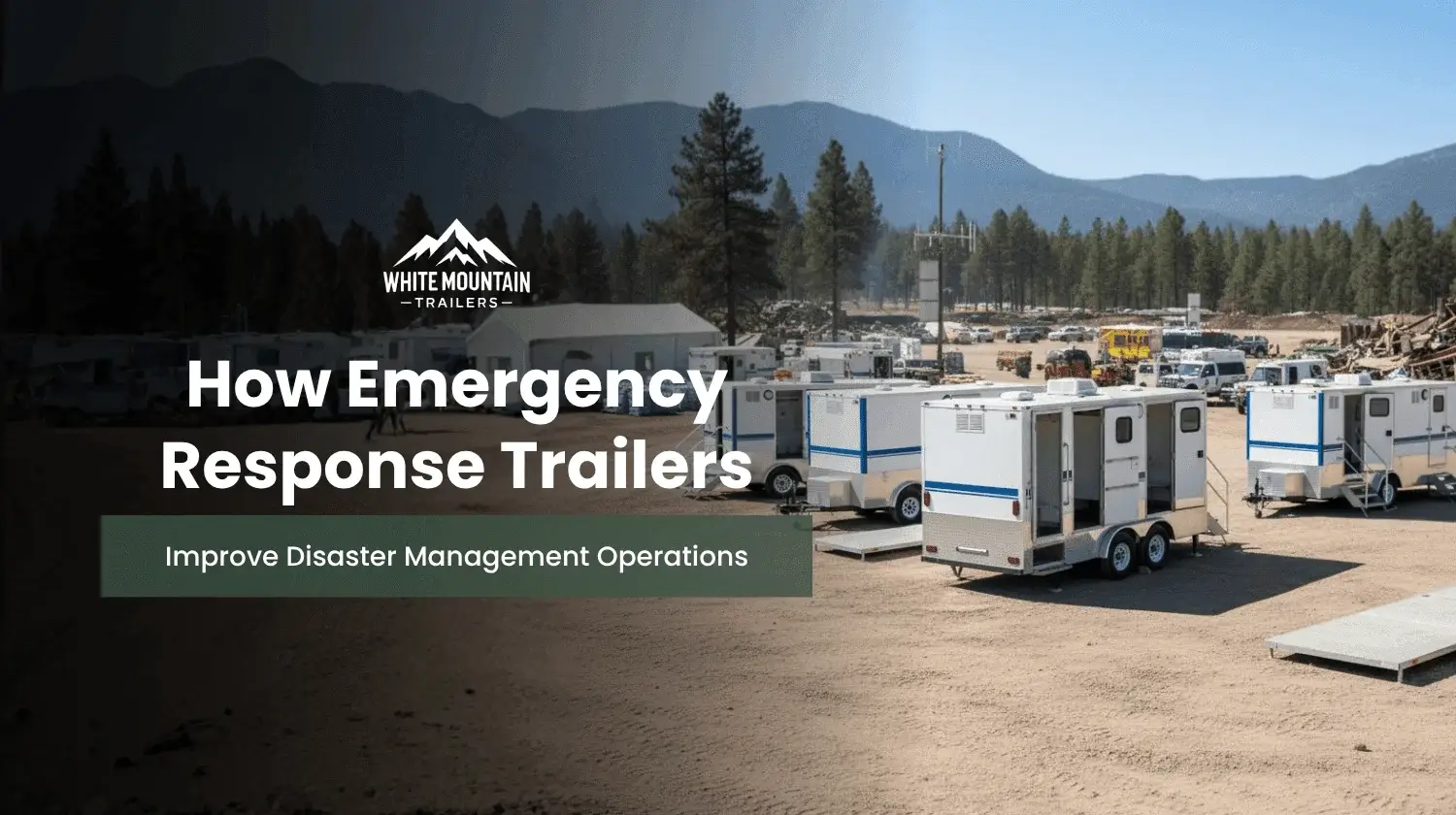
Long-duration disaster operations require proper hygiene facilities. Without them, responder fatigue increases, and the risk of illness rises sharply. A properly equipped emergency response trailer can include restroom and shower capabilities that maintain health standards in the field.
These sanitation features are especially valuable in wildfire camps, hurricane recovery zones, and large evacuation sites.
6. Increased Operational Efficiency
This type of unit consolidates essential resources into an organized mobile platform. This reduces logistical complexity and allows teams to focus on mission-critical tasks.
Operational benefits include:
- Reduced setup time
- Centralized equipment storage
- Fewer support vehicles required
- Improved workflow for response teams
When every minute counts, streamlined operations can directly affect outcomes.
7. Flexibility Through Custom Design
Every emergency management agency has different requirements. A custom emergency response trailer allows organizations to configure layouts, equipment, and power systems based on their mission profile.
Customization options often include:
- Interior workstation layouts
- Power and battery capacity
- Communication packages
- Medical or sanitation modules
- Exterior branding and lighting
This adaptability ensures the trailer performs effectively across multiple incident types.
8. Rapid Incident Coordination
Large-scale emergencies require quick decision-making across multiple agencies. A rapid emergency command trailer creates a centralized environment where leaders can collaborate in real time.
By bringing personnel, data, and communication tools into one mobile space, agencies improve coordination, reduce response delays, and maintain better operational control throughout the incident lifecycle.
Long-Term Value for Emergency Agencies
While the upfront investment may seem significant, this type of unit often delivers strong long-term value. These units are reusable, durable, and capable of supporting many different mission types over their service life.
Key financial advantages include:
- Multi-incident usability
- Lower temporary facility costs
- Reduced setup labor
- Scalable fleet growth
- An extended lifespan with proper maintenance
For municipalities and response organizations, the return on investment can be substantial.
Conclusion
An emergency response trailer plays a vital role in modern disaster management by bringing mobility, coordination, and essential services directly to the field. From command operations and communications to medical care and sanitation, these versatile units help agencies respond faster and operate more effectively when emergencies occur. Organizations that invest in well-designed mobile response solutions position themselves to protect both responders and communities when it matters most.
Be ready for any crisis with a high-performance emergency response trailer from White Mountain Trailers. Contact the team today to discuss your requirements and get a reliable mobile solution built for real-world disaster operations.
FAQs
1. What is an emergency response trailer used for?
An emergency trailer is used to support disaster operations by providing mobile command, communication, medical, or sanitation capabilities directly at the incident site.
2. How quickly can an emergency response trailer be deployed?
Most units can be towed and operational within hours, depending on site access and setup requirements. Their self-contained design allows rapid field readiness.
3. Can an emergency trailer be customized?
Yes, many manufacturers offer fully customizable layouts, equipment packages, power systems, and exterior features to meet specific agency or mission needs.
4. Who typically uses emergency response trailers?
They are commonly used by emergency management agencies, fire departments, law enforcement, military units, disaster relief organizations, and large event coordinators.