Businesses that operate at temporary locations often need reliable handwashing facilities. Construction sites, outdoor kitchens, food vendors, event organizers, and emergency response teams may work in areas where permanent plumbing is unavailable or inconvenient.
A portable hand wash station rental can be a practical option for a short-term requirement. However, businesses with recurring or long-term needs may find it more useful to consider purchasing their own equipment.
Portable Sink Trailers provide mobile handwashing facilities that can be used in different work environments. Before deciding whether to rent or buy, it is important to understand how frequently the unit will be needed, what features the operation requires, and how the equipment will be maintained.
This guide explains the main considerations to help businesses compare both options.
What Are Portable Sink Trailers?
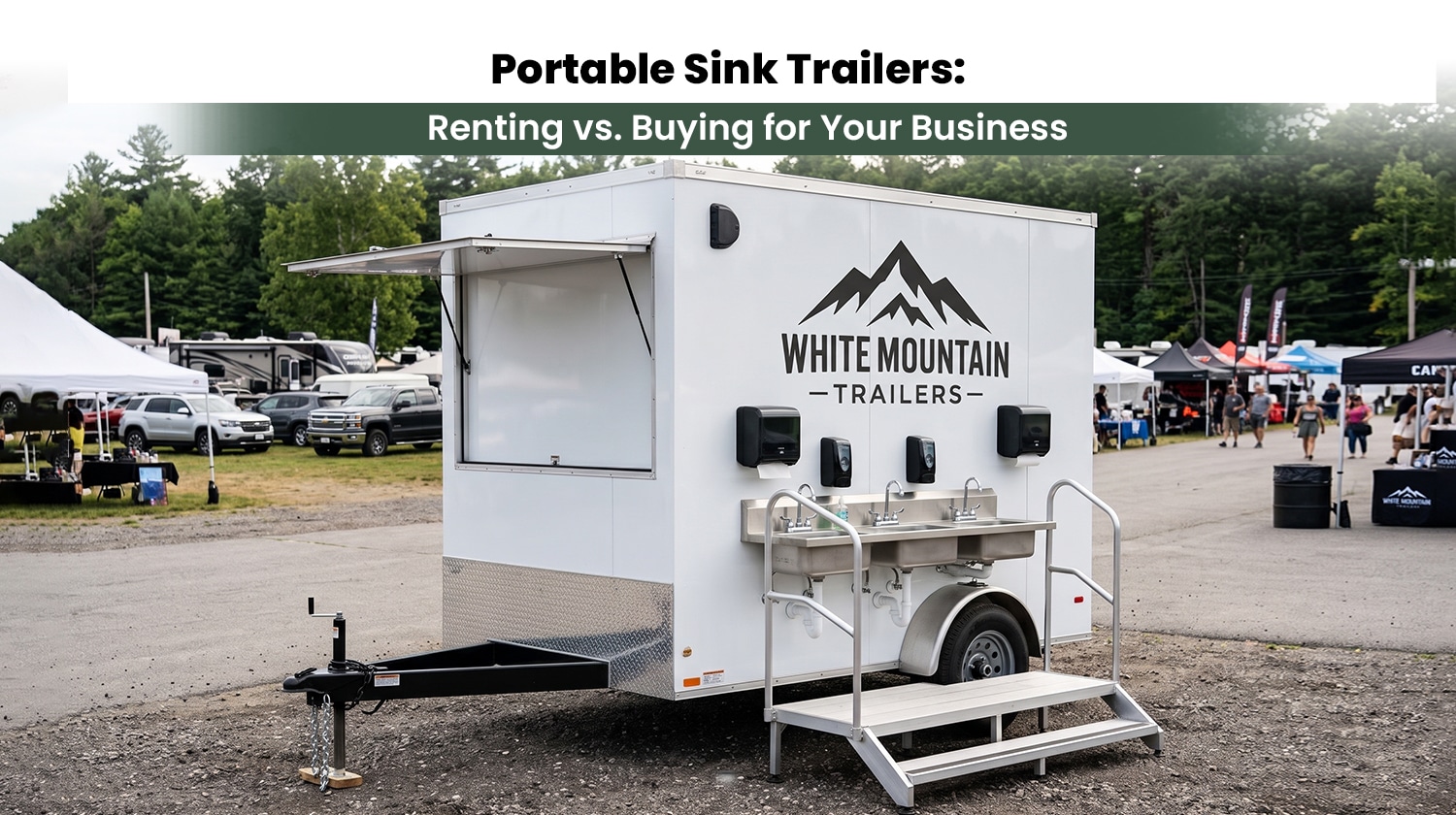
Portable Sink Trailers are mobile handwashing units designed to provide access to sinks in locations where permanent plumbing may not be available.
Depending on the selected configuration, features may include:
- Multiple sink stations.
- Hot and cold water.
- Soap dispensers.
- Paper towel holders.
- Freshwater and wastewater storage.
- A self-contained water system.
These features can support handwashing requirements at construction sites, outdoor events, food service locations, and other temporary or remote operations.
White Mountain Trailers offers custom Portable Sink Trailers designed for different applications. Businesses can review the available Portable Sink Trailer options to understand the features and configurations.
Portable Hand Wash Station Rental: When Does Renting Make Sense?
Renting may be suitable when a business needs a handwashing facility for a limited period.
For example, an event organizer may need additional handwashing stations for a weekend festival, while a contractor may need temporary facilities during a specific construction phase.
Consider renting when:
1. You Have a Short-Term Requirement
If your business needs a portable handwashing unit for only a few days, weeks, or a specific project, renting may help avoid purchasing equipment that will not be used regularly.
This can be useful for temporary events, seasonal operations, or one-time projects.
2. Your Requirements May Change
Some businesses do not have consistent facility requirements throughout the year.
An event company may work at different venues, while a contractor may move between projects with different workforce sizes. Renting can provide flexibility when the required equipment or duration changes.
3. You Want to Avoid Managing Long-Term Ownership
Ownership involves planning for storage, routine maintenance, cleaning, and servicing. With a rental arrangement, some of these responsibilities may be included in the rental agreement.
However, responsibilities vary by provider. Always confirm what is included before signing an agreement.
4. You Need a Temporary Solution While Planning a Purchase
A business may need immediate handwashing facilities while evaluating its long-term requirements.
A rental can serve as a temporary option while the company determines the appropriate configuration, capacity, and budget for a future purchase.
When Buying Portable Sink Trailers May Be a Better Choice
For businesses that regularly need mobile handwashing facilities, purchasing may offer greater control over equipment availability and configuration.
Consider ownership when:
1. You Use Handwashing Facilities Regularly
If your company operates at multiple events, construction sites, or outdoor locations throughout the year, recurring rental arrangements may become difficult to manage.
Owning a trailer allows the business to plan its use around its own operating schedule, subject to transportation, servicing, and site requirements.
2. You Need a Specific Configuration
Different businesses have different handwashing requirements.
A food service operation may need a different layout from a construction site or emergency response team. Purchasing a custom-built trailer can allow the business to discuss its intended use and required features with the manufacturer.
For example, the number of sink stations, water systems, and storage arrangements should be considered before selecting a configuration.
3. You Want More Control Over Availability
When a business owns its equipment, it can plan when and where the trailer will be used without relying on a third-party rental schedule.
This can be valuable for companies with recurring projects or multiple operating locations.
4. You Are Planning for Long-Term Use
A purchase may make sense when a business expects to use the trailer regularly over an extended period.
However, the decision should account for the purchase price, financing, transportation, maintenance, storage, and expected usage. Ownership is not automatically less expensive than renting.
Renting vs. Buying: What Should Businesses Compare?
The best option depends on the total cost and operational requirements, not just the initial price.
Consideration | Renting | Buying |
|---|---|---|
Initial expense | Usually involves rental payments rather than a purchase price | Requires a purchase investment or financing |
Usage period | Often suitable for short-term needs | Can suit recurring and long-term use |
Availability | Depends on rental provider and scheduling | Business controls its own equipment availability |
Configuration | Depends on available rental inventory | More opportunity to discuss a custom configuration |
Maintenance | Responsibilities depend on rental agreement | Owner plans and manages maintenance |
Storage | May not require long-term storage after return | Storage must be planned between uses |
Flexibility | Useful when needs change frequently | Useful when requirements are relatively consistent |
Before comparing prices, calculate how frequently the unit will be used and how long it will remain in operation.
A rental quote should be reviewed alongside delivery, setup, servicing, cleaning, and any additional fees. A purchase quote should be evaluated with financing, maintenance, storage, transportation, and expected useful life in mind.
How to Estimate Your Portable Sink Trailer Requirements
Whether renting or buying, start by understanding how the facility will be used.
1. Estimate the Number of Users
Identify how many workers, staff members, vendors, or visitors may need access to the handwashing facilities.
Also consider peak periods. A site with 50 workers may experience concentrated demand during breaks, shift changes, or meal preparation periods.
2. Determine the Number of Sink Stations
The number of sink stations should reflect expected usage and the layout of the site.
Consider whether one central location will be sufficient or whether users need access in more than one area.
3. Review Water Supply and Wastewater Capacity
Confirm how freshwater will be supplied and how wastewater will be collected and removed.
White Mountain Trailers lists onboard freshwater and greywater tanks for its portable sink trailer options. Confirm the capacity and servicing requirements of the specific unit before making a decision.
4. Check Handwashing Features
Review the features that support everyday use, such as:
- Hot and cold water.
- Multiple sink stations.
- Soap dispensers.
- Paper towel holders.
- Wastewater collection.
Confirm which features are included in the selected configuration.
5. Consider Delivery and Placement
Before arranging a rental or purchase, check the intended placement area.
The trailer needs suitable access for delivery and a location where users can reach it conveniently. Consider ground conditions, vehicle movement, available space, and servicing access.
Which Industries Use Portable Sink Trailers?
Portable Sink Trailers can support different types of businesses and temporary operations.
Construction and Industrial Sites
Construction projects may operate in locations without convenient access to permanent plumbing. Mobile handwashing facilities can provide workers with a designated place to wash their hands throughout the workday.
For more jobsite planning advice, read our guide on Portable Sink Trailers for Construction Sites.
Outdoor Food Service
Food vendors, outdoor kitchens, catering operations, and food truck locations may need accessible handwashing facilities.
The required setup depends on the menu, food preparation activities, and local health department requirements. Businesses should confirm applicable rules before selecting equipment.
Our article on how portable sink trailers help outdoor kitchens prepare for health inspections covers additional planning considerations.
Outdoor Events
Festivals, fairs, community gatherings, and other outdoor events may need handwashing facilities for vendors, staff, and visitors.
The number of users, event duration, and location should guide the required setup.
Emergency Response Operations
Emergency response teams may need temporary handwashing facilities at locations where permanent infrastructure is unavailable or disrupted.
A mobile unit can provide a dedicated handwashing location, subject to water supply, wastewater management, and servicing arrangements.
Questions to Ask Before Renting or Buying
Before making a decision, prepare answers to these questions:
- How frequently will the business need the trailer?
- How many people will use the sinks?
- What are the busiest usage periods?
- How many sink stations are required?
- Does the selected unit include hot and cold water?
- What freshwater and wastewater capacities are available?
- Who is responsible for cleaning and maintenance?
- What delivery and transportation arrangements are required?
- Is long-term storage available if the trailer is purchased?
- What local health or workplace requirements apply?
These details can help you compare available options based on the actual needs of your business.
Explore Portable Sink Trailers from White Mountain Trailers
The decision to rent or buy depends on how often your business needs mobile handwashing facilities, how long the equipment will be used, and what configuration is required.
Renting may suit short-term or occasional needs. Purchasing may be worth considering for businesses that expect recurring use and want greater control over their equipment.
White Mountain Trailers builds custom Portable Sink Trailers for applications including construction sites, outdoor events, food service, and emergency operations. Based in Northern Arizona, the company also provides nationwide delivery information for its trailer solutions.
If your business operates in Show Low or elsewhere in Northern Arizona, discuss your handwashing requirements, preferred configuration, and project location with the team.
Call 928-358-8404 or contact White Mountain Trailers to discuss your project and request more information.
Frequently Asked Questions
What is a portable hand wash station rental?
A portable hand wash station rental is a temporary arrangement in which a business pays a provider to use mobile handwashing equipment for an agreed period. Rental terms, delivery, servicing, and included features vary by provider.
Is it better to rent or buy a portable sink trailer?
Renting may suit short-term or occasional requirements. Buying may be worth considering when a business expects regular use and wants control over equipment availability and configuration. Compare the total costs before deciding.
What features should I look for in Portable Sink Trailers?
Review the number of sink stations, hot and cold water, soap dispensers, paper towel holders, freshwater supply, wastewater storage, and servicing requirements. Confirm the specifications of the selected model.
Can portable sink trailers be used at construction sites?
Yes. Portable Sink Trailers can provide mobile handwashing facilities at construction sites, particularly where permanent plumbing is limited or unavailable. The configuration should reflect workforce size and site requirements.
Do portable sink trailers require external plumbing?
White Mountain Trailers describes its portable sink trailer options as self-contained, with onboard freshwater and greywater tanks. Confirm the exact water and servicing arrangements for the unit you are considering.
How do I choose the right portable sink trailer?
Start with the number of users, expected usage periods, required sink stations, water capacity, site layout, and servicing needs. Discuss these details with the manufacturer before choosing a configuration.