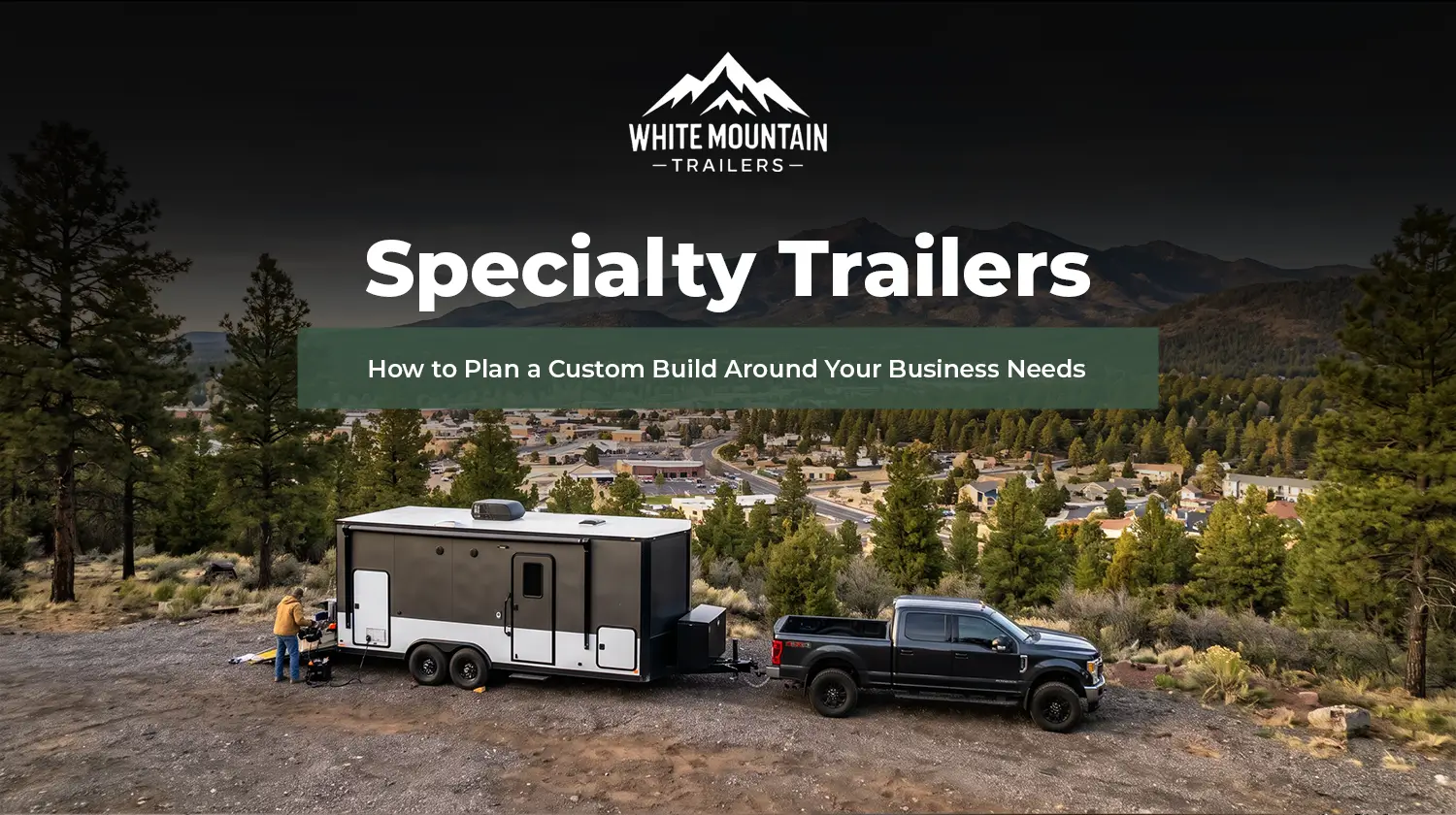
A specialty trailer should be designed around the work it needs to perform. Whether your business needs a mobile office, sanitation unit, field-support space, or another specialized mobile facility, the right design depends on how people will use it, what equipment it must accommodate, and where it will operate.
Planning these details before requesting a quote can help prevent layout problems, overlooked utility requirements, and unnecessary design changes later.
White Mountain Trailers is a family-run manufacturer serving Northern Arizona, including Show Low, with two generations of trailer-building experience. The company develops custom mobile solutions for different business and operational needs.
If you are considering a specialty trailer, the following steps can help you organize your requirements and prepare for a more productive conversation with a manufacturer.
1. Define the Trailer’s Primary Purpose
Start with the main job the trailer needs to perform. A clear purpose helps determine which features are essential and which may not be necessary.
For example:
- Mobile office: May require workstations, storage, lighting, and climate control.
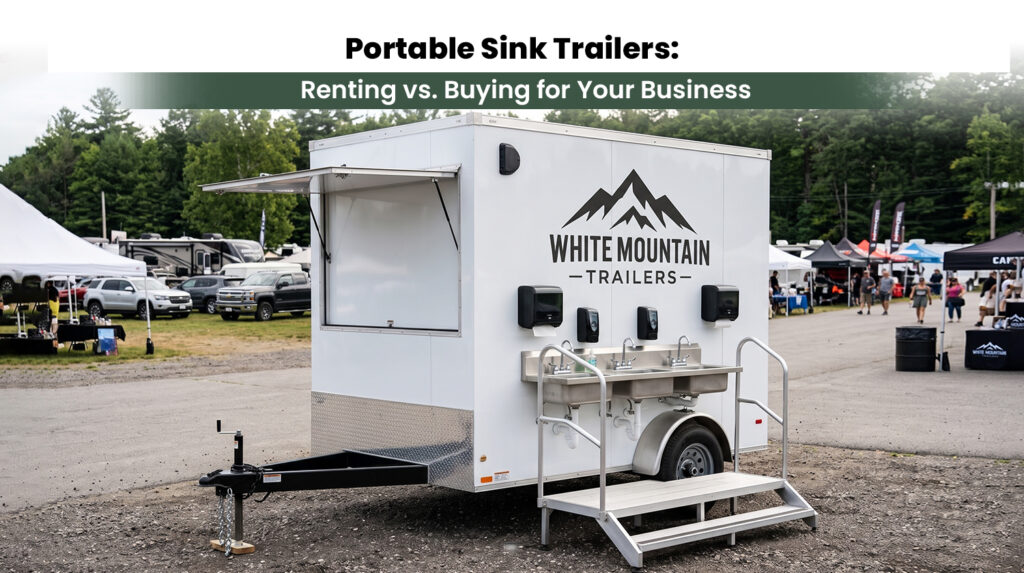
- Sanitation unit: May need plumbing fixtures, water storage, wastewater management, and appropriate ventilation.
- Field-support trailer: Could require equipment storage, electrical access, and dedicated work areas.
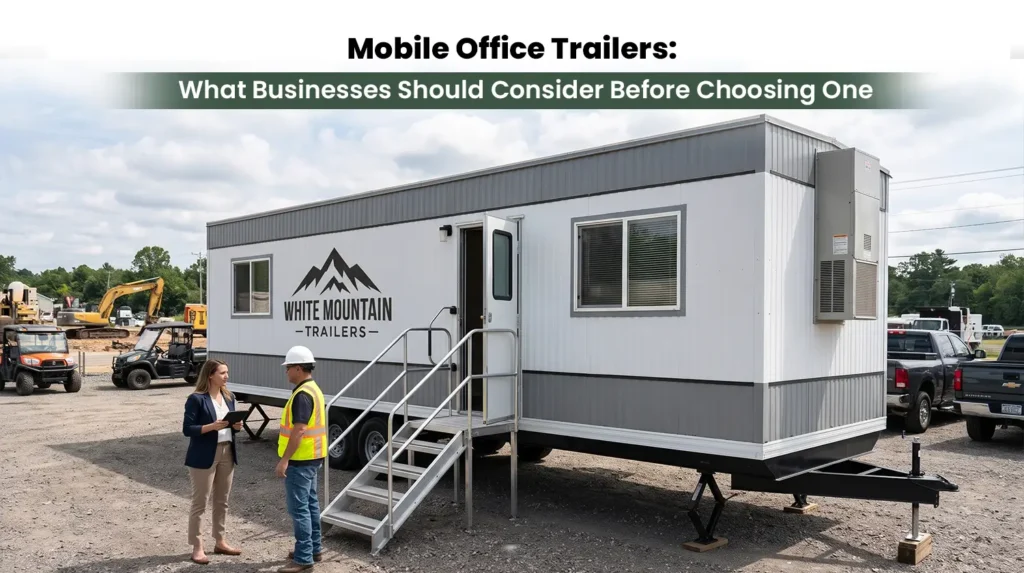
- Specialized commercial unit: May need a particular interior arrangement, installed equipment, or branded exterior.
These are examples rather than fixed configurations. The requirements will depend on your business operations and the specific project.
Before moving into design, identify the trailer’s primary function, intended users, expected operating hours, and the tasks it must support.
2. Understand Your Daily Workflow
Once the purpose is clear, consider how people will use the trailer throughout a normal working day.
Think about the order of activities, how many people may use the space at once, and whether multiple tasks will happen simultaneously.
For example, a mobile workspace may need separate areas for employees, equipment, and document storage. A specialized service trailer may require clear access to installed equipment and enough room for staff to perform their work safely.
Consider these questions:
- How many people will use the trailer at one time?
- Which activities will take place inside?
- Does equipment need to be accessed frequently?
- Will employees need dedicated work or storage areas?
- Are there tasks that must happen simultaneously?
Understanding the workflow early helps the manufacturer design a layout that supports daily operations instead of simply fitting equipment inside the trailer.
3. Plan the Layout, Equipment, and Utilities Together
Interior layout and utility requirements should be considered together because equipment placement affects the space, connections, and access needed throughout the trailer.
Start by identifying the major equipment you expect to install. Record its dimensions, quantity, intended location, and operating requirements wherever possible.
Then consider how those items will fit into the overall floor plan.
Important planning factors include:
Planning Area | What to Consider |
Work areas | Employee positions, task areas, and available working space |
Equipment placement | Dimensions, mounting needs, connections, and access for maintenance |
Movement and access | Door locations, walkways, storage access, and clear movement paths |
Electrical requirements | Equipment loads, outlets, voltage, and available power sources |
Water and plumbing | Water supply, drainage, fixtures, and wastewater arrangements where required |
Climate and ventilation | Heating, cooling, airflow, and equipment-related heat or moisture |
A piece of equipment may fit inside the trailer but still create problems if its doors cannot open fully or service personnel cannot reach it for maintenance.
Power requirements also deserve early attention. Some equipment may need dedicated electrical connections, while other configurations may require a generator, inverter, or optional solar arrangement. The right solution depends on the installed equipment and available site infrastructure.
White Mountain Trailers’ custom mobile solutions can be planned around project-specific requirements. Discuss the intended equipment and operating conditions during the design stage rather than assuming every feature is included in a standard configuration.
4. Plan Branding and Accessibility Requirements
A specialty trailer can also represent your business when it is used at customer locations, events, or public-facing sites.
If appearance is important to the project, discuss exterior colors, logos, signage, and finishes before the design is finalized. Planning these elements early helps account for their placement and any related design considerations.
Accessibility should also be considered according to the intended users and applicable requirements. Depending on the project, this may involve entrance access, door clearances, interior movement space, ramps, or other features.
Do not assume that a particular trailer design automatically meets every accessibility or regulatory requirement. Identify the applicable standards for your project and discuss them with the manufacturer before approving the design.
5. Evaluate the Operating Environment
Where the trailer will operate can influence its construction, utilities, equipment, and setup requirements.
A unit used at a permanent commercial location may have different needs from one that travels between jobsites or operates in a remote area.
Consider the following:
- Climate: Will the trailer operate in hot, cold, or changing weather conditions?
- Site access: Can the trailer reach the intended location and be positioned safely?
- Available utilities: Are dependable electrical, water, or wastewater connections available?
- Mobility: Will the trailer remain in one location or move between sites?
- Maintenance: Can staff access equipment and service areas without disrupting operations?
For projects in Northern Arizona and other locations with changing operating conditions, discuss the expected environment before selecting materials, climate-control options, and utility arrangements.
The manufacturer should understand not only what the trailer needs to contain, but also the conditions in which it will be used.
6. Understand the Custom Trailer Build Process
A custom trailer project involves more than choosing features. It requires coordination between the intended use, design, construction, delivery, and ongoing support.
White Mountain Trailers follows a five-step process:
- Discovery: Discuss the project, intended use, and operational requirements.
- Design: Develop a configuration around the agreed project needs.
- Build: Move the approved design into manufacturing.
- Delivery: Coordinate delivery of the completed trailer.
- Aftercare: Provide support after delivery according to the project and service arrangements.
Understanding these stages helps set expectations before the project begins.
Build timelines can vary depending on design complexity, selected features, and project requirements. Discuss the expected schedule with the manufacturer rather than relying on a general estimate.
7. Prepare the Key Details Before Requesting a Quote
You do not need a finalized technical design before contacting a manufacturer. However, having basic project information ready can make the initial discussion more useful.
Use this table to organize the main details:
Project Detail | Information to Prepare |
Purpose and users | Main function, intended users, and number of people using the trailer |
Layout and equipment | Preferred dimensions, work areas, equipment list, and storage needs |
Utilities | Electrical, water, plumbing, ventilation, and climate-control requirements |
Location and mobility | Operating environment, site access, setup area, and transport needs |
Project expectations | Branding, accessibility considerations, target delivery date, and budget range if established |
If some requirements are still uncertain, list them as questions rather than making assumptions. Sharing what you already know allows the manufacturer to identify which details need further discussion.
A clear project brief also makes it easier to review proposed specifications and confirm that the final design supports the intended work.
8. Choose a Manufacturer That Understands Custom Projects
The manufacturer you work with plays an important role in turning an operational requirement into a practical trailer design.
Look beyond the exterior appearance and ask how the company approaches project discovery, layout planning, equipment integration, manufacturing, delivery, and aftercare.
You should also discuss which features are included in the proposed configuration, which are optional, and which requirements need additional review.
White Mountain Trailers brings two generations of trailer-building experience to its custom manufacturing work. Its approach focuses on understanding the project before moving through design, construction, delivery, and aftercare.
For businesses planning a specialized mobile unit, that project-focused process provides a clear starting point for discussing the right configuration.
Frequently Asked Questions
What are specialty trailers used for?
Specialty trailers are designed for specific business, commercial, or operational purposes. Examples may include mobile offices, sanitation units, field-support facilities, and other custom mobile spaces. Their layouts and features depend on the work they need to support.
What information does a manufacturer need to build a custom trailer?
A manufacturer needs to understand the intended use, users, equipment, layout preferences, utility requirements, operating location, and delivery expectations. Having these details ready helps establish a clearer project scope.
How long does it take to build a custom specialty trailer?
The timeline depends on the design, selected features, materials, and project complexity. Some builds may take a few weeks, while more involved projects can take several months. Ask the manufacturer for a project-specific estimate.
Can a specialty trailer be designed around existing equipment?
Equipment requirements can be considered during the design process. Provide the manufacturer with equipment dimensions, mounting needs, operating requirements, and connection details so they can assess how the items may fit into the proposed configuration.
What should I consider before requesting a custom trailer quote?
Start with the trailer’s purpose, intended users, workflow, layout, equipment, utilities, operating environment, accessibility considerations, and delivery expectations. You can discuss any unresolved requirements with the manufacturer during the initial consultation.
Start Planning Your Specialty Trailer
A successful specialty trailer project begins with a clear understanding of how the unit will be used. Planning the workflow, layout, equipment, utilities, and operating environment before requesting a quote gives the manufacturer a stronger foundation for developing a suitable design.
Explore White Mountain Trailers to learn more about its manufacturing approach and available solutions. Visit the Custom Mobile Trailers page to review custom trailer capabilities, or contact the team to discuss your project and request a quote.