A homeowner near Lakeside once asked us, half-joking, if our shower trailers were “just a garden hose and a curtain.” Fair question. From the outside, a shower trailer looks simple — a clean little building on wheels. But the first time someone steps in expecting a trickle of lukewarm water and gets a real hot shower with real pressure, the question changes fast: how does this thing actually work?
It’s not magic. It’s three systems working together — heating, storage, and drainage — and each one has to be sized and set up right, or the whole experience falls apart.
Here’s what’s actually happening behind the walls.
Why the Mechanics Actually Matter
People rent a shower trailer expecting a normal shower experience, not a survival-camp version of one. That expectation is only met if the systems underneath are doing their job.
Get the water heating wrong, and showers turn cold by the third or fourth user. Get the tank sizing wrong, and the trailer runs dry halfway through a crew’s morning. Get the drainage wrong, and you’ve got a maintenance call — or worse, standing wastewater on-site.
None of this is complicated once you know what’s going on. It just isn’t obvious from the outside, which is exactly why it’s worth explaining.
Water Heating: How the Trailer Delivers Hot Water on Demand
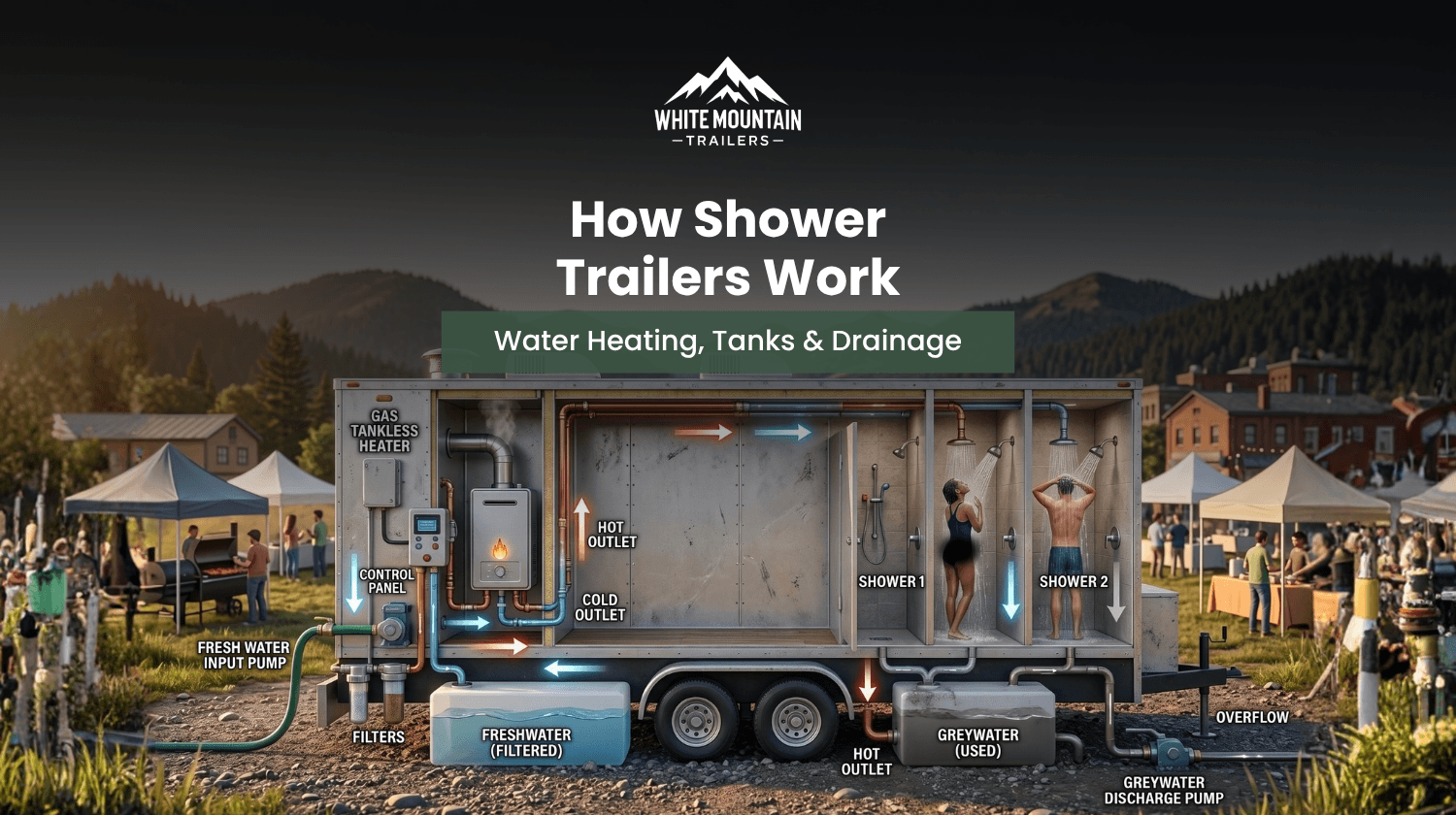
Most shower trailers use a propane or diesel-fired tankless water heater, not a traditional hot water tank.
What’s actually happening:
- Cold water is pulled from the fresh water tank and run through a heat exchanger
- The heater fires only when water is flowing, so it heats water on demand rather than storing a fixed supply
- Fuel is usually propane, stored in tanks mounted on or towed with the trailer
- Larger trailers may run multiple heaters in parallel to keep pressure and temperature steady across several stations at once
Because it’s heating on demand instead of storing hot water, a well-set-up shower trailer doesn’t run out of hot water the way a home tank does. It runs out of fuel or fresh water first — which is exactly why the next two systems matter just as much.
Tanks: Where the Water Actually Comes From (and Goes)
Every shower trailer runs on two separate tank systems, and mixing them up is the fastest way to misunderstand how the unit works.
What’s actually happening:
- A fresh water tank holds clean water for showers, sized anywhere from 40 to over 200 gallons depending on trailer size
- The fresh tank can be filled from a hose bib hookup or delivered by a water truck on sites with no water source
- A separate greywater holding tank collects used shower water — it never touches the fresh supply
- Tank capacity, not station count alone, determines how many showers a trailer can run before it needs a refill or pump-out
A trailer with plenty of stations but an undersized tank will still run dry early. Matching tank size to expected daily use matters just as much as picking the right number of stations.
Drainage: Where the Used Water Goes After the Shower
This is the part people think about least, and it’s the one that determines whether a trailer can run for a day or a week without issue.
What’s actually happening:
- Used water drains from each stall into the onboard greywater tank, not directly onto the ground
- The greywater tank needs to be pumped out on a schedule — daily for high-use sites, less often for lighter use
- Level, stable ground helps the drainage system work the way it’s designed to, since it relies partly on gravity
- Long-term or remote sites often schedule routine pump-out service alongside water tank refills, so both happen on the same visit
A trailer parked somewhere a pump truck can’t easily reach turns a routine service into a logistics problem. That’s usually a site-planning issue, not a trailer issue — but it’s worth catching before day one.
A Quick Way to Think It Through
Before you count on a shower trailer for daily use, run through these questions:
- How many showers per day, realistically? This drives both tank size and heater capacity, more than station count alone.
- Is there a water source on-site, or will tanks need to be filled by delivery? That changes how often refills happen.
- How often can the greywater tank be pumped out? Daily high-use sites need a tighter service schedule than light-use ones.
- Is the ground level and accessible for service trucks? Both refills and pump-outs depend on it.
If you’re not sure how your crew size or event turnout translates into tank and heater needs, that’s exactly the kind of thing worth asking before delivery day.
Get a Trailer That’s Built for How You’ll Actually Use It
Understanding what’s happening behind the walls makes it a lot easier to pick the right trailer — and to keep it running the way it’s supposed to for the length of your job or event. Get the heating, tanks, and drainage matched to your actual use, and the trailer just works. Get it wrong, and it’s the first thing anyone notices.
White Mountain Trailers has been building and servicing shower trailers for Northern Arizona contractors and event hosts — from Flagstaff to Pinetop-Lakeside — for two generations. Tell us how you plan to use it, and we’ll help you land on a setup that holds up.
Call 928-532-2434 or visit wmtrailers.com to talk through what your site needs.