A property manager in Show Low called us the week before a big outdoor wedding, sounding a little panicked. The trailer was booked, the site was picked, and everyone was excited — until someone asked where the water hookup was. There wasn’t one. Not within 200 feet, anyway. We ended up scrambling to arrange a water buffalo tank two days before the event, when a five-minute conversation up front would have caught it.
It’s the most common way a restroom trailer rental goes sideways. Not the trailer itself — the site.
People spend their planning energy picking the right size and style of unit, then assume setup is something the delivery crew handles on arrival. Mostly, that’s true. But power, water, and waste hookups are the three things that have to be right before the trailer ever shows up, and getting them wrong on delivery day costs you time you don’t have.
Here’s what actually needs to be in place.
Why Setup Requirements Matter More Than People Expect
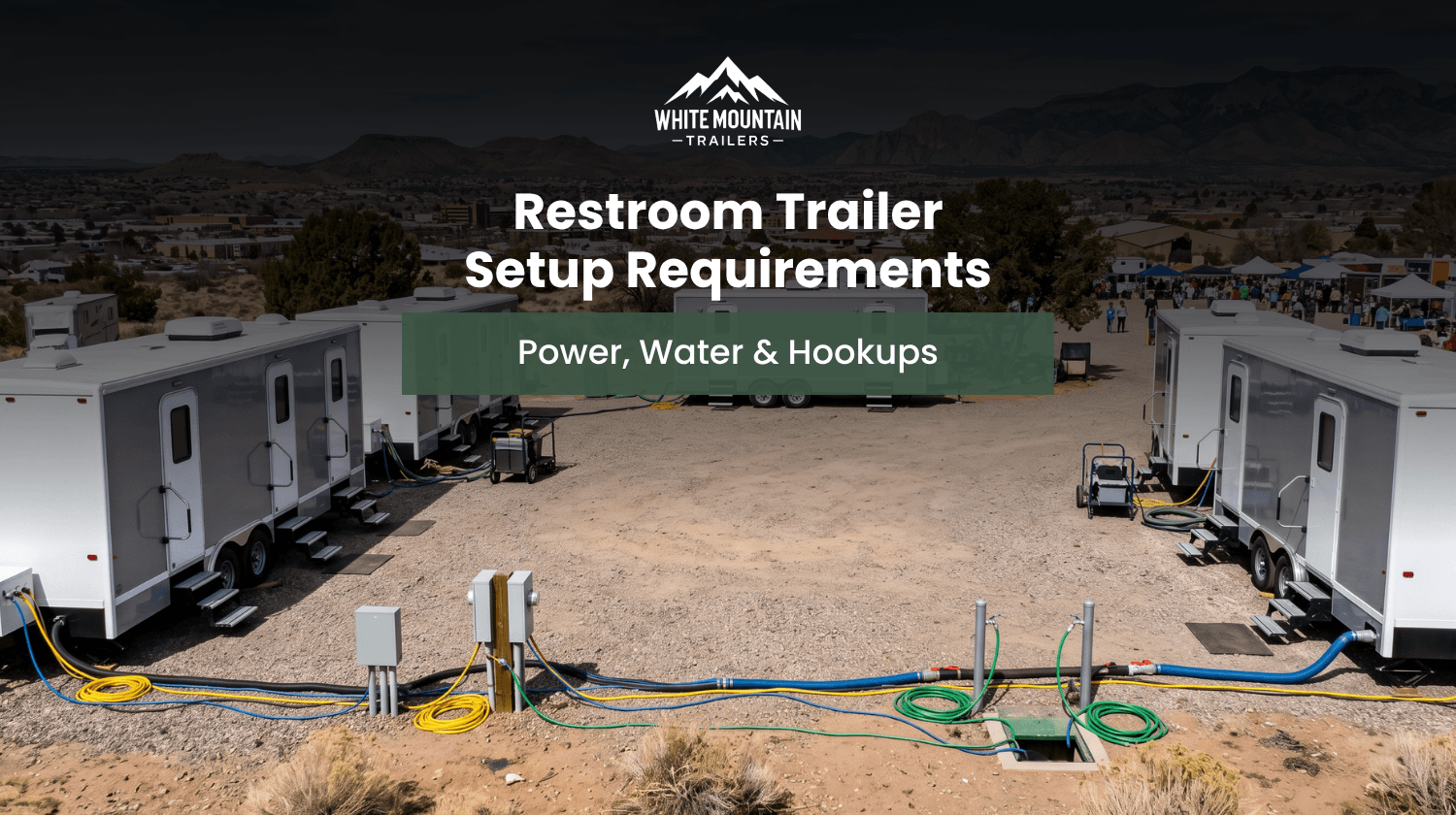
A restroom trailer is a self-contained unit, but “self-contained” doesn’t mean “self-sufficient.” It still needs a power source to run lighting, climate control, and pumps. It still needs a water source to fill its tank. And it still needs a way to manage what comes out the other end.
Skip any one of those, and the trailer doesn’t work the way it’s supposed to — no matter how nice the interior is.
The good news is none of this is complicated. It’s just easy to overlook if nobody’s asked about it before delivery day. A little planning here saves a lot of stress later.
Power Requirements: Keeping the Lights and Pumps Running
Most restroom trailers run on standard household power, but the details matter more than people assume.
What you’ll typically need:
- A dedicated 20-amp, 110-volt circuit for smaller units
- 30-amp service for larger trailers with multiple stations or added climate control
- A generator as backup for sites without accessible power, especially remote locations or raw land
- Weatherproof, grounded outlets within reach of the trailer’s cord — usually 100 feet or less
Events and job sites without existing electrical service usually rent a generator alongside the trailer. It’s a small add, but it has to be planned for, not figured out the morning of.
Water Requirements: What It Takes to Keep Tanks Full
A restroom trailer needs a fresh water source to fill its onboard tank, either through a direct hookup or a scheduled fill.
What you’ll typically need:
- A standard garden hose connection within 100 feet of the unit
- Adequate water pressure — most units run fine on a typical residential or commercial spigot
- A water buffalo tank or scheduled tanker fill for sites with no hookup nearby
- Freeze protection or heated hose lines for cold-weather rentals
If a site has running water anywhere nearby, the hookup is usually simple. If it doesn’t — construction sites, remote land, undeveloped lots — that’s the detail to flag early. It changes the setup plan entirely.
Waste Hookup Requirements: Where Everything Actually Goes
This is the piece people think about least and need to plan for most.
What you’ll typically need:
- A sewer cleanout connection, if the site has one accessible
- A holding tank with scheduled pump-out service for sites without sewer access
- Level, stable ground for the trailer — waste systems rely on gravity, so the unit can’t sit on a steep grade
- Clear access for a pump truck to reach the trailer for service on multi-day events
This is also where site layout matters most. A trailer parked somewhere a service truck can’t reach is a problem nobody notices until day three of a five-day rental.
A Quick Way to Think It Through
Before your trailer arrives, run through these questions:
- Is there power within 100 feet? If not, you’ll need a generator, and it needs to be arranged in advance.
- Is there a water source nearby? If not, plan for a tank fill or buffalo tank, not a last-minute fix.
- Is there sewer access, or will you need pump-out service? Multi-day events almost always need one scheduled.
- Is the ground level and accessible? Service trucks and gravity-based systems both need it.
If you’re unsure about any of these, ask before delivery day, not after. A quick site check by the rental company almost always catches what a phone description misses.
Get the Setup Right the First Time
Sizing your restroom trailer is only half the job. The other half is making sure the site is actually ready for it — power, water, and waste all sorted out before the truck shows up. Get it right, and the trailer runs quietly in the background for the whole event or job. Get it wrong, and it’s the first thing anyone notices.
White Mountain Trailers has been setting up restroom trailers for events, job sites, and properties across Northern Arizona — from Flagstaff to Pinetop-Lakeside — for two generations. Tell us about your site, and we’ll help you plan the hookups before delivery day, not after.
Call 928-532-2434 or visit wmtrailers.com to walk through what your site needs.