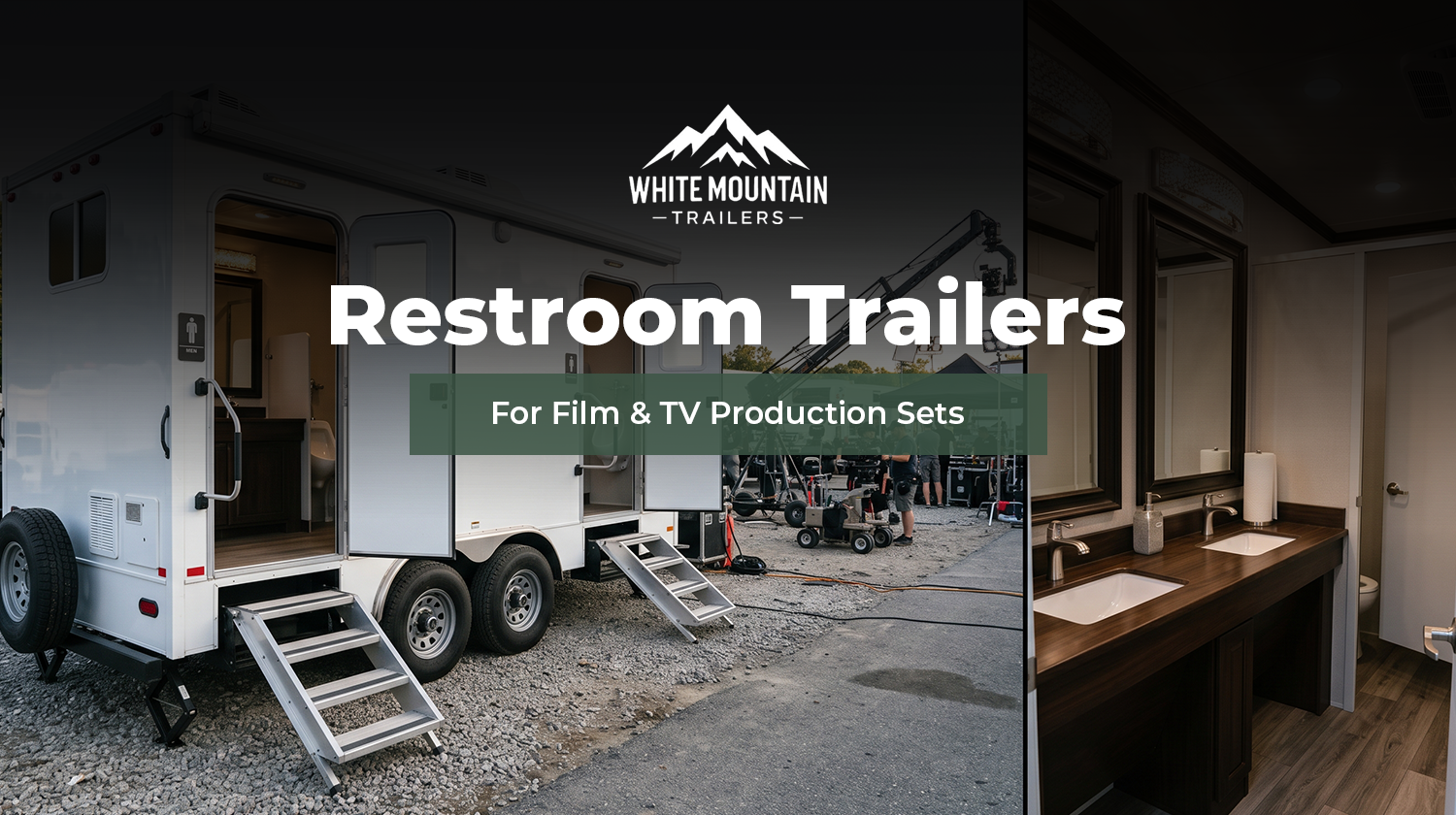
A location manager once called us on a Thursday for a shoot starting Monday. The crew was 60 people deep, the location was a working ranch with no plumbing for half a mile in any direction, and the production schedule had zero room to slip. “I need this to just work,” she said. “I don’t have time to think about bathrooms once we’re rolling.” That’s basically the whole job when it comes to set restrooms — they need to disappear into the background so the crew can focus on the shot.
Film and TV productions run on tight schedules, tighter budgets, and a lot of moving people. A restroom trailer might seem like a small line item next to lighting rigs and catering, but on a real set, it affects turnaround time, crew morale, and sometimes even the shooting schedule itself. Get it wrong, and you’ll hear about it by lunch.
Key Takeaways
- Set restrooms need to run on generator or battery power, not just shore power, since most locations don’t have a hookup.
- Quiet operation matters more on a film set than almost anywhere else — HVAC and generators that hum too loud can bleed into audio takes.
- Talent and crew often need separate, private facilities, especially for wardrobe changes or quick costume fixes.
- Fast turnaround between locations is a real factor — ask about tow time and setup speed before booking.
Why Production Sets Need a Different Kind of Restroom Trailer
A restroom trailer for a backyard wedding just needs to look nice and function well. A restroom trailer for a film set needs to do that and survive being towed to three different locations in one week, run without shore power, and stay quiet enough not to interrupt a sound mixer’s take.
This is the search intent behind terms like “production restroom trailer” and “film set restroom rental” — people looking for this aren’t planning an event, they’re solving a logistics problem with a hard deadline attached. That changes what actually matters in a rental.
Would a director stop rolling because a generator hummed too loud in the background? It happens more than people expect. The restroom trailer is rarely the star of the story, but it can absolutely become one if it causes a problem.
Generator and Off-Grid Power Options
Most filming locations — ranches, remote landscapes, industrial lots, closed-off streets — don’t have a power hookup waiting for a restroom trailer. Units built for production work need to run cleanly on generator power or battery packs, without flickering lights or losing water pressure mid-scene.
Ask directly whether the trailer can run fully off-grid for a full shooting day, typically 10 to 14 hours, and what backup exists if the generator needs fuel or servicing mid-shoot. A trailer that dies at hour eight is worse than no trailer at all, because now it’s an unplanned break in the schedule.
Quiet Operation for Sound-Sensitive Shoots
Sound departments are picky for good reason — a hum in the background can ruin an otherwise perfect take. Restroom trailers with standard HVAC or loud generators can create exactly that kind of background noise if they’re placed anywhere near the shooting area.
Look for trailers with quieter generator options or the ability to run HVAC on a lower, less noisy setting during active takes. It’s also worth asking your rental company how far the unit needs to sit from set for sound purposes — placement matters just as much as the equipment itself.
Fast Setup, Fast Teardown, Fast Move
Multi-location shoots are common in film and TV work, and a restroom trailer that takes hours to set up or break down eats directly into the shooting day. Production-ready trailers should tow easily, set up quickly on uneven or unpaved ground, and break down fast enough to keep pace with a moving crew.
If your schedule includes more than one location in a single day or week, ask about tow time between sites and whether the rental company can handle same-day moves. Not every trailer or every company is built for that pace — some are designed to sit in one spot for a whole event and stay there.
Separate Facilities for Talent, Crew, and Extras
On larger productions, talent often needs private, secure facilities separate from general crew — sometimes for quick costume changes, sometimes simply for privacy away from a busy set. A trailer with a private stall or a dedicated small unit for talent solves this cleanly, without pulling someone off set to walk to a distant trailer.
Crew and background talent, meanwhile, usually need enough stalls to avoid long lines during short breaks between setups. Productions with 50 or more crew members should plan for multiple stalls, not a single unit, to keep breaks from eating into the schedule.
Durability for Rough Terrain and Long Shoot Days
Location shoots don’t always happen on flat, paved lots. Deserts, ranches, forests, and industrial sites all put real strain on a trailer’s tires, suspension, and leveling system. A unit built for weddings and backyard events may not hold up to the same conditions a multi-week location shoot demands.
Ask your rental company whether their fleet is rated for rough or unpaved terrain, and how they handle leveling on uneven ground. A trailer that isn’t level creates real plumbing problems — not just a minor inconvenience, but a full unit going down mid-shoot.
Questions Production Coordinators Should Ask Before Booking
A short list of direct questions can save a lot of headaches once cameras start rolling:
- Can the unit run fully off-grid on generator or battery power for a full shoot day?
- How quiet is the generator, and how far from set should it sit?
- What’s the setup and teardown time, and can the crew handle same-day moves?
- Is a separate, private unit available for talent?
- Is the trailer rated for unpaved or uneven terrain?
- What’s the turnaround time if something breaks mid-shoot?
A rental company with real production experience should answer these without hesitation — and should be honest if a specific unit isn’t built for the terrain or schedule you’re working with.
Frequently Asked Questions
Can restroom trailers run without a power hookup on location?
Yes, many production-ready trailers run on generator power or battery packs, allowing full off-grid operation for a typical 10 to 14 hour shoot day. It’s worth confirming runtime and backup power options directly with the rental company before booking a remote location.
How many stalls does a film crew of 50 to 75 people need?
For a crew that size, most productions book a multi-stall trailer with at least 3 to 4 stalls to avoid long lines during short breaks between setups. Larger crews or productions with talent needing separate facilities may need an additional smaller unit as well.
Are restroom trailers quiet enough for sound-sensitive filming?
Standard units can produce noticeable generator or HVAC hum, which can interfere with audio takes if placed too close to set. Ask specifically about quieter generator options and recommended placement distance to avoid sound issues during filming.
How quickly can a restroom trailer be moved between filming locations?
Setup and teardown time varies by unit size and terrain, but production-ready trailers are generally built for faster turnaround than standard event trailers. Confirm same-day move capability directly with your rental company if your schedule includes multiple locations.
Do restroom trailers work on unpaved or remote filming locations?
Many trailers are rated for rough or unpaved terrain, but not all — this varies by rental company and unit. Ask directly about terrain rating and how leveling is handled on uneven ground, since an unlevel trailer can cause real plumbing problems mid-shoot.
Ready to Plan Restrooms for Your Next Production?
Film and TV shoots don’t leave room for equipment that can’t keep pace — restroom trailers included. The details that matter most on a production set are generator readiness, quiet operation, fast setup, and durability on rough terrain, not just finishes and style.
White Mountain Trailers has supported film, TV, and commercial productions across Northern Arizona, from Flagstaff to Pinetop-Lakeside, for two generations. We’ll walk you through exactly which unit fits your shooting schedule and location — no surprises once the cameras roll.
Call 928-532-2434 or visit wmtrailers.com to talk through your production’s needs.