Every temporary worksite or event eventually faces the same question: what kind of restroom setup actually fits the job? The answer isn’t always obvious. Porta potties and restroom trailers both solve the same basic problem — providing sanitation where permanent plumbing doesn’t exist — but they serve very different needs, budgets, and guest expectations.
Choosing between them isn’t just about cost. It’s about matching the unit to the crowd size, the length of the event, and the impression you want to leave on guests, clients, or crew. Understanding the real differences helps site managers and event planners avoid an awkward mismatch on the big day.
What Is a Porta Potty?
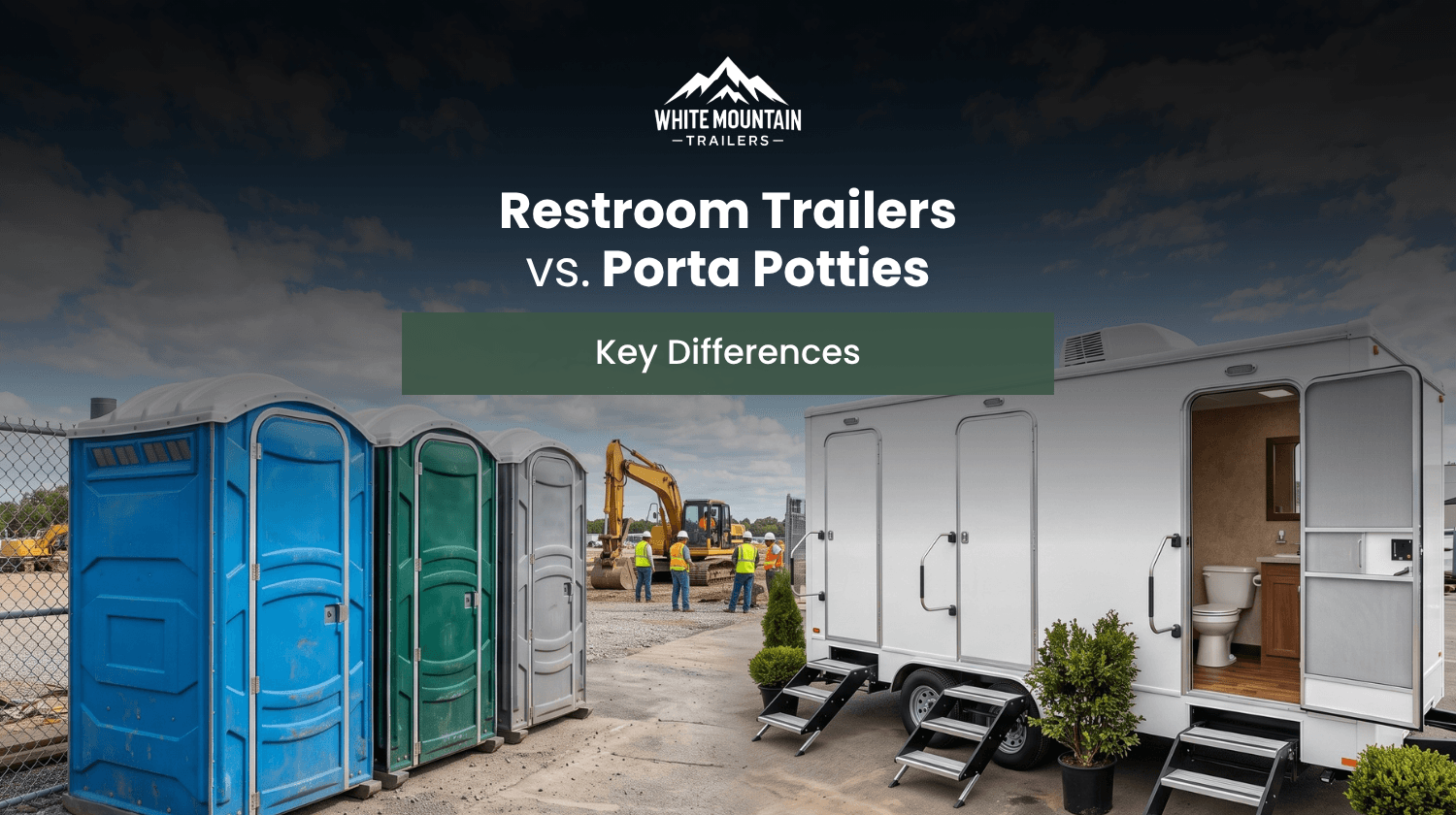
A porta potty is a single-occupancy, self-contained restroom unit built for simplicity and speed. It requires no water or sewer hookup, holds waste in an internal tank, and can be dropped off or picked up in minutes. It’s the standard choice for construction sites, small outdoor gatherings, and any job where budget and basic function matter more than comfort.
Porta potties typically offer:
Compact single-stall design that fits tight spaces; no water or electrical hookup required; low rental cost per unit; fast delivery, setup, and removal; options like hand sanitizer dispensers or hand-washing stations add-ons
What Is a Restroom Trailer?
A restroom trailer is a towable unit housing multiple private stalls, real flushing toilets, sinks with running water, and often climate control. Instead of a single closet-sized space, guests step into something that feels closer to a permanent restroom — private, climate-controlled, and finished with real fixtures.
Restroom trailers typically offer:
Multiple stalls to handle higher guest volume; flushing toilets and sinks with running water; climate control for hot or cold weather events; interior finishes like lighting, mirrors, and flooring; separate compartments for men and women on larger units
Key Differences at a Glance
Capacity and Wait Times
A porta potty serves one person at a time, which works fine for smaller crews or short events but creates long lines once guest counts climb. A restroom trailer’s multiple stalls spread out demand, keeping lines short even during peak hours like a wedding reception or a festival headliner set.
Comfort and Experience
Porta potties are built for function, not comfort — enough for a job site, but not always what guests expect at a wedding or corporate event. Restroom trailers are designed to feel like an extension of the venue, with amenities that make guests forget they’re using a temporary facility at all.
Water and Plumbing
Porta potties never need a water or sewer connection, which makes them easy to place almost anywhere. Restroom trailers usually run on a self-contained fresh water and holding tank system, though some larger setups can tie into an existing water source for extended events.
Cost Considerations
Porta potties cost less per unit and less to service, making them the practical choice for tight budgets or purely functional job sites. Restroom trailers cost more upfront but deliver a very different guest experience, which often justifies the price for events where appearance and comfort matter.
Setup and Mobility
Porta potties are lightweight and can be placed almost anywhere with a flat surface, including tight or uneven job sites. Restroom trailers need a level, accessible spot for towing and hookup, so site access and layout matter more during planning.
When Construction Sites Should Choose Porta Potties
For most construction projects, porta potties remain the standard. Crews need functional, code-compliant restrooms without unnecessary cost, and porta potties meet OSHA sanitation requirements without added expense. They’re also easier to relocate as work progresses across a large site.
Construction projects favor porta potties for:
Meeting OSHA sanitation requirements at minimal cost; easy relocation as the job site footprint changes; durability in rough, high-traffic conditions; simple servicing schedules for long-term rentals
When Events Should Choose Restroom Trailers
Weddings, corporate events, and upscale festivals are where restroom trailers earn their keep. Guests notice sanitation quality more than almost any other detail at an event, and a well-appointed trailer can elevate the entire experience rather than becoming the thing everyone complains about.
Events favor restroom trailers for:
A polished, upscale guest experience; climate control for comfort in extreme weather; enough capacity to prevent long lines; a better match for formalwear and higher-end venues
Hybrid Situations: When Sites Need Both
Larger construction projects and multi-day festivals often use both. Porta potties handle daily crew needs in work zones, while a restroom trailer serves VIP areas, staff offices, or guest-facing spaces. Combining the two lets planners control costs while still delivering a better experience where it matters most.
Common Myths About Restroom Trailers and Porta Potties
Myth: Restroom trailers always need a permanent water hookup. Most restroom trailers are self-contained, arriving with their own fresh water and holding tanks that get serviced on a set schedule, just like porta potties.
Myth: Porta potties are too basic for any professional event. Upgraded porta potty units with hand-washing stations and better ventilation work fine for casual or budget-conscious gatherings where full trailers aren’t necessary.
Myth: Restroom trailers are only for weddings. Corporate events, film sets, disaster relief operations, and even long-term construction offices use restroom trailers whenever comfort or capacity is a priority.
Myth: One type always beats the other. The right choice depends entirely on guest count, event duration, budget, and the impression the site or event needs to make — not a fixed rule.
Choosing the Right Fit for Your Site or Event
Before deciding, it helps to weigh a few practical factors:
Expected guest or crew count and peak usage times; length of the rental period; budget for both rental and servicing; site access for delivery, towing, and hookup; the overall tone or experience the space needs to deliver
Final Thoughts: Matching the Restroom to the Job
Porta potties and restroom trailers both solve the same core problem, but they’re built for different situations. A porta potty gets the job done affordably and efficiently on a work site, while a restroom trailer turns a temporary necessity into a comfortable, even upscale, part of the guest experience. Knowing which one fits your event or project is the difference between a smooth day and a line of frustrated guests.
If you’re not sure which option makes sense for your next project or event, it’s worth reaching out to a local sanitation rental provider to walk through guest counts, site logistics, and budget before making a final call.