A guy planning a 150-person backyard wedding in Pinetop called us, convinced he needed our biggest unit — the same trailer we’d send to a three-day music festival. When we walked through his actual guest count, his four-hour reception window, and the fact that half his guests would be seated at dinner for most of the night, the math changed fast. He didn’t need six stalls. He needed two, done right.
That’s the question we get more than almost any other: how many stalls do I actually need? And the honest answer is that “bigger” isn’t automatically “better.” The right call depends on your guest count, your event length, and how people move through the space — not just how big the number on the flyer looks.
Here’s how to actually tell the difference.
What a Single-Stall Trailer Is Built For
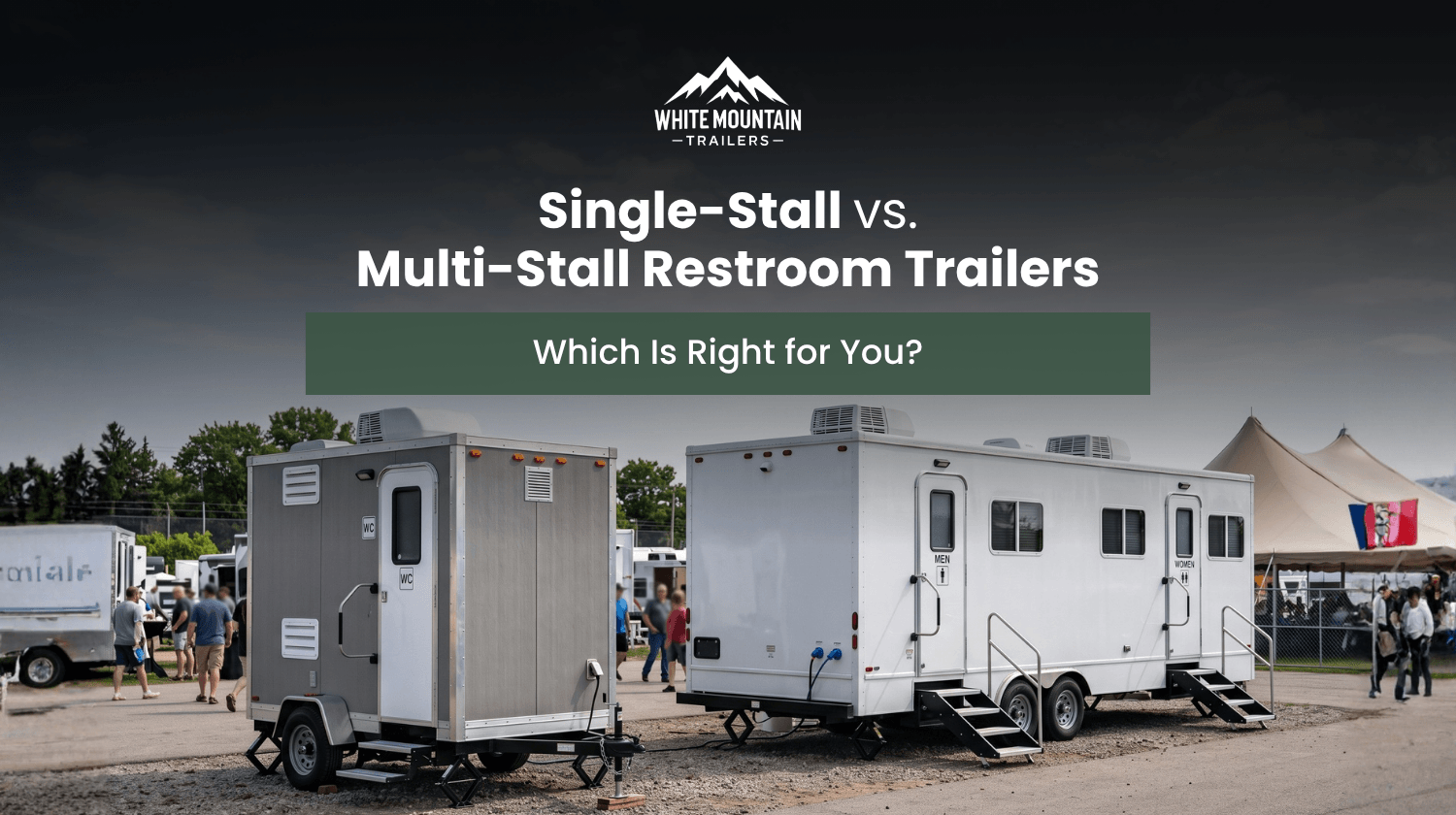
A single-stall trailer is exactly what it sounds like — one self-contained restroom, sometimes with a small sink and mirror, sometimes split into a men’s and women’s side within the same unit.
Where it works best:
- Small gatherings — think 50 guests or fewer
- Short events, typically under four hours
- Backyard weddings, intimate parties, or private property with limited space
- Job sites with a small, steady crew rather than large shift changes
The upside is simple: it’s compact, easy to place on tighter lots, and there’s a lot less plumbing and power draw to manage. The tradeoff is capacity. If your guest count creeps up or your event runs long, a single stall gets a line fast — and nothing kills party energy like a bathroom line.
What a Multi-Stall Trailer Is Built For
Multi-stall trailers scale up from there — typically 2 to 8 stalls, often split evenly between men’s and women’s sides, sometimes with a separate ADA-accessible stall built in.
Where it works best:
- Weddings and events over 75 guests
- Multi-day festivals, fairs, or tournaments
- Job sites with large or rotating crews
- Any event where a lot of people need access in a short window — think a wedding reception right after the ceremony ends
More stalls means more simultaneous access, which matters more than total headcount alone. A 100-person cocktail hour with everyone up and moving needs more capacity than a 100-person sit-down dinner where guests trickle to the restroom in smaller waves.
It’s Not Just About Guest Count
This is the part people miss. Two events with the same number of guests can need completely different setups, depending on how the crowd behaves.
A seated dinner spreads restroom use out over hours. A dance floor with an open bar sends people in bursts. A construction site with one shift is different from one running two overlapping crews. The question isn’t just “how many people,” it’s “how many people, how fast, and for how long.”
A few things that push you toward more stalls, even with a modest guest count:
- An open bar or extended cocktail hour
- An event longer than four hours
- A layout where the restroom trailer is the only option nearby
- Any event where guests will be standing and mingling rather than seated
A Quick Way to Decide
Run through these before you book:
- How many total guests, and what’s the mix of standing vs. seated time?
- How long is the event — a four-hour reception or an all-day festival?
- Is there an open bar, or will drink and food service create rush periods?
- Is this the only restroom option, or is there a backup nearby?
- Is the site tight enough that a smaller footprint matters more than stall count?
If you’re landing in the middle — say, 60 to 80 guests with a mixed seated-and-standing event — that’s usually where a mid-size multi-stall unit earns its keep. It’s the range where a single stall runs short, and the biggest trailers are overkill.
Get the Sizing Right the First Time
Picking between single-stall and multi-stall isn’t about going as big as the budget allows. It’s about matching the unit to how your specific event actually moves — guest count, event length, and crowd behavior all included. Get it right, and nobody thinks about the restroom trailer all night. Get it wrong, and it’s the only thing anyone remembers.
White Mountain Trailers has been sizing restroom trailers for events, job sites, and properties across Northern Arizona — from Flagstaff to Pinetop-Lakeside — for two generations. Tell us about your event, and we’ll help you land on the right unit before you book, not after.
Call 928-532-2434 or visit wmtrailers.com to walk through what your event needs.