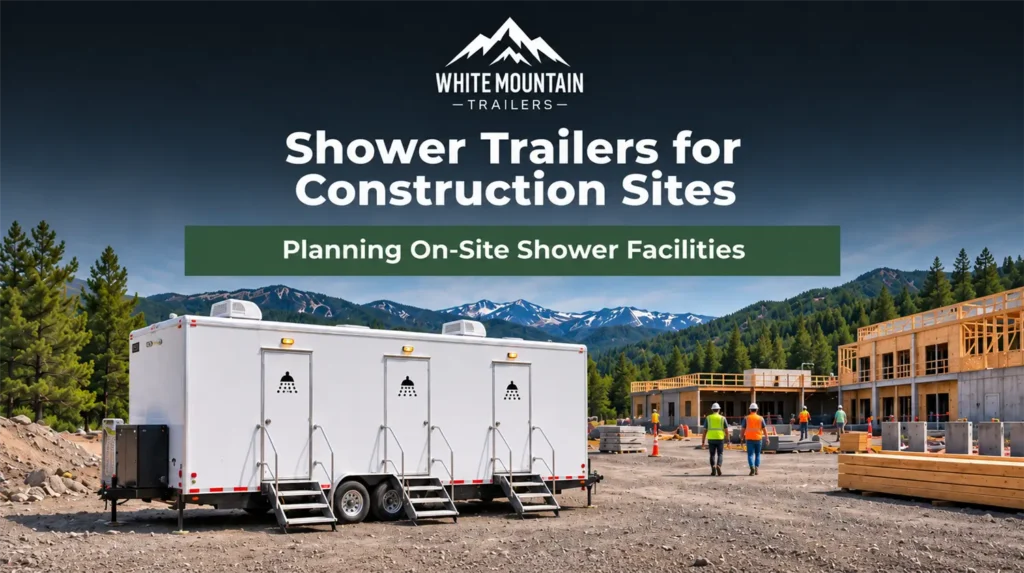
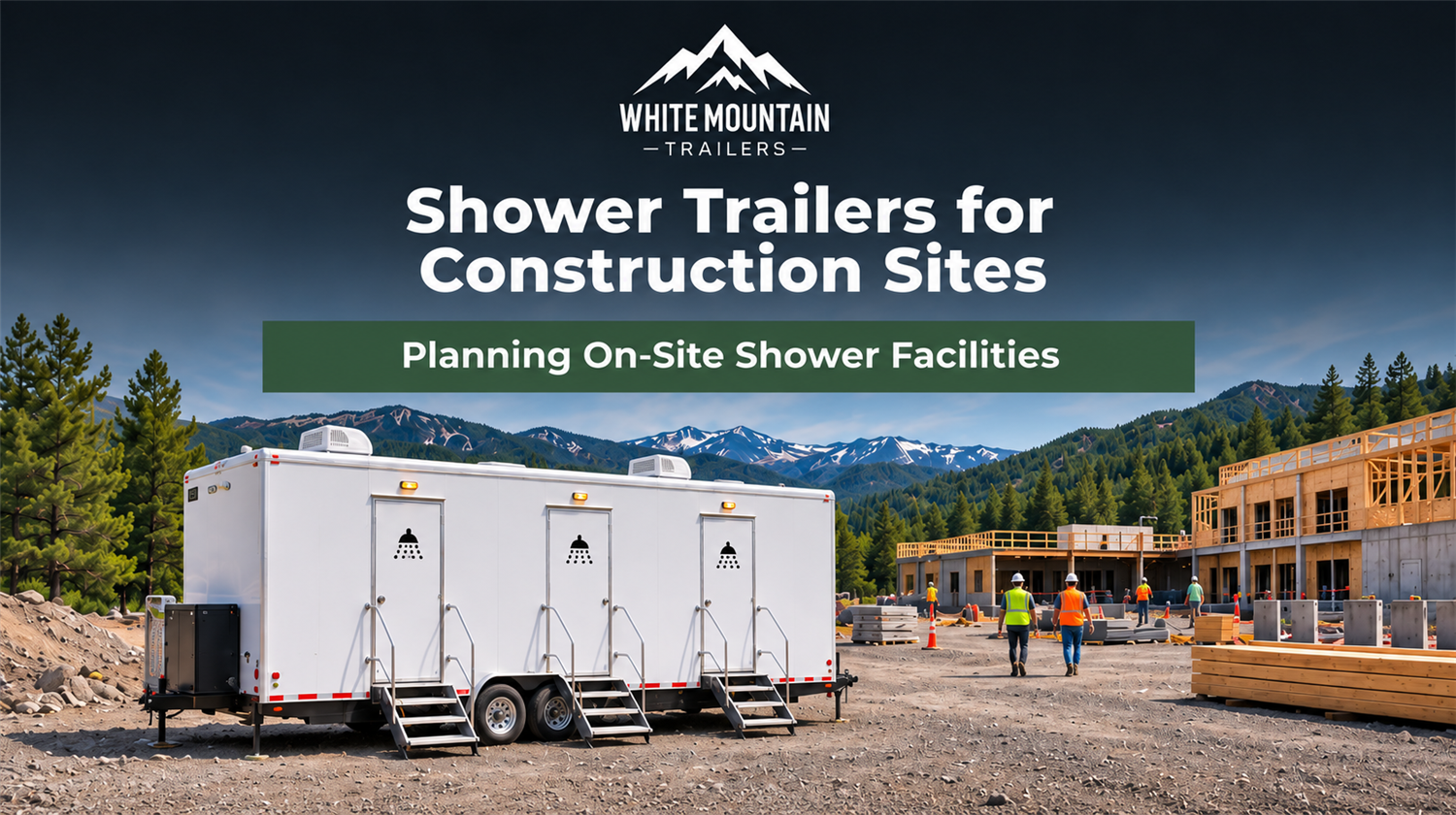
Some construction projects require more than standard restroom facilities. When workers spend long periods on remote sites, work in demanding conditions, or stay in workforce accommodation near the jobsite, access to showers may become an important part of site planning.
A portable shower trailer can provide an enclosed shower facility without requiring a permanent building. However, choosing a suitable unit involves more than counting the number of shower stations. Contractors and site managers also need to consider workforce size, daily usage, placement, water supply, wastewater handling, power, and servicing.
For construction projects in Northern Arizona, including Show Low and surrounding communities, these considerations should be reviewed before arranging delivery. White Mountain Trailers is a family-run business with two generations of trailer-building experience and offers mobile shower and custom trailer solutions for different applications.
This guide covers the main planning considerations for using shower trailers on construction sites.
1. Establish Why the Site Needs Shower Facilities
Start by identifying the reason showers are needed.
Not every construction project requires on-site showers. A short project with workers returning home at the end of each shift may have different requirements from a remote project with workforce accommodation.
Shower facilities may be worth considering when:
- Workers stay in accommodation near the jobsite
- The project is located far from nearby facilities
- The work involves conditions where workers need to shower before leaving the site
- The site operates for an extended period
- Multiple shifts or teams share the same facilities
- The project has a planned workforce accommodation area
The intended use will influence the number of shower stations, layout, operating schedule, and servicing plan.
2. Estimate the Number of Users and Daily Demand
The number of workers assigned to a project does not automatically tell you how many shower stations are needed.
Consider how many workers are likely to shower during the same period. For example, workers finishing a shift at a similar time may create a short period of higher demand.
A useful planning estimate should account for:
- Total number of workers using the facility
- Number of workers staying on or near the site
- Shift start and finish times
- Expected shower frequency
- Time available for workers to use the facility
- Whether multiple crews share the same unit
If workers finish at different times, demand may be spread across a longer period. If several teams finish together, the facility may experience a concentrated rush.
For additional guidance on estimating demand, read How to Calculate Portable Shower Trailer Capacity for a Multi-Shift Workforce.
3. Select a Configuration That Fits the Project
Shower trailers are available in different layouts and station counts. The appropriate configuration depends on the number of users, available space, and the way the facility will operate.
WM Trailers describes shower trailer options with different station configurations, including 2–4 and 6–8 station arrangements. Combination restroom and shower configurations are also available.
However, the number of stations alone should not determine the choice. Review the complete layout, including privacy, access, interior space, and the expected flow of users.
Depending on the selected model, features may include private lockable stalls, drying areas, hot and cold water, non-slip flooring, LED lighting, insulation, and HVAC. Confirm which features are included in the specific configuration being considered.
Explore WM Trailers’ portable shower trailers for available configurations and product information.
4. Choose a Suitable Location on the Jobsite
The placement of a shower trailer can affect convenience, safety, and daily operations.
The unit should be positioned where workers can reach it without crossing active equipment routes or interfering with construction activity. It should also remain accessible for delivery, maintenance, and servicing.
Before selecting a location, review:
- Available space for the trailer
- Ground conditions and level placement
- Access for delivery vehicles
- Safe pedestrian routes
- Distance from worker accommodation or designated facilities
- Drainage and wastewater arrangements
- Access for service vehicles
- Any site restrictions that affect positioning
On a large project, the most convenient location may change as construction moves from one phase to another. Consider whether the original location will remain practical throughout the planned use period.
Discuss placement with the provider before delivery rather than waiting until the trailer arrives.
5. Confirm Water Supply and Wastewater Handling
Water supply and wastewater management are essential parts of shower trailer planning.
A shower facility needs an appropriate source of water and a suitable way to handle wastewater. Depending on the selected model, the setup may use onboard tanks, external connections, or a combination of arrangements.
Before ordering, ask the provider to confirm:
- Freshwater capacity and supply requirements
- Wastewater storage or discharge arrangements
- Whether external connections are needed
- The expected water demand for the intended use
- How often tanks or wastewater systems need servicing
- Whether the site can accommodate the required service access
Do not estimate water capacity based only on the number of shower stations. Actual demand depends on user numbers, shower duration, operating hours, and the selected equipment.
A site manager should also identify who will monitor water levels and coordinate wastewater servicing.
6. Check Power and Operating Requirements
Some shower trailer features may require electrical power. Depending on the configuration, this can include lighting, ventilation, HVAC, or other installed equipment.
Before delivery, confirm the power requirements of the specific unit.
Ask whether the trailer requires an external power connection or has another power arrangement. Also clarify the required supply, connection location, and any site preparation needed.
If the project is remote, power availability should be assessed early. Do not assume that a trailer’s power setup will automatically match the site’s electrical infrastructure.
7. Plan for Privacy, Cleaning, and Maintenance
A shower facility should be practical for daily use, not just suitable on delivery day.
Review the interior layout and confirm that the selected configuration provides the privacy and user flow required by the project. Lockable stalls, appropriate changing or drying areas, and suitable flooring may be important depending on the model.
The site manager should also establish a routine for:
- Cleaning shower areas
- Checking water supply
- Monitoring wastewater capacity
- Inspecting doors, locks, and fixtures
- Reporting maintenance issues
- Coordinating scheduled servicing
Responsibility for cleaning and maintenance should be agreed upon before the facility becomes operational.
8. Consider Whether Restroom Facilities Are Also Needed
A shower trailer does not necessarily replace a separate restroom facility.
If workers need both showers and toilets, plan for both functions. Depending on the project, separate facilities may be appropriate, while a combined configuration may be worth evaluating.
The decision should be based on the number of users, site layout, privacy requirements, available space, and operating arrangements.
WM Trailers has a separate article covering the planning considerations for combined shower and restroom facilities: Portable Shower Trailers with Restroom Combinations: Is One Unit Enough?.
Review that guidance alongside the requirements of the specific construction project.
9. Prepare for Delivery Before the Trailer Arrives
A delivery plan helps the project team avoid last-minute site changes.
Before scheduling delivery, confirm:
- The delivery route and site entry point
- Available turning and maneuvering space
- The proposed parking or placement area
- Ground conditions
- Utility access, if required
- Water and wastewater arrangements
- Site contact for delivery coordination
- Any access restrictions or site operating hours
The selected trailer’s dimensions and connection requirements should be confirmed with the provider. A location that looks large enough on a site plan may not provide enough room for delivery and positioning.
Jobsite Shower Trailer Planning Checklist
Planning area | Questions to resolve |
Intended use | Why does the project need showers? |
Workforce | How many people will use the facility? |
Schedule | When will demand be highest? |
Configuration | How many stations and what layout are required? |
Placement | Is there suitable space and safe access? |
Water | How will the unit receive freshwater? |
Wastewater | How will wastewater be stored or removed? |
Power | What electrical supply does the model require? |
Maintenance | Who handles cleaning and routine checks? |
Delivery | Can the trailer reach and fit the planned location? |
Frequently Asked Questions
Are shower trailers suitable for construction sites?
They may be suitable for projects where workers need on-site shower facilities, particularly when the site is remote or includes workforce accommodation. Suitability depends on user demand, configuration, utilities, placement, and servicing.
How many shower stations does a construction site need?
The required number depends on the number of users, shift schedules, shower frequency, and the time available for use. Estimate peak demand rather than relying only on the total workforce.
Do portable shower trailers need an external water connection?
Requirements vary by model. Some configurations may use onboard water storage, while others may require external connections. Confirm the selected unit’s specifications before delivery.
How is wastewater handled?
Wastewater arrangements depend on the trailer configuration and site setup. Confirm the storage or discharge method and servicing requirements with the provider.
Should a construction project choose a combined shower and restroom trailer?
That depends on the project’s needs, available space, user demand, and preferred layout. Compare the requirements for both functions before choosing a combined or separate arrangement.
What should a site manager confirm before delivery?
Confirm the delivery route, placement area, ground conditions, required utility connections, water and wastewater arrangements, and access for servicing. The provider should also confirm the selected trailer’s dimensions and operating requirements.
Plan Your On-Site Shower Facilities
Planning shower facilities involves more than selecting a trailer with enough stations. Workforce demand, site placement, water supply, wastewater handling, power, privacy, and maintenance all affect whether the setup will work well throughout the project.
White Mountain Trailers offers portable shower and custom mobile trailer solutions for different applications. To discuss your construction site’s requirements, contact White Mountain Trailers and share your expected workforce, project location, and facility needs.