We got a call a few years back from an event coordinator running a three-day festival outside Show Low. Attendance was higher than she’d planned for, and by day two, the restroom trailers she’d rented from a competitor were drawing complaints — not about lines, but about smell. Guests were walking in, wrinkling their noses, and walking right back out. She called us mid-event; we swapped in a unit with a proper ventilation system, and the complaints stopped by that afternoon.
That’s usually how people first realize air quality in a restroom trailer isn’t a minor detail — it’s the difference between a facility people are willing to use and one they avoid. Here’s what actually drives air quality in these units, and what to look for before you book one.
Why Air Quality Matters More Than People Expect
A restroom trailer is a small, enclosed space that gets heavy use in a short window of time. Without the right airflow, odors build fast, humidity climbs, and the space starts to feel unpleasant well before it’s actually dirty. Good air quality isn’t just about comfort, either — it affects how clean the unit feels, how long it stays that way between servicing, and whether people are willing to use it at all.
For events, that translates directly into guest experience. For job sites, it affects whether crews actually use the facility instead of avoiding it, which creates its own problems. Either way, air quality is doing more work than most people give it credit for.
What Actually Causes Poor Air Quality in a Trailer
A few things tend to be behind it, and they usually compound each other:
- Weak or absent ventilation systems that don’t exchange air fast enough for the number of users
- Waste tanks that are undersized for the crowd or crew, filling faster than expected
- High humidity from showers or heavy handwashing use, especially in enclosed units
- Servicing schedules that don’t match actual usage volume
- Cheap deodorizing methods that mask odor temporarily instead of managing airflow
Most of these come down to one root issue: the unit wasn’t sized or ventilated for how it was actually going to be used. Ask your rental company how the unit handles airflow — a real ventilation system, not just a vent stack, makes a bigger difference than people assume.
How Ventilation Systems Actually Work
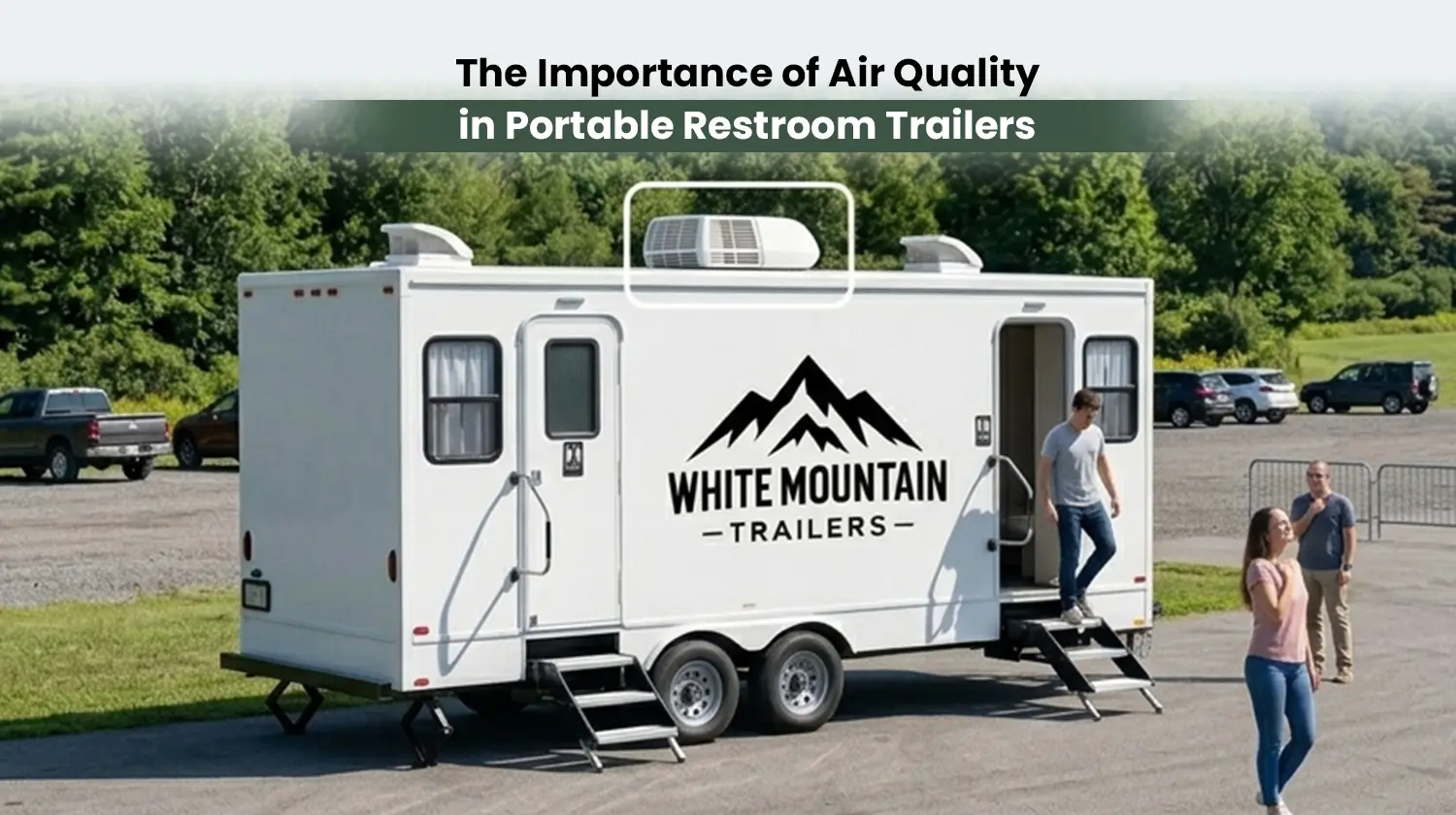
Quality restroom trailers use powered ventilation — fans that continuously pull air out of the unit and draw fresh air in — rather than relying on passive vents alone. This does two things: it keeps odors from accumulating, and it manages humidity so surfaces don’t stay damp between cleanings.
Climate-controlled units take this further with HVAC systems that regulate temperature alongside airflow, which matters more than people expect in Northern Arizona’s swings between summer heat and high-elevation cold. A unit that’s too hot or too humid inside doesn’t just smell worse — it becomes a space people rush through instead of one they’re comfortable in.
If you’re comparing trailers, ask specifically whether the unit has powered ventilation and climate control, or just a vent stack and a fan. The difference shows up fast once real usage starts.
Servicing Frequency and Its Effect on Air Quality
Even the best ventilation system can’t outpace a tank that’s filling faster than it’s being serviced. This is where a lot of rentals go wrong — the unit was sized and serviced for a lighter crowd than what actually showed up.
Here’s what tends to fix it: match the servicing schedule to your actual headcount and hours of use, not a generic default, and build in a mid-event or mid-week service for anything running more than a couple of days at real capacity. If you’re not sure what that schedule should look like, this is exactly the kind of question your rental company should be able to answer before you book, not after complaints start coming in.
Climate and Location Make a Real Difference
Air quality problems show up faster in some conditions than others. Heat accelerates odor buildup. High humidity slows evaporation and keeps things damp longer. Elevation and temperature swings — common across Northern Arizona from Flagstaff down to the White Mountains — can affect how well a unit’s ventilation system performs if it wasn’t built for those conditions.
A trailer that works fine for a mild spring weekend in the Verde Valley might need a different setup for a July job site in Payson or a windy fall event at elevation. It’s worth mentioning your specific location and season when you’re booking, since it genuinely changes what setup makes sense.
What to Ask Before You Book
A few direct questions upfront save a lot of headaches later. Does the unit have powered ventilation, or passive vents only? Is climate control included, and is it sized for the number of stalls? What’s the servicing schedule based on, and does it account for your actual expected usage? A rental company that’s set up trailers across different climates and crowd sizes should be able to answer all three without hesitation.
Still Not Sure What Your Event or Site Needs?
Air quality isn’t something you can eyeball from a spec sheet — it depends on your crowd size, your climate, and how long the unit needs to hold up.
White Mountain Trailers has set up restroom trailers across Northern Arizona, from Flagstaff to Pinetop-Lakeside, for two generations, and we can tell you honestly what a given site or event actually needs before you book.
Call 928-532-2434 or visit wmtrailers.com to talk through your setup.