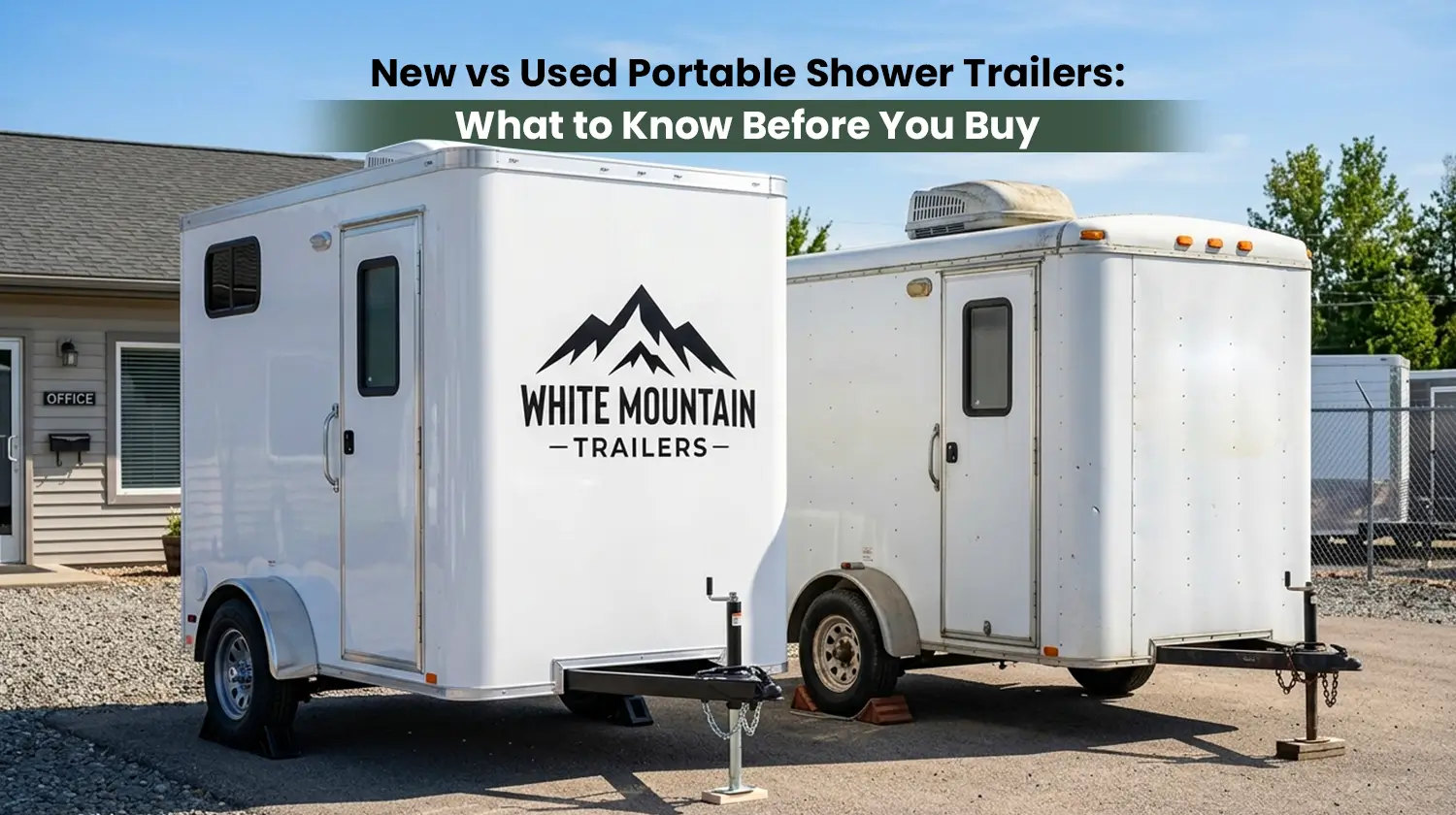
A landscaping company owner near Show Low called us after finding what looked like a great deal on a used shower trailer online — half the price of new, and the seller swore it had “barely been used.” He asked us to take a look before he wired a deposit. Two things stood out right away: the water heater had clearly been replaced with a residential unit that wasn’t built for road use, and the holding tank sensors didn’t work at all. What looked like a steal would have cost him more in repairs than the savings were worth.
That’s the core risk with buying used — the trailer that looks fine in photos and the trailer that’s actually sound aren’t always the same thing. Buying new isn’t automatically the right call either. Here’s what actually matters when you’re deciding.
Why People Consider Buying at All
Most of our customers rent. But for companies running trailers on a near-constant basis — event businesses, larger contractors, property management companies with recurring needs — owning can eventually make more financial sense than renting every time.
Usual reasons buying comes up:
- Frequent, predictable use that adds up to more than a rental would cost over a year or two
- Wanting full control over scheduling instead of working around a rental company’s availability
- Building out a fleet to rent to others as a business
How to know if you’re actually in this category:
- Add up what you’ve spent on rentals in the last 12 months and compare it to a realistic purchase price plus upkeep
- If your need is seasonal or occasional, renting almost always wins — ownership only pays off with consistent, heavy use
- If you’re unsure, ask a rental company for an honest answer. A good one will tell you if buying doesn’t make sense for your volume.
Upfront Cost Difference
Usual causes of sticker shock either way:
- New trailers carry the full manufacturer price, plus any custom stall configuration or add-ons
- Used trailers can run 30 to 50 percent less, but the range varies enormously based on condition and age
- A used trailer priced far below market usually means something is being hidden or ignored
How to approach it:
- Get quotes on new units first, even if you’re leaning used — it gives you a real baseline for what a “deal” actually looks like
- Budget separately for an inspection before you buy used, not after
- Factor in likely near-term repairs on a used unit, not just the purchase price, when comparing total cost
Mechanical and Plumbing Condition
Usual causes of expensive surprises on used units:
- Water heaters and pumps that have been swapped for non-commercial parts not built for repeated setup and teardown
- Holding tank sensors and gauges that no longer read accurately
- Corrosion or wear in supply lines that isn’t visible without a real inspection
How to fix it:
- Run every faucet, flush every toilet, and check every gauge in person before buying — never rely on a seller’s description alone
- Ask specifically what parts have been replaced and with what — generic residential parts are a red flag on a trailer built for road use
- If you can’t inspect it yourself, hire someone who services trailers professionally to look at it before you commit
Trailer Frame, Axles, and Road-Worthiness
Usual causes of overlooked damage:
- Frame rust or stress cracks from years of towing on rough job-site roads
- Worn tires, bearings, or brakes that weren’t part of the seller’s “recently serviced” claim
- Water damage to the undercarriage that isn’t obvious without getting underneath the unit
How to fix it:
- Physically get under the trailer and check the frame, not just the interior
- Ask for maintenance records on tires, brakes, and axles — a seller with nothing to show is telling you something
- Have the hitch and towing setup checked separately if you plan to move the trailer between sites yourself
Warranty and Support
Usual causes of regret after the purchase:
- New trailers typically come with a manufacturer warranty covering major systems for a set period
- Used trailers usually come with no warranty at all, putting every future repair on you
- Some sellers offer informal guarantees that aren’t enforceable if something goes wrong
How to fix it:
- If buying new, confirm exactly what’s covered and for how long before signing anything
- If buying used, price in the cost of a service contract or an on-call technician relationship, since you won’t have a warranty to fall back on
- Ask whether the seller — new or used — offers any post-sale support, or if you’re entirely on your own once the trailer leaves the lot
Resale Value and Depreciation
Usual causes of a bad long-term outcome:
- New trailers depreciate fastest in the first couple of years, similar to vehicles
- Used trailers hold their value more predictably if properly maintained, since most of the depreciation already happened
- Poor maintenance history follows a used trailer and drags down its resale value even further down the line
How to fix it:
- If you plan to resell in a few years, a well-maintained used trailer can actually be the safer financial bet
- Keep detailed maintenance and service records from day one, regardless of new or used, to protect resale value later
- Ask a dealer or rental company what similar units have resold for — real numbers beat guesswork
When Buying New Makes Sense
New is usually the better call when:
- You’re building a business around the trailer and need it running reliably for years
- You want full warranty coverage and predictable maintenance costs
- You have specific stall configuration or capacity needs that used inventory doesn’t match
- You plan to keep the trailer long enough that the higher upfront cost evens out over time
When Buying Used Makes Sense
Used is usually the better call when:
- You can properly inspect the unit, or have access to someone who can
- The trailer’s maintenance history is documented and available
- Your budget makes new unrealistic, but your usage still justifies ownership over renting
- You’re comfortable handling repairs without manufacturer warranty support
Not Ready to Buy? Renting Might Answer the Question First
If you’re not fully sure how much use you’ll actually get out of owning a trailer, renting for a season before buying tells you more than any spec sheet will. It’s also often the smarter move for anyone whose need turns out to be temporary rather than ongoing.
White Mountain Trailers has rented, serviced, and sold restroom and shower trailers across Northern Arizona, from Flagstaff to Pinetop-Lakeside, for two generations — and we’ll tell you honestly if buying doesn’t make sense for your situation yet.
Call 928-532-2434 or visit wmtrailers.com before you make a decision either way.