In an increasingly dynamic operational landscape, fixed brick-and-mortar facilities frequently pose significant financial liabilities and geographical constraints. Whether managing rapid emergency situations, launching experiential commercial campaigns, or expanding regional healthcare access, organizations require infrastructure that adapts instantly to changing environments.
Rather than anchoring capital in stationary real estate or forcing standard, mass-produced transport units to fit complex technical needs, forward-thinking enterprises deploy custom-built trailers. A purpose-engineered mobile asset transforms specialized tools, heavy equipment, and administrative environments into highly agile, deployable platforms.
Designing structural infrastructure from the ground up allows organizations to control spatial efficiency, weight distribution, and mechanical integration perfectly. This baseline optimization ensures peak performance, long-term durability, and structural resilience under demanding field conditions.
1. Absolute Spatial Optimization and Structural Integration
The primary limitation of standard, pre-manufactured assets is the inefficient use of interior square footage. Mass-produced units enforce fixed dimensions, generic entry configurations, and standardized structural support that rarely aligns with high-density technical equipment or specialized workflows.
Choosing custom mobile trailers or custom enclosed trailers allows engineers to map the interior layout precisely to the user’s specific operational workflows. Heavy power equipment, specialized climate control systems, and sensitive digital arrays can be integrated directly into the structural frame, rather than being retrofitted into weak, unreinforced walls.
This engineering approach maximizes every cubic inch of internal volume. It utilizes integrated under-floor storage compartments, custom heavy-duty tiedowns, overhead rack systems, and slide-out structural pods. This meticulous configuration ensures optimal weight distribution across the axles, which directly enhances highway towing stability, reduces vehicular wear, and minimizes setup time at destination sites when deploying custom utility trailers.
2. Advanced Multi-Climate Utility and Power Autonomy
Field operations frequently require deployments to remote environments lacking reliable access to public municipal grids, stable cellular infrastructure, or temperate weather conditions. Standard commercial mobile trailers lack the thermal resistance and onboard utility architecture needed to protect delicate systems or ensure personnel safety during extended remote operations.
High-tier modular mobile trailers are engineered with advanced thermal envelopes, utilizing continuous spray-foam insulation, heavy thermal breaks, and commercial-grade HVAC systems capable of maintaining stable internal climates from sub-zero environments to desert heat.
To achieve true self-sufficiency, these assets feature integrated power systems, including:
- Onboard diesel or quiet gas generator arrays with high-capacity sub-frame fuel tanks.
- Roof-mounted solar cell configurations paired with industrial lithium iron phosphate ($LiFePO_4$) battery banks.
- Automated power transfer switches that seamlessly transition from shore power to onboard backup systems.
This redundant utility framework transforms specialized assets like mobile command trailers, emergency response trailers, and mobile training trailers into resilient field hubs capable of operating indefinitely without external support.
3. High-Density Mechanical and Specialized Equipment Integration
For specialized service sectors—including medical care, heavy industrial training, and rapid technical communication—a trailer is far more than a simple transport shell. It serves as a precision enclosure for high-value tech arrays that require strict structural stabilization, clean power inputs, and precise environmental control.
For instance, modern mobile medical trailers and mobile healthcare trailers require built-in radiation shielding, sterile storage environments, automated leveling systems, and point-of-use water filtration infrastructure.
Similarly, industrial mobile display trailers and mobile marketing trailers require reinforced, articulating wall panels, integrated hydraulic lifts, and weatherproof exterior LED displays that deploy automatically via electronic control systems. Choosing a custom concession trailers build or specialized mobile event trailers configuration ensures the structural integrity matches the exact culinary or presentation equipment weight demands.
Standard transport units simply cannot support the physical weight or mechanical power needs of these specialized components. Building from scratch ensures that the chassis, suspension system, and wall framing are fully rated to withstand the dynamic forces encountered during transit, effectively eliminating structural fatigue and protecting your equipment investments.
4. Scalable Deployment Strategies and Capital Efficiency
Maintaining traditional physical office spaces or setting up temporary brick-and-mortar facilities in new expansion territories introduces massive capital expenditures, lengthy permitting timelines, and rigid long-term lease commitments.
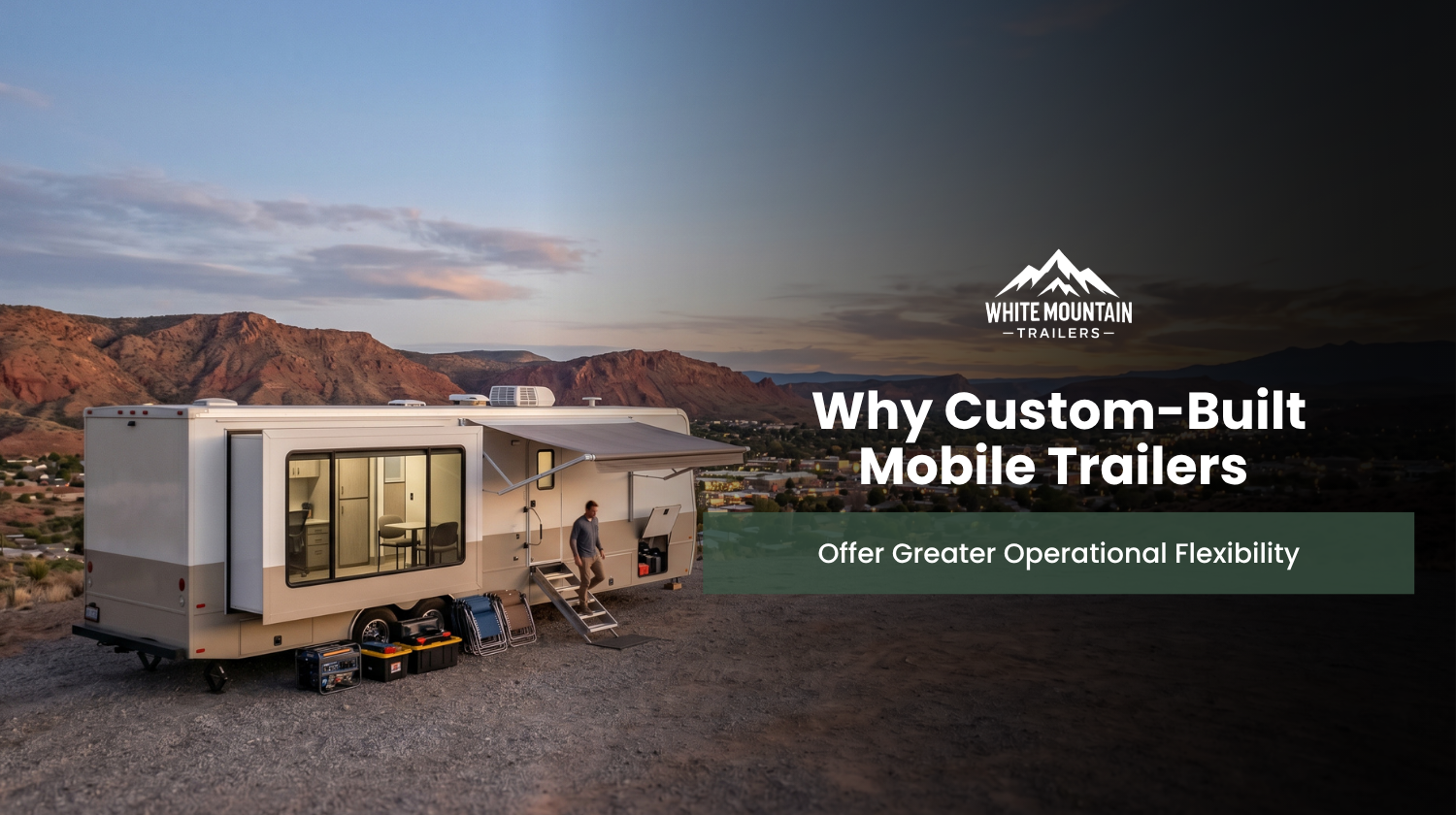
Deploying highly flexible assets like mobile office trailers or portable office trailers allows organizations to establish immediate physical operations exactly where demand dictates. If local market dynamics change, or if a field project concludes, the entire asset is easily hitched to a tow vehicle and relocated to the next project site within hours.
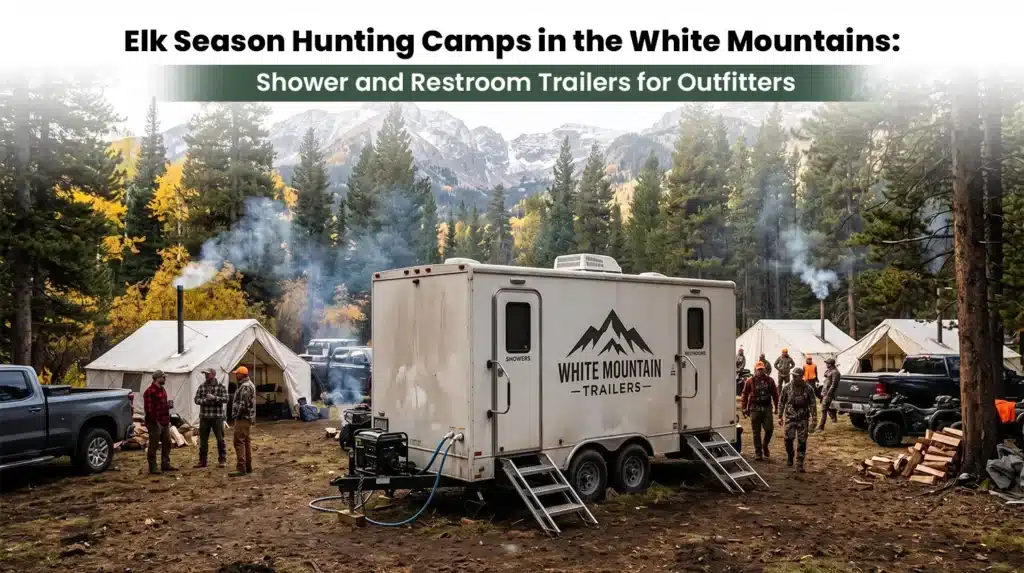
This mobility eliminates structural abandonment costs and maximizes long-term capital efficiency. Furthermore, for highly specific field uses like industrial sanitation or large-scale event logistics, deploying specialized mobile restroom trailers or portable shower trailers provides top-tier facilities on-demand, completely bypassing the need for permanent utility connections or costly structural builds.
Engineering High-Performance Fleet Assets
Custom mobile engineering bridges the gap between stationary structural capability and rapid transit utility. By eliminating the structural limitations of standard cargo shells and designing explicitly for your payload requirements, custom trailers optimize resource efficiency, safeguard equipment investments, and ensure your team remains fully operational in any field condition.