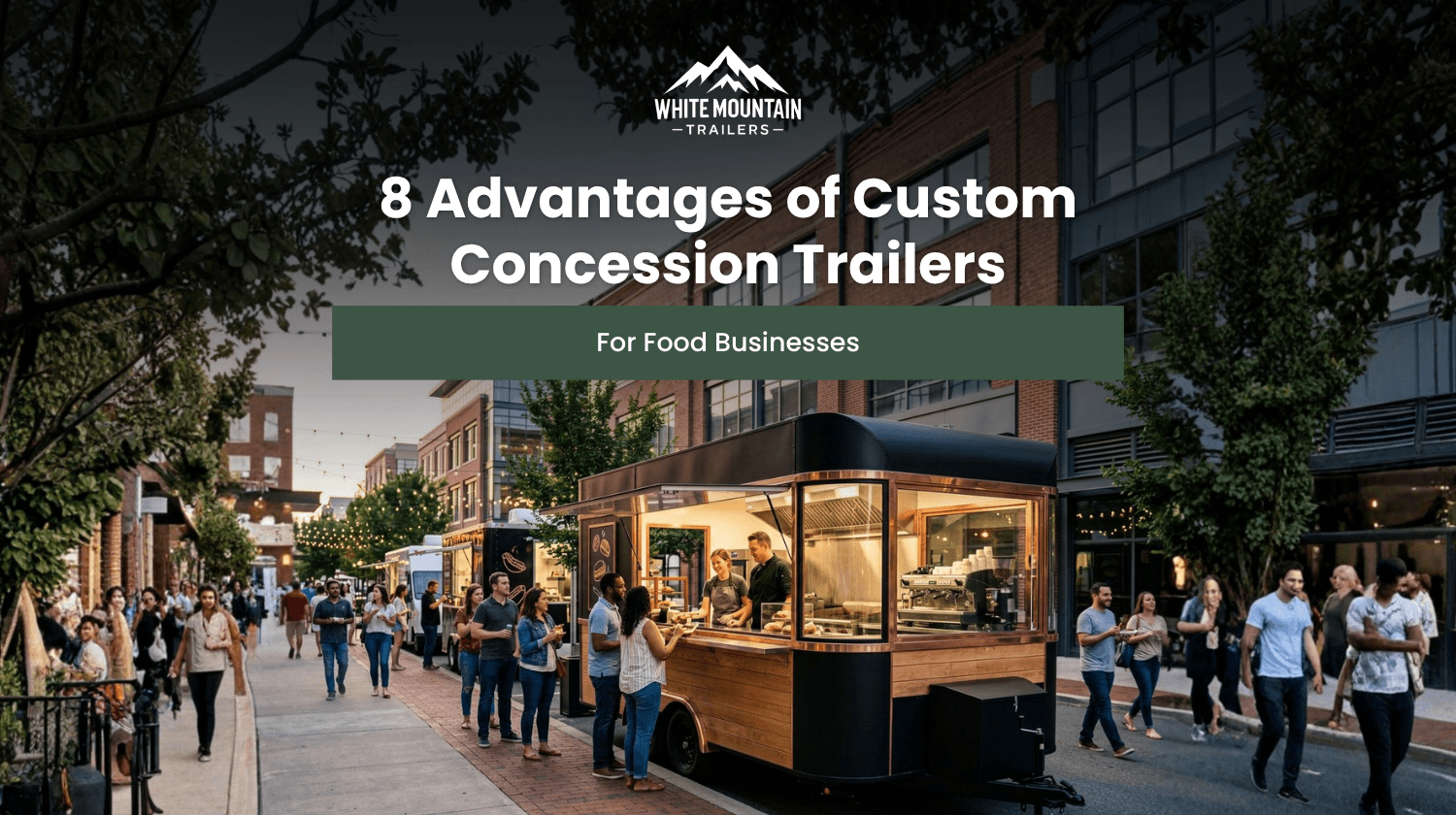
The traditional brick-and-mortar restaurant model is facing unprecedented operational headwinds. Skyrocketing commercial rents, steep utility rates, and permanent staffing challenges have made launching a standard storefront a high-risk venture for culinary entrepreneurs. To bypass these fixed overhead bottlenecks, the modern food and beverage industry has shifted heavily toward mobile infrastructure.
While buying a generic, pre-built step van or standard utility cart might seem like an easy shortcut, template layouts rarely align with specialized kitchen workflows. A wood-fired pizza concept requires entirely different ventilation, structural reinforcement, and weight distribution than a high-volume specialty coffee rig or a commercial bakery setup.
Investing in precision custom concession trailers built by professional fabricators allows mobile business owners to design an asset around their exact operational needs. Here are eight distinct advantages of choosing a custom concession buildout for your mobile food brand.
1. Maximizes Ergonomic Workflow and Speed of Service
In a high-volume mobile kitchen, seconds directly dictate your daily revenue. If your cooks are constantly stepping over one another, reaching across poor counter configurations, or fighting inefficient prep lines, your speed of service drops, leading to long lines and lost customers at busy festivals.
Working alongside experienced custom mobile trailer builders ensures that every square inch of your floor plan is optimized for internal efficiency. Fabricators design the interior using an intentional linear configuration—mapping out the exact progression from cold storage and prep surfaces to the cooking line, assembly zone, and final service window.
Actionable Operational Tip: When reviewing engineering schematics, map your layout based on a “no-step” rule. Your primary line cook should be able to reach the grill, fryers, and cold prep tables simply by pivoting, rather than walking. This cuts down on order ticket processing times by up to 30%.
2. Significantly Lowers Initial Capital and Maintenance Expenses
When comparing mobile food assets, entrepreneurs often debate between buying a motorized food truck or a towable concession trailer. A motorized truck wraps your kitchen and your vehicle engine into a single piece of machinery. If the truck’s transmission or engine fails on the way to a major event, your entire kitchen is stuck in the auto shop, completely halting your cash flow.
Opting for specialized custom mobile trailers decouples your cooking kitchen from your vehicle engine. If your towing vehicle requires mechanical repairs, you can easily hitch your concession asset to an alternative truck or rental vehicle and still make it to your venue. Furthermore, trailers feature lower insurance premiums, zero engine maintenance costs, and an overall lower initial acquisition cost.
3. Guarantees Precise Utility, Power, and Water Infrastructure
A common issue with buying a used or pre-assembled trailer is that the existing plumbing, electrical grids, and propane lines rarely match commercial cooking equipment profiles. Forcing a high-draw espresso machine or multiple commercial deep fryers onto an underpowered electrical panel triggers constant breaker trips, damaging your appliances and disrupting service.
A tailored buildout provides comprehensive custom trailer solutions engineered specifically for your appliance load. Fabricators calculate your exact total amperage requirements and construct a commercial-grade electrical panel (complete with dedicated circuits for high-draw items), structure adequate liquid propane (LP) gas loops, and size your fresh and greywater holding tanks to meet strict municipal health codes.
4. Amplifies Foot Traffic via High-Impact Brand Marketing
In a crowded event field or a busy downtown food park, your trailer’s exterior acts as your primary marketing asset. A plain white box or a poorly wrapped generic trailer fails to capture consumer attention, making it incredibly difficult to stand out from your competitors.
Custom fabrication allows for the seamless integration of high-impact mobile marketing trailers design elements. Builders can integrate custom exterior LED menu boards, structural pop-out televisions, integrated exterior audio speakers, and custom fold-out service awnings. When paired with a premium commercial vinyl wrap, your mobile asset serves as a moving billboard that builds brand awareness both on the road and at your event venue.
Mobile Architecture: Custom Trailers vs. Pre-Built Class-B Vans
Operational Metric | Pre-Built / Used Step Vans | Custom Concession Trailers |
Interior Volume Utilization | Fixed wheel wells and driver cab lose space | 100% of internal square footage is dedicated to kitchen space |
Mechanical Downtime Risk | High (Engine failure closes your entire business) | Low (Swap your tow vehicle instantly if a breakdown occurs) |
Asset Depreciation Rate | Drops quickly as engine mileage accumulates | Retains strong resale value due to kitchen asset longevity |
Custom Ventilation Setup | Restricted by vehicle roof lines and structural frames | Designed seamlessly to support exact hood space requirements |
5. Ensures Full Compliance with Local Health and Fire Codes
Navigating local regulatory environments can be a nightmare for food truck owners. Different municipalities enforce strict, varied guidelines regarding freshwater capacities, fire suppression systems, and wall surface materials. Bringing a generic, non-compliant trailer into a strict jurisdiction can result in immediate fines or a total shutdown on opening day.
Utilizing expert custom trailer fabrication services eliminates compliance risk. Certified builders assemble your unit using non-porous NSF-approved stainless steel or fiber-reinforced plastic (FRP) interior walls, integrate commercial fire suppression systems (ansul hoods), and build compliant three-compartment sink loops with dedicated hand-washing stations to guarantee you sail through your local health inspections.
6. Engineered Safely for Proper Commercial Weight Distribution
Commercial kitchen gear is incredibly heavy. Placing a massive commercial refrigerator, a three-deck pizza oven, and filled freshwater tanks all on one side of a trailer creates an incredibly dangerous weight imbalance. This imbalance leads to severe trailer sway on highways, uneven tire wear, and catastrophic axle strain.
Elite mobile trailer builders use computer-aided design (CAD) software to map out your kitchen’s weight distribution down to the pound. They select the perfect pairing of heavy-duty double or triple axles, place heavy appliances over the axle centers, and space out storage components to ensure a safe, stable tow behind your truck.
7. Delivers Long-Term Structural Integrity and Durability
The daily vibrations of highway travel present a serious challenge for mobile business structures. Cheap, consumer-grade cargo trailers are built with thin aluminum skins and staples that quickly pull apart under the continuous shaking of transit, leading to roof leaks and wall warping.
Premium commercial mobile trailers are engineered from the ground up for commercial-grade durability. Builders use heavy-duty box tube steel frames, reinforced walking roofs, solid plywood or aluminum subfloors, and heavy-duty tongue jacks. This rugged frame construction ensures your mobile assets can handle thousands of transit miles without structural failure.
8. Offers Scalable Flexibility for Long-Term Event Catering
A custom concession build allows your business to scale into multiple revenue channels easily. Because trailers offer expansive internal storage capacities and wide serving windows, you can seamlessly shift from serving small lunch crowds to catering massive corporate events or multi-day music festivals.
Many brands use their custom rigs as low-overhead test kitchens. Before spending millions on a permanent brick-and-mortar lease, they deploy custom event trailers into local neighborhoods to test menu concepts, build a loyal customer database, and accumulate capital with minimal financial risk.
Frequently Asked Questions
What is the average build timeline for a custom concession trailer?
Depending on the structural complexity of your design and current factory floor schedules, a fully customized concession buildout typically takes between 8 to 14 weeks from initial blueprint approval to final delivery.
Can I choose a custom trailer with a built-in generator compartment?
Yes. Professional fabricators highly recommend integrating a dedicated, insulated generator box with slide-out trays directly into the trailer tongue or rear frame. This layout dampens engine noise and protects your power source from weather elements.
Is it hard to get commercial financing for custom mobile trailers?
Not when working with an established builder. Recognized custom mobile trailer builders provide verified blueprints, spec sheets, and clean manufacturer certificates of origin (MCO), which commercial lenders require to secure asset-backed equipment financing.
What size tow vehicle do I need for a commercial concession trailer?
Your tow vehicle choice depends entirely on the trailer’s total Gross Vehicle Weight Rating (GVWR) when fully loaded with water, fuel, and equipment. While smaller 10-to-12 foot trailers can occasionally be hauled by heavy-duty SUVs, larger 16-to-24 foot commercial rigs generally require a 3/4-ton or 1-ton pickup truck ($e.g.$, F-250 or Ram 2500) for safe transit.
Launch Your Brand with Premium Mobile Infrastructure
Relying on a generic, pre-owned kitchen layout forces your culinary business to adapt to bad engineering. Upgrading your food brand to a tailored mobile kitchen protects your staff from daily workplace bottlenecks, insulates your business against vehicle maintenance delays, and projects a premium brand image that commands attention. By partnering with a dedicated fabrication team to engineer your infrastructure, you replace operational guesswork with a scalable asset designed to maximize your profit margin.
Ready to bring your mobile kitchen concept to life? Visit our Custom Concession Trailers Engineering Page today to explore our structural floor plans, review our past custom builds, and schedule a complimentary design consultation with our fabrication team!