A property manager in Pinetop called us last summer trying to solve the same problem two different ways at once. He had a construction crew living on-site for a month and a seasonal RV park that needed extra shower capacity during a busy holiday weekend. His first instinct was to look into a permanent shower house for both. After walking through the numbers with him, he ended up renting a shower trailer for the crew and holding off on construction for the park entirely — the trailer covered both needs for less than half the cost of breaking ground on a fixed building.
That’s the question most people are really asking when they compare portable shower trailers to fixed shower facilities: not which one is “better,” but which one actually fits the timeline, budget, and site they’re working with. Here’s how to think through it.
What’s the Difference, Exactly?
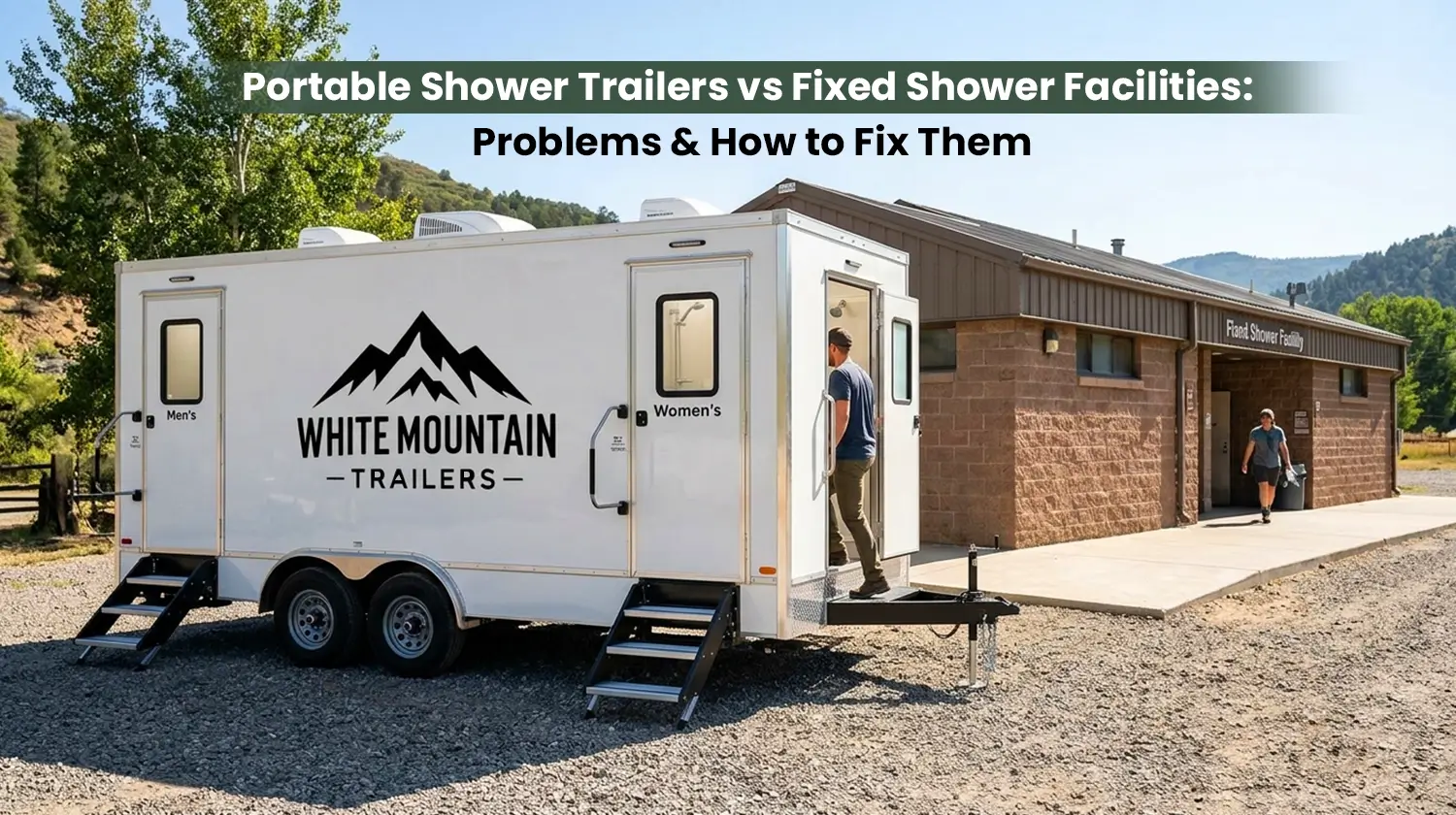
A portable shower trailer is a self-contained unit — plumbing, water heater, stalls, and often climate control — that arrives ready to use and can be relocated when the job or event is over. A fixed shower facility is a permanent structure built on-site, tied into utilities, and designed to stay put indefinitely.
Both get people clean. The difference is in flexibility, cost, timing, and what happens when your needs change.
Upfront Cost and Timeline
Usual costs and considerations:
- Shower trailers are rented, so there’s no construction cost, permitting delay, or foundation work
- Fixed facilities require site prep, plumbing tie-ins, permitting, and typically weeks to months of construction
- A trailer can be delivered and operational within days of booking
- A fixed building is a capital investment that pays off only with years of consistent use
How to think about it:
- If you need showers running in the next two weeks, a trailer is the only realistic option
- If you’re planning a facility that will serve the same fixed location for a decade or more, the long-term math can favor building
- For anything in between — a season, a project, a few years — run the rental cost against the construction cost before assuming permanent is cheaper
Site Flexibility
Usual causes of this becoming a deciding factor:
- Job sites move, wind down, or relocate to a new phase of a project
- Event and seasonal needs (festivals, RV parks, agricultural operations) don’t require water access year-round
- Land use, zoning, or lease terms may not allow permanent structures at all
How to fix a mismatch here:
- If the location isn’t guaranteed to be the same in 12 months, don’t build something that can’t move with you
- Ask whether your site’s zoning or lease actually permits a permanent structure before pricing one out
- For multi-site operations, one trailer that rotates between locations often replaces the need for several fixed buildings
Water and Waste Management
Usual causes of confusion here:
- People assume a fixed facility means “no more thinking about tanks,” but many rural and remote sites still rely on holding tanks and scheduled pump-outs either way
- Portable trailers can run on a direct hookup or self-contained tanks, depending on what the site offers
- Fixed facilities need a real water and sewer connection, which isn’t available or affordable at every site
How to fix it:
- Check what utilities are actually available at your site before assuming either option is simpler
- If you’re off-grid or on a remote job site, a trailer with self-contained tanks and a pump-out schedule is often the more realistic choice
- Ask your rental company how servicing works for your specific site before booking, not after
Capacity and Crowd Size
Usual causes of undersizing or oversizing:
- Underestimating how much shower capacity a crew or event actually needs during peak hours
- Assuming a fixed facility scales easily, when in reality most are built for a fixed number of stalls
- Not accounting for seasonal spikes — a summer festival weekend versus a slow midweek stretch
How to fix it:
- Shower trailers come in a range of stall counts, so capacity can be matched — and adjusted — to the actual event or crew size
- For fluctuating needs, it’s usually cheaper to bring in a second trailer for a peak weekend than to overbuild a permanent facility for year-round capacity you rarely use
- If you’re not sure how many stalls you need, ask your rental company — they’ve likely sized similar crews or events before
Maintenance and Long-Term Upkeep
Usual causes of unexpected costs down the line:
- Fixed facilities require ongoing maintenance on plumbing, water heaters, and structure — all on the property owner’s dime
- Portable trailers shift most maintenance responsibility to the rental company for the length of the rental
- Weather, freeze risk, and seasonal shutdowns hit fixed facilities harder in Northern Arizona’s mixed climate
How to fix it:
- If you don’t want to own the maintenance problem long-term, renting keeps that responsibility off your plate
- For a facility you do plan to keep permanently, budget for winterization and annual upkeep from day one, not as an afterthought
- Ask whether your rental includes service visits during multi-day or multi-week bookings — most reputable companies build this in
When a Fixed Facility Actually Makes Sense
Portable isn’t always the right call. A fixed shower facility is usually the better long-term investment when:
- The location is permanent and won’t change for years
- Usage is consistent and high enough to justify the build-out
- The property already has full utility access, so tie-in costs are low
- Zoning and permitting already support permanent construction
If all four of those are true, it’s worth getting a real construction quote before committing to indefinite rentals.
When a Portable Trailer Is the Right Call
A shower trailer is usually the better fit when:
- The need is temporary, seasonal, or tied to a specific project or event
- The site location isn’t guaranteed to stay the same
- You need capacity fast, without permitting delays
- Utility access is limited, remote, or inconsistent
- You’d rather not own long-term maintenance and repair costs
For most construction crews, event organizers, and property managers dealing with a temporary or fluctuating need, this is where the math lands.
Still Not Sure Which Fits Your Situation?
Most people don’t need a spreadsheet to make this call — they need someone who’s set up both kinds of facilities to ask a few direct questions about their site, their timeline, and their crowd size.
White Mountain Trailers has helped job sites, events, and properties across Northern Arizona — from Flagstaff to Pinetop-Lakeside — figure out exactly this, for two generations. We’ll tell you honestly if renting doesn’t make sense for your situation, not just sell you a trailer because that’s what we rent.
Call 928-532-2434 or visit wmtrailers.com to talk through what your site actually needs.