A logistics coordinator supporting a multi-week fire assignment once described the moment base camp sanitation actually mattered to him: not on day one, when everything was fresh and crews were fresh off the line for the first time, but on day twelve, when several hundred firefighters had been living, working, and rotating through camp long enough that any gap in showers or restrooms stopped being an inconvenience and started being a morale and health problem. Base camp facilities don’t get noticed when they work. They get noticed immediately when they don’t.
That’s the reality behind restroom and shower trailers for wildland firefighter base camps. These aren’t standard event rentals dropped into a parking lot for a weekend — they’re operational infrastructure supporting hundreds of people living in close quarters for days or weeks, under an incident command structure with its own terminology, its own procurement process, and its own standards for what “adequate” sanitation actually means. Understanding how base camps are structured and what they require is the difference between a vendor who shows up and one who actually fits into the operation.
Key Takeaways
- Fire camps are one of five predesignated temporary facility types under the National Incident Management System, providing food, sleeping areas, and sanitation for the incident.
- Base camps and spike camps have different sanitation needs — spike camps draw supplies from the main camp but typically provide their own separate sanitation facilities.
- The Base/Camp Manager oversees setup of sleeping, shower, and sanitation facilities and reports to the Facilities Unit Leader within the incident’s logistics structure.
- National mobile shower contracts and procurement systems like VIPR are how agencies bring in shower and sanitation vendors for large incidents that exceed local resources.
- Federal guidance specifically calls for adequate handwashing and sanitation facilities, and in some cases separate shower and sanitation facilities for isolating symptomatic personnel during an incident.
What a Fire Camp Actually Is, and Why It’s Different From an Event Rental
A fire camp is a campsite set up for wildland firefighters and support personnel, typically established for a large project fire requiring significant manpower, organization, and logistics — and under the National Incident Management System, it’s recognized as one of five predesignated temporary incident facility types. Fire camps provide food, sleeping areas, and sanitation, and while technically distinct from the incident command post and incident base, it’s common practice to co-locate the fire camp with the incident base itself.
This matters for anyone providing restroom or shower trailers into this environment: you’re not delivering to a private client with a single point of contact. You’re delivering into a structured incident with its own chain of command, its own facility planning process, and its own expectations for how quickly and reliably support resources need to perform.
Base Camps vs. Spike Camps: Different Sanitation Needs
Spike camps are satellite camps that draw supplies and food from the main fire camp but generally provide their own sanitation facilities, and they exist specifically to support crews working in areas too far from the main camp to return each day, reducing fatigue and the safety risks that come with it. This distinction matters directly for restroom and shower trailer planning: a base camp supporting several hundred personnel has very different capacity needs than a spike camp supporting a smaller crew working a remote section of the fireline.
Planning sanitation for an incident with active spike camps means thinking in terms of multiple smaller deployments rather than one large facility, each with its own access, capacity, and servicing requirements.
Who Actually Manages Camp Sanitation on an Incident
Camp sanitation isn’t handled informally — it sits within a defined position structure. The Base/Camp Manager provides support for camp operations at both base camp and spike camps, manages equipment and facilities used across incident functions, and specifically supervises the setup of sleeping, shower, and sanitation facilities, reporting up to the Facilities Unit Leader. Facilities Unit responsibilities include determining special requirements for facilities, ensuring applicable use rate methodology is established once a shower unit arrives, and serving as the contract representative for national mobile shower contracts.
For a vendor providing shower or restroom trailers to an incident, this means your actual point of coordination is usually the Base/Camp Manager or Facilities Unit Leader, not an event planner or general contractor in the sense most rental businesses are used to working with.
Why Handwashing and Sanitation Get Specific Federal Attention
Wildland fire incidents create genuinely elevated infectious disease risk: high-density living and working conditions, transient personnel rotating in and out, and limited access to soap and sanitizer in field conditions all compound the risk of outbreaks spreading through a camp population. Federal guidance is direct about the response: incident management teams are instructed to insist that adequate handwashing and sanitation facilities and supplies are available, and in situations where symptomatic personnel need to be isolated, guidance calls for separate feeding, sanitation, showering, and sleeping facilities kept apart from the general population.
This isn’t a theoretical requirement. It means a base camp’s sanitation plan needs enough capacity and flexibility to potentially stand up a second, isolated set of facilities on short notice if an outbreak develops mid-incident — a planning consideration that doesn’t come up in typical event or construction rentals.
How Sanitation and Shower Resources Actually Get Contracted
Large incidents that exceed what local agency resources can provide bring in additional equipment and services through procurement systems like VIPR (Virtual Incident Procurement), which specifically covers categories including portable toilets and sanitation for base and spike camps, along with mobile shower units for extended incidents. Registration, inspection standards, and administrative requirements apply to vendors participating in this system — it’s a formal federal contracting process, not an informal rental agreement.
Separately, Facilities Unit Leaders serve as the contract representative for national mobile shower contracts specifically, which reflects how significant a standing, pre-arranged resource shower capability is for fire agencies rather than something sourced ad hoc for each incident.
What Base Camp Restroom and Shower Trailers Actually Need to Handle
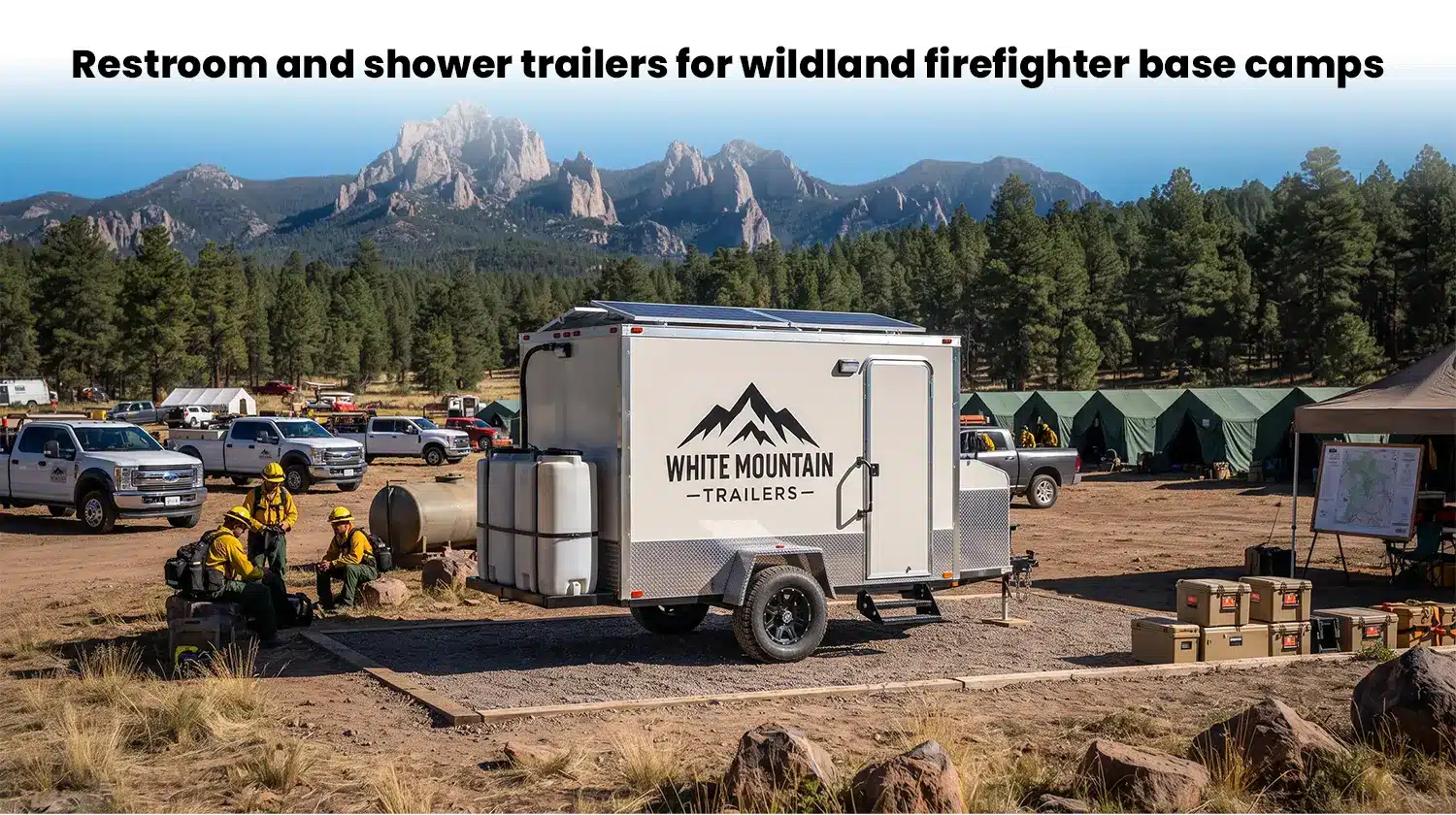
Given the scale and duration involved, restroom and shower trailers supporting a fire base camp need to hold up to conditions well beyond a typical weekend event: sustained heavy daily use from hundreds of rotating personnel, extended deployment periods that can run days to weeks, remote or rugged site access depending on the incident’s location, and rapid setup timelines since camps often need to be operational quickly once established. Portable shower trailers built for events, job sites, and emergency response are designed around exactly this kind of durability and quick deployment, and portable restroom trailers sized for larger groups scale more naturally to base camp population than smaller event-oriented units would.
Seasonal timing matters too — Arizona’s fire season often overlaps with extreme heat, and incidents in higher-elevation forested terrain can also run into the kind of cold-weather conditions covered in our guide on how restroom and shower trailers hold up in Arizona winter, depending on elevation and season.
Questions to Ask When Planning Base Camp Sanitation
- What’s the expected camp population, and does that change over the life of the incident?
- Will spike camps need separate sanitation capacity, or does everything route through the main base camp?
- What’s the realistic setup timeline once the order is placed, and can that be met given site access?
- Is there a plan or reserve capacity for standing up isolated sanitation facilities if infectious disease protocols are triggered?
- What procurement pathway applies — direct agency contract, VIPR, or an existing standing agreement?
Frequently Asked Questions
What's the difference between a base camp and a spike camp for sanitation purposes?
A base camp is the main incident facility, typically co-located with the incident command post, supporting the bulk of personnel. Spike camps are smaller satellite camps supporting crews working too far from base camp to return daily, and they generally maintain their own separate sanitation facilities even though they draw food and supplies from the main camp.
Who coordinates restroom and shower trailer needs on a fire incident?
Typically the Base/Camp Manager, who supervises setup of shower and sanitation facilities directly, reporting to the Facilities Unit Leader within the incident’s logistics section. Facilities Unit Leaders also serve as the contract representative for national mobile shower contracts.
How do vendors get contracted to provide sanitation for fire incidents?
Larger incidents often bring in vendors through federal procurement systems like VIPR, which specifically covers portable toilets, sanitation, and mobile shower units for base and spike camps. Registration and inspection requirements apply to vendors participating in these systems.
Why does federal guidance emphasize handwashing and sanitation so specifically for fire camps?
High-density living conditions, transient personnel, and limited field access to hygiene supplies create real infectious disease risk on fire incidents. Federal guidance requires adequate handwashing and sanitation facilities, and calls for separate isolated facilities if symptomatic personnel need to be kept apart from the general camp population.
Can the same restroom and shower trailers handle both base camp and spike camp needs?
They can, but capacity planning differs. Base camps typically need higher-capacity units supporting larger, rotating populations, while spike camps need smaller, more mobile setups that can be deployed and relocated as operations shift across the incident.
Supporting a Fire Incident or Planning Base Camp Capacity?
Wildland fire base camps run on a different operational rhythm than a typical event or job site, and sanitation support needs to be built for sustained, heavy use with fast deployment.
White Mountain Trailers has provided restroom and shower trailers across Northern Arizona, from Flagstaff to Pinetop-Lakeside, for two generations, and we’re ready to talk through capacity, deployment timelines, and contracting for fire camp support.
Call 928-358-8404 or visit wmtrailers.com to discuss your base camp sanitation needs, or contact our team directly.