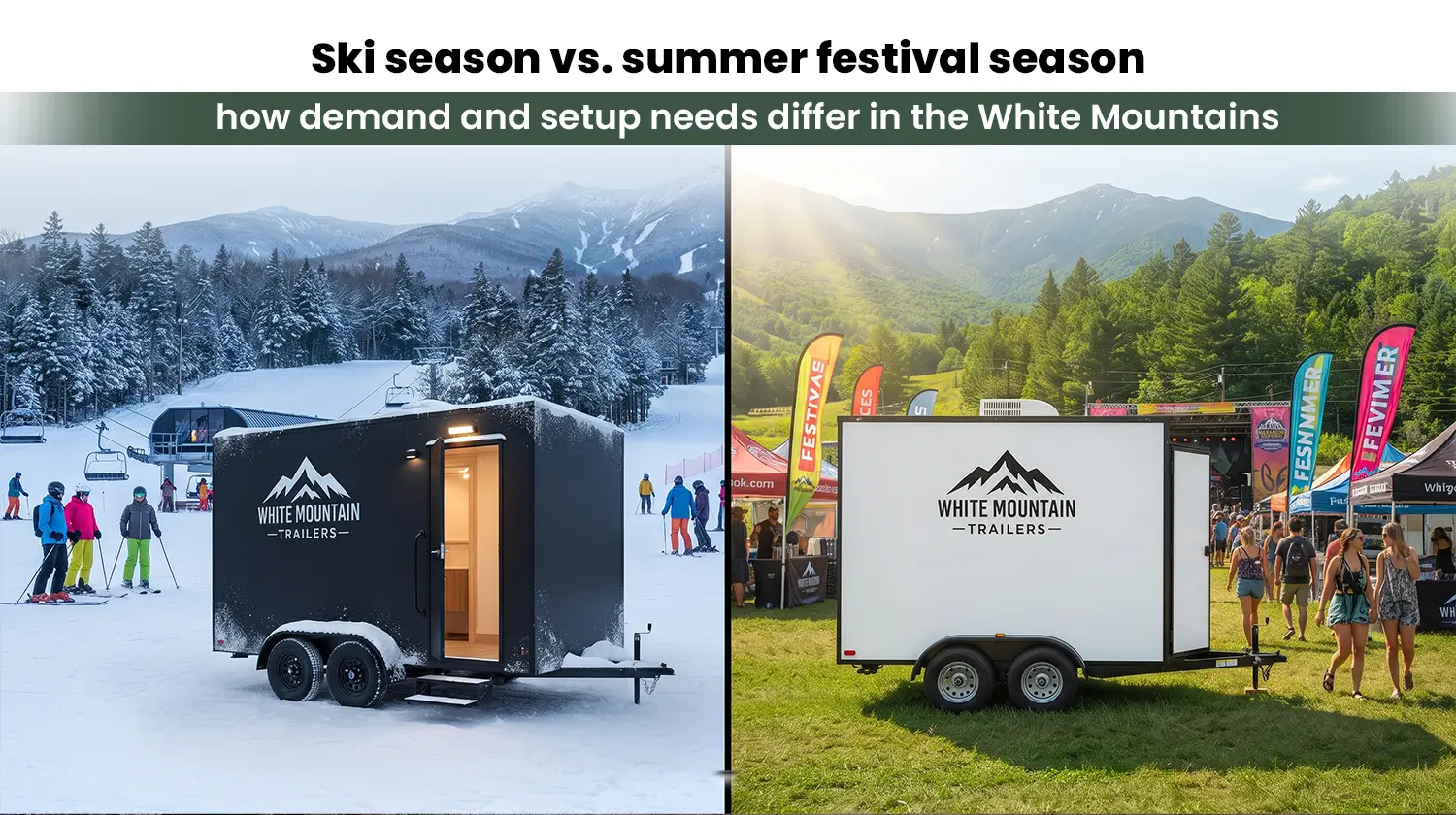
An event coordinator who’d booked restroom trailers for a July festival outside Show Low called us the following winter about a ski race weekend, expecting the same order to simply carry over. Same headcount, same trailer count, same delivery plan. We asked one question first: how would guests get from the parking area to the trailers when snow was on the ground? She hadn’t thought about it. The festival setup she’d perfected didn’t translate at all, and it took a full planning conversation to rebuild the order around what winter actually demands.
That’s the pattern in the White Mountains. The region works as a year-round destination, with skiing at Sunrise Park Resort in winter and a full calendar of summer festivals, fairs, and community events drawing crowds across Show Low, Pinetop-Lakeside, Greer, and beyond. Both seasons need restroom facilities, but the demand curve, the equipment, and the setup logistics look very different. Understanding those differences ahead of time is what separates a smooth rental from a scramble.
Key Takeaways
- Summer is peak visitor season in the White Mountains thanks to cooler temperatures than the low desert, while winter is a separate, ski-driven demand cycle built around Sunrise Park Resort.
- Summer festival rentals lean on headcount, layout, and airflow, while winter rentals lean on freeze protection, heating, and snow access.
- Booking lead times matter in both seasons, but for different reasons: summer stacks weekend after weekend of events, while winter units with cold-weather capability are a smaller share of most fleets.
- Site prep differs sharply. Summer sites worry about dust, shade, and crowd flow. Winter sites worry about plowed access, packed snow, and ice.
- Matching the trailer type to the season, not just the headcount, prevents most mid-event problems.
Two Seasons, Two Different Demand Patterns
The White Mountains have a genuine two-season identity. Summer is the peak season, when cooler mountain temperatures make the region an escape from the low desert heat, drawing campers, boaters, hikers, and festival crowds. Winter turns the same landscape into a snow destination, with skiing at Sunrise Park Resort, which sits about 34 miles from Show Low along Highway 273.
Summer demand tends to spread across many events: community festivals, concerts, rodeos, fairs, weddings, and holiday gatherings in Show Low, Pinetop-Lakeside, Snowflake, Taylor, Springerville, and Greer. Winter demand is more concentrated around resort-adjacent events, races, and winter holiday happenings. Different calendars mean different booking pressure, and different pressure means different planning timelines.
How Summer Festival Setup Differs
Summer festival rentals are largely a crowd-management problem. Guests arrive in waves, restroom traffic spikes around meals, headliners, and fireworks, and a well-planned layout keeps lines short and traffic flowing instead of bunching up at a single bank of units. Placement matters: units should be visible, well-lit for evening use, and distributed sensibly across the grounds rather than tucked in one far corner. Our portable restroom trailers come in sizes from compact units for small gatherings to larger models built for festivals and extended events, so you can scale the setup to the crowd.
Summer setup also brings its own site considerations. Dry, dusty ground, afternoon heat, and monsoon-season storms in July through September all shape where units sit and how they’re anchored. Climate-controlled interiors matter more at mid-day peaks, and shaded or breezy placement improves guest comfort where the site allows it.
How Ski Season Setup Differs
Winter setup is a cold-weather logistics problem first and a capacity problem second. A standard trailer that works perfectly at a July festival can run into trouble once overnight temperatures drop well below freezing, since exposed plumbing and tanks are vulnerable. Trailers with weather-resistant plumbing and heavy insulation are built for exactly this, and confirming that capability before booking is the single most important winter question.
Access is the second big difference. Delivery trucks need a plowed, packed path to the placement spot, and guests need a clear, non-slippery route to the door. A trailer placed perfectly on a summer site may be effectively unreachable once snow accumulates, so placement, plowing plans, and pathway traction all belong in the conversation early. Ice around steps and entrances deserves attention, since heavy foot traffic on packed snow gets slick quickly.
Booking Lead Times: Same Urgency, Different Reasons
Summer weekends fill up fast because so many events compete for the same dates: holiday weekends, festival weekends, and wedding-season Saturdays all stack. Booking early protects your date and gives you more choice over unit size and features.
Winter has a different squeeze. Cold-weather-capable units are typically a smaller portion of any rental fleet, and demand for them clusters around ski season weekends and holiday events. If your event needs a winter-ready trailer, confirm availability early rather than assuming any unit in the fleet will work.
Capacity Planning: Why Headcount Alone Isn’t Enough
Both seasons need a sensible unit count for expected attendance, but the usage pattern differs. Festivals see sharp peaks tied to programming, while ski events often see steadier traffic over longer hours, with people cycling in from cold conditions and staying longer in warm indoor spaces. Portable shower trailers can also enter the picture in either season, whether for camp-style summer events or for crews and staff working extended winter days.
Servicing plans matter just as much as unit count. A two-day festival and a ski race weekend with the same headcount can call for different pump-out schedules, so it helps to understand how restroom trailer holding tanks and waste disposal work before you finalize your order.
Questions to Ask Before Booking for Either Season
- Is this unit suited for the conditions my event will actually face: summer heat and dust, or freezing temperatures and snow?
- What access and placement do you need from my site, and how does snow or dry ground change that?
- How far in advance should I book for my specific dates?
- How many units do I need based on my schedule and crowd pattern, not just total headcount?
- What’s the plan for servicing and support if conditions change during my event?
Frequently Asked Questions
Is demand higher in summer or winter in the White Mountains?
Summer is generally the peak visitor season, thanks to cooler temperatures than the low desert and a busy calendar of festivals and events. Winter demand is more concentrated around ski season and resort-area events, so booking pressure looks different in each season.
Do I need a special restroom trailer for a ski event?
For sustained freezing temperatures, a unit with insulated, weather-resistant plumbing and heated systems is strongly recommended. Confirm this capability directly with your provider before booking, since standard trailers aren’t built for prolonged hard freezes.
How is setup different for a winter event compared to a summer festival?
Winter setup adds cold-weather protection, plowed access for delivery, and safe footing around entrances. Summer setup focuses more on crowd flow, layout, shade, and dust or monsoon considerations.
How far ahead should I book a restroom trailer for a festival or ski weekend?
Earlier is better in both seasons. Summer dates fill quickly because many events compete for the same weekends, and cold-weather-ready units are a smaller share of most fleets, so confirming availability early protects your date.
Can I use the same rental plan for both seasons?
Rarely. Headcount may stay the same, but unit type, placement, access planning, and servicing needs change with the season, so it’s worth planning each event from scratch.
Planning an Event in the White Mountains, Any Time of Year?
Whether it’s a summer festival in Show Low or a ski weekend near Sunrise Park, the right restroom trailer plan starts with the season, not just the guest count.
White Mountain Trailers has supported events and job sites across Northern Arizona, from Flagstaff to Pinetop-Lakeside, for two generations, and we’ll help you match the right unit and setup to your season before you book.
Call 928-358-8404 or visit wmtrailers.com to plan your White Mountains event, or contact our team directly.