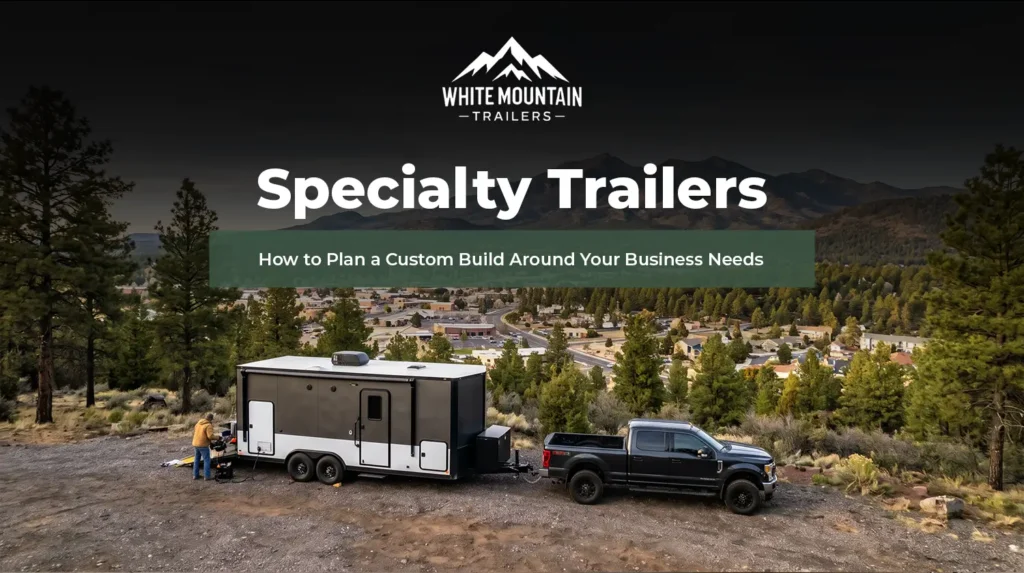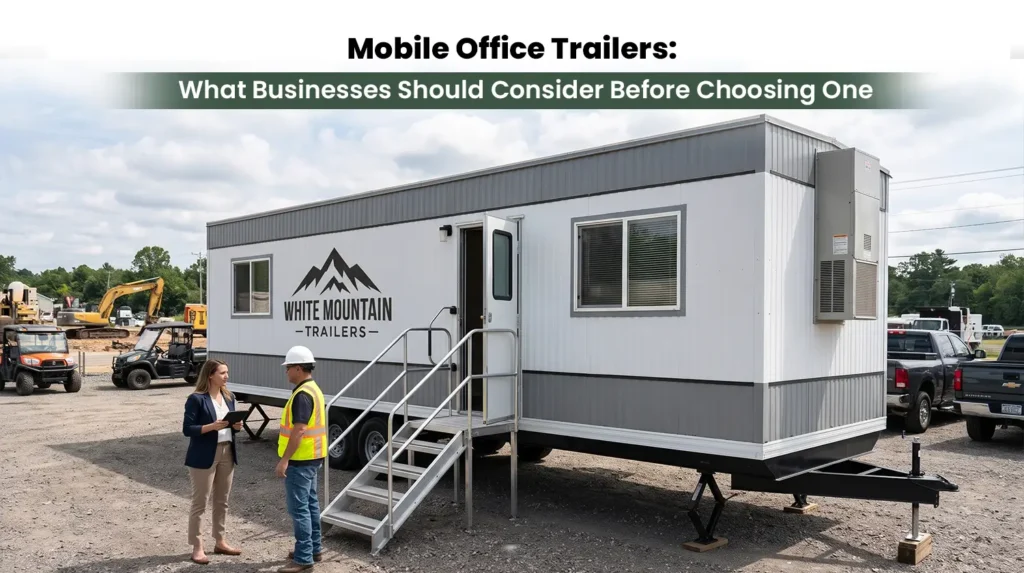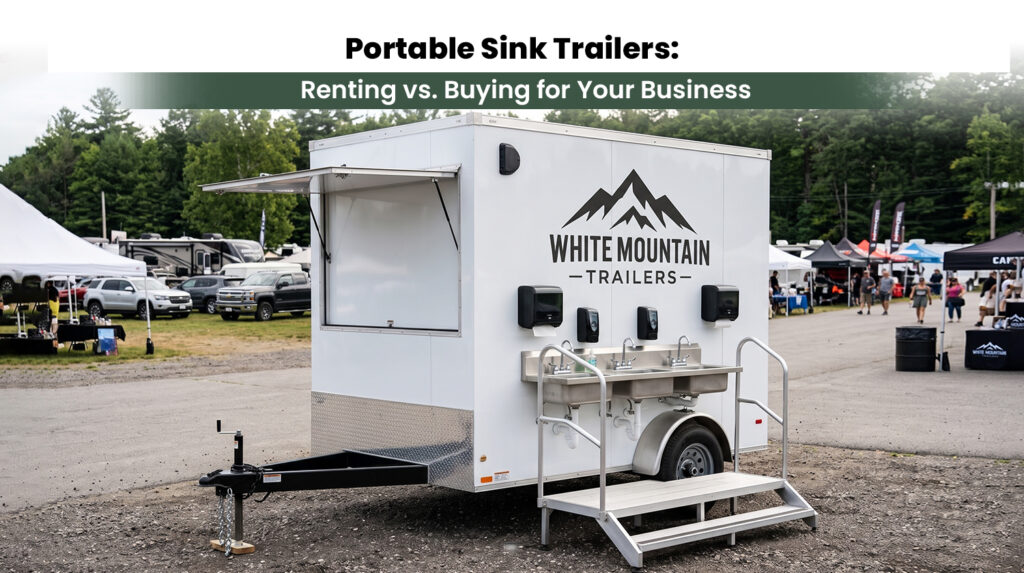

A custom mobile trailer should be designed around the work it needs to perform. Whether the goal is a mobile office, food-service unit, sanitation solution, field workspace or another specialized application, the final trailer must fit the intended workflow, equipment, utilities and operating environment.
The process starts well before fabrication. Buyers need to define the project, review the layout, confirm technical requirements, understand the quoted specification and prepare for delivery. Missing details early in the process can lead to avoidable design changes, added costs or a trailer that does not work as intended.
White Mountain Trailers develops custom mobile solutions for different professional applications. You can explore the White Mountain Trailers homepage for an overview of its mobile trailer offerings.
This guide explains the main stages of the custom mobile trailer build process, from the first project brief to delivery and aftercare.
1. Discovery: Define the Project Before Designing the Trailer
The first stage is understanding what the trailer must do. A project brief gives the customer and builder a shared starting point and helps turn a general idea into a set of practical requirements.
Begin by answering the following questions:
- What is the trailer’s primary purpose?
- Who will use it, and how many people will use it at one time?
- What activities will take place inside?
- Which equipment, furniture or fixtures are essential?
- Where will the trailer operate?
- Will it stay in one location or move between sites?
- What power, water, wastewater, connectivity or climate-control systems may be needed?
- What is the target budget and required timeline?
- Are there site, access, permitting or accessibility requirements to consider?
The answers will vary by application. A mobile office may prioritize workstations, storage and connectivity. A food-service unit may need carefully planned equipment, ventilation and plumbing. A field-operations trailer may require secure storage, communications equipment and a layout that supports the team’s workflow.
Separate essential requirements from preferences
Not every desired feature needs to be part of the initial specification. Divide the project requirements into three categories:
Essential: Features required for the trailer to perform its primary function.
Important: Features that improve usability, comfort or efficiency but may have alternatives.
Optional: Upgrades that can be considered if they fit the budget, design and operating needs.
This simple exercise helps focus design discussions and makes it easier to compare possible configurations.
Prepare a clear project brief
A useful brief includes the intended application, number of users, major equipment, operating conditions, preferred layout, utility requirements, budget range and target date. Include photographs, equipment specifications or reference layouts if they help explain the intended result.
The goal is not to solve every engineering question at the beginning. It is to provide enough detail for the design conversation to move forward.
2. Design: Turn Requirements Into an Approved Layout
Once the project requirements are understood, the next step is to translate them into a practical design. The layout should support the intended work, accommodate the specified equipment and account for access, storage and maintenance.
Review the proposed design against the activities the trailer must support. Consider how people will enter, move around, use the equipment and access supplies. Check that frequently used items are positioned logically and that service access has not been overlooked.
Review the complete configuration
Depending on the application, the design review may cover:
- Interior layout and dimensions
- Workstations, cabinetry and storage
- Equipment placement and access
- Electrical requirements and outlet locations
- Lighting and climate control
- Plumbing and water or waste systems, where needed
- Doors, ramps, windows and entry access
- Exterior finishes, branding and signage
- Specialized equipment or technology
These items are not automatically included in every custom build. The final configuration should clearly identify what the selected project requires and what the supplier has agreed to provide.
Confirm utility requirements early
Utilities should be planned alongside the layout. Adding a major appliance, workstation or specialized system late in the process may affect space, wiring, plumbing, ventilation, weight or other design considerations.
Provide equipment specifications as early as possible. Where relevant, have qualified professionals and the appropriate authorities review technical or regulatory requirements before the design is finalized.
Approve the drawings and written specification
Before production begins, review the latest drawings and the written specification together. Make sure both documents describe the same configuration.
Confirm the trailer dimensions, layout, materials, finishes, equipment, utility systems, customer-supplied items, exclusions and any agreed options. If a detail is unclear, resolve it before approving the design.
For an overview of available applications and customization possibilities, explore White Mountain Trailers’ custom mobile trailer solutions.
3. Build: Manage Fabrication and Specification Changes
After the design and specification have been approved, the project moves into the build stage. This is where the agreed design is translated into the physical trailer.
Customers should understand how progress updates, quality checks and proposed changes will be handled. A written specification provides a reference for both sides throughout the process.
Keep one approved version of the design
If drawings or specifications are revised, make sure the customer and builder are working from the same approved version. Older versions should not be confused with the current design.
This is particularly important when multiple people are involved in the project. The person requesting a change, the person approving its cost and the person responsible for the final specification should all have a clear record of the decision.
Understand the impact of changes
Consider a project where the customer initially approves a mobile office with a defined desk arrangement, then requests additional built-in storage after production planning has started.
That change may appear straightforward, but its effect depends on the design. It could influence available floor space, access, materials, installation work or other specifications.
Before authorizing a change, ask:
- What exactly will change?
- Does the change affect the layout, equipment or utility systems?
- Will the price change?
- Could the change affect the build or delivery schedule?
- Does the revised design require another approval?
- Has the updated specification been documented?
Do not assume that every requested modification can be accommodated without cost or schedule implications. Ask the builder to assess the specific change and confirm the agreed outcome in writing.
Ask how quality checks are documented
Before the project begins, clarify what checks are included and how concerns will be communicated. Depending on the build, relevant review points may include fit and finish, equipment installation, utility systems, doors and access points, and the operation of specified components.
The exact inspection and testing process should be confirmed with the builder rather than assumed to be identical across every trailer type.
4. Delivery: Prepare the Destination Before the Trailer Arrives
A completed trailer still needs a suitable route to its destination and a prepared placement area. Delivery planning should therefore begin before the expected arrival date.
Start with the location. Identify the intended placement area and review the route that the delivery vehicle will use. Narrow entrances, tight turns, overhead obstructions, poor ground conditions or limited staging space can create avoidable complications.
Use a site-readiness checklist
Before delivery, confirm:
- The access route and entrance are suitable for the planned delivery.
- Turning and maneuvering space has been considered.
- The placement area is prepared for the trailer.
- Ground conditions and drainage have been reviewed.
- Overhead obstructions and nearby structures have been considered.
- Required utility connection points are identified.
- Site access and delivery timing are coordinated.
- Any site-specific approvals or restrictions have been checked.
- The person receiving the trailer knows what to inspect and which documents to collect.
The requirements will depend on the trailer, delivery method and destination. Confirm the actual arrangements with the supplier and any relevant site professionals.
Clarify what delivery includes
Delivery, placement, utility connection, installation, training and site preparation are not necessarily the same service. Ask which activities are included in the quote and which responsibilities belong to the customer or another contractor.
Also confirm how the trailer will be handed over, what documentation will be provided, and whom to contact if an issue is identified after arrival.
For more detailed destination planning, read the guide to delivery and setup logistics for remote job sites.
5. Aftercare: Plan for Maintenance and Future Needs
The relationship with a trailer supplier should not end with delivery. A custom trailer contains systems and components that may need routine care, servicing or replacement over time.
Before accepting the finished project, ask for the documentation relevant to the supplied configuration. Depending on the build, this may include equipment manuals, maintenance guidance, warranty terms and information about service support.
Understand the warranty and service terms
Confirm what the warranty covers, how long coverage lasts, what exclusions apply and how to request service. Do not assume that every component has identical warranty terms.
Ask who to contact when a supplied component needs attention and whether any routine maintenance must be completed at specific intervals.
Think about future modifications
Business requirements can change. A mobile office may need a different storage arrangement, or a field unit may require new equipment as its role develops.
When planning a future modification, assess how it could affect weight, layout, utilities, safety and the original specification. Consult the builder or appropriately qualified professionals before changing structural components or installed systems.
A little planning at the start can make it easier to understand what is practical to modify later.
How to Compare Custom Trailer Quotes
Two custom trailer quotes may look similar while covering different specifications. Compare them using the same project brief and ask each supplier to clarify what is included.
Quote item | What to confirm |
|---|---|
Trailer and layout | Dimensions, floor plan and intended application |
Materials and finishes | What materials and finishes are specified |
Equipment | Included equipment, customer-supplied items and exclusions |
Utilities | Electrical, plumbing, power and other specified systems |
Custom features | Branding, cabinetry, specialized access or technology |
Delivery | Destination, delivery arrangements and customer responsibilities |
Schedule | Estimated build and delivery timeline, including dependencies |
Warranty and service | Coverage, exclusions and support arrangements |
Changes | How revisions are priced, approved and documented |
Ask for clarification whenever a quote uses broad descriptions that could mean different things. A detailed specification is more useful than comparing headline prices alone.
Custom Mobile Trailer Project Checklist
Use this checklist before approving a build:
☐ Define the trailer’s purpose and primary users.
☐ Document essential equipment and workflow requirements.
☐ Establish a budget range and target timeline.
☐ Identify utility, site and regulatory considerations.
☐ Review the proposed layout and technical drawings.
☐ Confirm the written specification, exclusions and optional upgrades.
☐ Understand how changes and approvals will be managed.
☐ Compare quotes against the same specification.
☐ Prepare the delivery route and placement area.
☐ Confirm handover documents, warranty terms and service contacts.
Frequently Asked Questions
What are the main stages of a custom mobile trailer build?
A typical process includes discovery, design, build, delivery and aftercare. The exact steps and review points depend on the trailer’s application and agreed specification.
How do I prepare for a custom trailer design consultation?
Bring a project brief covering the intended use, number of users, equipment, preferred layout, utility needs, operating environment, budget and timeline. Reference photos or equipment specifications can also help communicate your requirements.
Can I change the design after the build has started?
A change may be possible, but feasibility and impact depend on the stage of production and the requested modification. Ask the builder to confirm any price, schedule, technical or approval implications before authorizing the change.
What should I check before delivery?
Review access, turning space, ground conditions, placement, utility connections, site restrictions and the responsibilities included in the delivery arrangement. Make sure someone is available to receive the trailer and review the handover information.
What documentation should I request after delivery?
Ask for the documents relevant to your specific build, which may include equipment manuals, maintenance instructions, warranty terms and service contacts. Confirm the handover package with the supplier before delivery.
How can I request a custom mobile trailer quote?
Prepare a project brief with your intended application, preferred configuration, equipment requirements, destination and timeline. Then contact White Mountain Trailers to discuss your project.
Start Planning Your Custom Mobile Trailer
A well-managed custom trailer project starts with clear requirements and continues through design approval, documented changes, delivery preparation and aftercare. Giving each stage the attention it needs helps customers and builders work from the same expectations.
White Mountain Trailers offers custom mobile solutions for a range of professional applications. Explore the custom mobile trailer options or contact the team for a project quote.
Call 928-358-8404 to discuss your requirements.