A general contractor called us mid-week last summer with a problem that had nothing to do with equipment or weather. His crew had doubled overnight to hit a deadline, but the restroom count on site hadn’t changed. By Thursday, workers were walking off-site to find a bathroom, production was slipping, and he was suddenly worried an inspector would show up before he could fix it. He wasn’t wrong to worry — and he also wasn’t sure what the actual rule even required, versus what he’d just assumed.
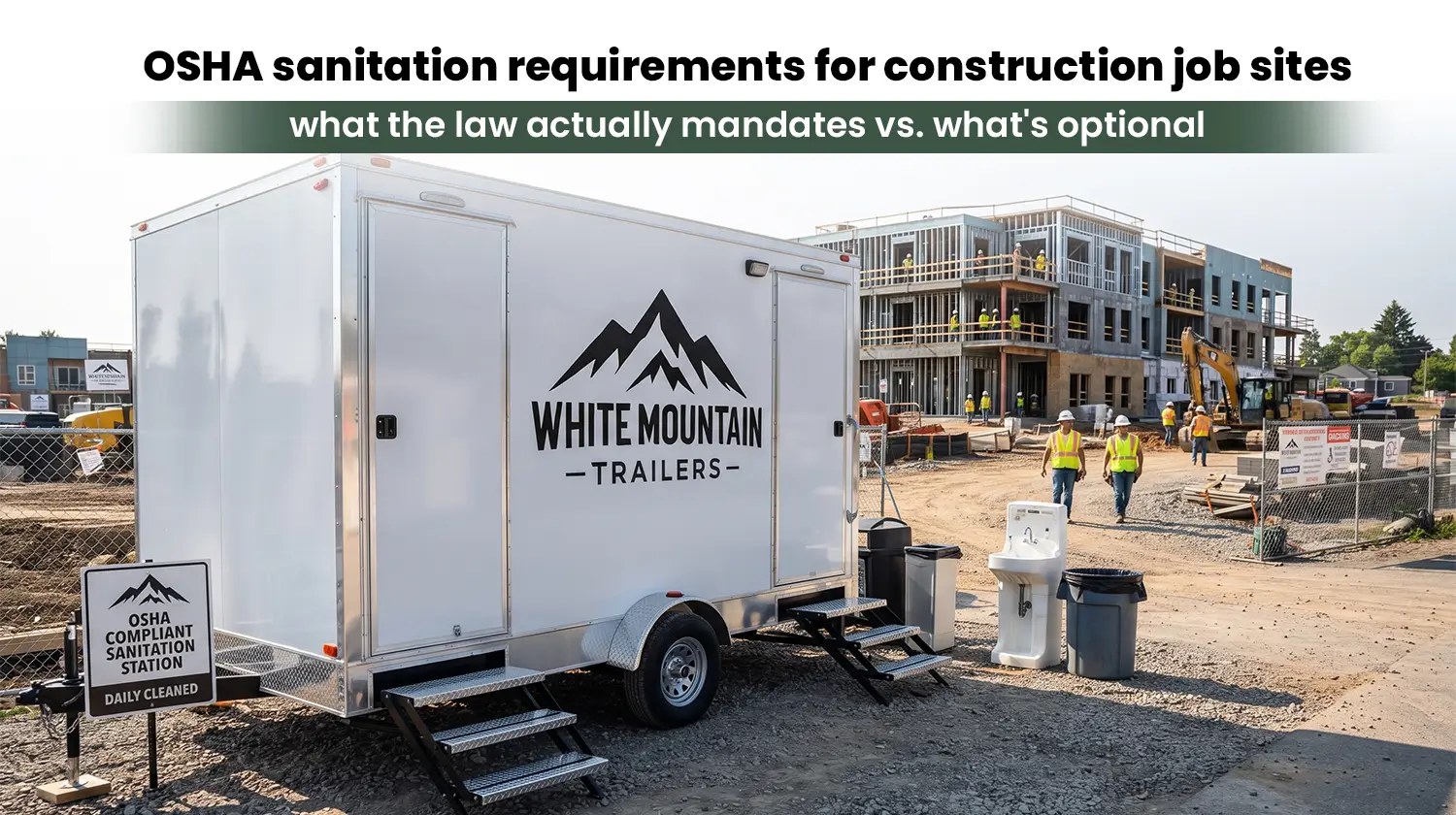
That’s the position a lot of contractors find themselves in. The OSHA sanitation standard isn’t complicated once you’ve read it, but most people never have — they’ve absorbed a rough sense of “you need porta potties” without knowing the specific ratios, exemptions, and servicing rules that determine whether a site is actually compliant. Knowing the difference between what OSHA sanitation regulations mandate and what’s simply good practice is the difference between passing an inspection and scrambling to fix a violation after the fact.
Key Takeaways
- OSHA’s toilet-count rule scales by crew size: one facility for 20 or fewer workers, then one toilet and one urinal per 40 workers, rising to one per 50 workers once headcount reaches 200 or more. Occupational Safety and Health Administration
- A toilet that’s out of service or in unsanitary condition doesn’t count toward that minimum, even if it’s physically present on site. Zters
- The requirement for on-site toilets doesn’t apply to mobile crews who have transportation readily available to nearby facilities. Occupational Safety and Health Administration
- Handwashing stations need soap and running water — hand sanitizer alone doesn’t satisfy the standard. Zters
- Beyond the federal minimum, voluntary industry standards exist for servicing frequency and unit quality, and following them is good practice, not a legal requirement.
What the OSHA Sanitation Standard Actually Covers
The OSHA sanitation standard for construction sites lives in 29 CFR 1926.51, and it covers more than just toilets — potable water, food handling, temporary sleeping quarters, washing facilities, vermin control, and change rooms for workers handling toxic materials all fall under the same section. Most contractors only ever deal with the toilet and handwashing portions day-to-day, but the full OSHA sanitation standards apply anywhere a job site sets up temporary facilities away from an existing building. Regulations
The core purpose behind the rule is straightforward: workers shouldn’t face health risks or unreasonable delays because sanitation facilities aren’t available when needed. Everything else in the regulation — ratios, access times, servicing expectations — exists to make that purpose enforceable rather than aspirational.
How Many Toilets Does OSHA Sanitation Actually Require?
This is the part of osha sanitation compliance most contractors get wrong, usually by rounding down. OSHA’s Table D-1 sets the minimum at one toilet facility for a crew of 20 or fewer, one toilet seat and one urinal per 40 workers once the crew exceeds 20, and one toilet seat and one urinal per 50 workers once the site reaches 200 or more employees. Occupational Safety and Health Administration
That count is based on the largest number of workers on site at any one time, not your total job headcount across the life of the project. This is exactly where the contractor from our opening anecdote ran into trouble — his crew size doubled for a two-week push, but the restroom count stayed fixed at the original headcount, putting the site out of compliance the moment the second shift showed up. Zters
The Mobile Crew Exemption — What It Actually Means
One of the more misunderstood parts of the osha sanitation rules is the mobile crew exemption. The on-site toilet requirement doesn’t apply to mobile crews who have transportation readily available to nearby toilet facilities. In practice, OSHA guidance treats “nearby” as prompt access — generally understood as facilities reachable in well under ten minutes, not a rough estimate of “somewhere in town.” Occupational Safety and Health Administration
This exemption gets misapplied more often than it gets correctly applied. It’s meant for crews that are genuinely mobile — utility line workers, survey teams, crews moving between multiple small sites in a day — not for a fixed job site that simply doesn’t want to budget for a unit. If your crew works from one location for the bulk of a shift, the exemption almost certainly doesn’t apply to you, regardless of what’s a short drive away.
Sanitary Condition: The Rule Most Sites Get Wrong
Here’s the detail that trips up more job sites than the ratio itself: a portable toilet that’s dirty, out of service, or otherwise unusable does not count toward your required minimum, even though it’s physically present on the property. An inspector who finds one working unit and one out-of-service unit on a 30-person site will treat that as a single-unit site — which fails the ratio requirement outright. Zters
This is also where OSHA has drawn a clear but often-missed line: the standard doesn’t require toilets to be spotless or immaculate to be considered sanitary — it requires that they be usable and provided in the specified minimum quantity based on crew size. That distinction matters for budgeting servicing schedules. You don’t need daily detailing to stay compliant, but you do need a service interval tight enough that units never sit in genuinely unusable condition for any meaningful stretch of time. Occupational Safety and Health Administration
Handwashing, Potable Water & the Other Required Facilities
Toilet counts get most of the attention, but the OSHA sanitation checklist doesn’t stop there. Handwashing stations must provide soap and running water — hand sanitizer by itself does not meet the requirement, even though it’s become a common (and non-compliant) shortcut on smaller sites. Zters
Potable water is its own separate line item: drinking water must come from an approved, tested supply and be dispensed through sanitary means — covered containers with spigots, fountains, or single-use cups — rather than an open container anyone can dip into. Sites without a connected water supply need to plan for both drinking water and handwashing water as two distinct logistics problems, not one.
What’s Legally Required vs. What’s Just Good Practice
This is the distinction most contractors actually want answered, and it’s worth being direct about it. 29 CFR 1926.51 sets the legal floor — the minimum toilet ratio, access requirements, and handwashing standard that every site must meet. ANSI/PSAI Z4.3 is a separate, voluntary standard for portable sanitation that generally goes further than the OSHA minimum, covering things like servicing frequency, unit quality, and site setup best practices. Zters
Following ANSI/PSAI guidance isn’t required to pass an OSHA inspection, but it’s a reasonable benchmark if you want a margin above bare compliance — especially on sites with tight crew ratios where a single service delay could drop you below the legal minimum without much warning.
Building Your Own OSHA Sanitation Checklist
A short, working checklist keeps most sites well clear of a violation:
- Confirm current crew size against Table D-1’s ratio, and recheck any time headcount changes materially.
- Verify every unit on site is actually in service and usable — don’t count anything you wouldn’t want an inspector opening the door on.
- Confirm handwashing stations have soap and running water, not just sanitizer.
- Separate potable drinking water from any non-potable or wash water source.
- Set a servicing schedule tight enough that units never sit unusable for more than a short window.
- Document your mobile crew exemption claim, if you’re using one, with actual transportation and facility-access details in case it’s ever questioned.
Frequently Asked Questions
How many portable toilets does OSHA require on a construction site?
One toilet facility for 20 or fewer workers, scaling up to one toilet and one urinal per 40 workers for larger crews, and one per 50 workers once the site reaches 200 or more employees. The count is based on the maximum number of workers on site at one time.
Does hand sanitizer meet OSHA's handwashing requirement?
No. OSHA’s sanitation standard requires handwashing stations with soap and running water — hand sanitizer alone does not satisfy the requirement, even though many smaller sites treat it as a substitute.
Are mobile crews exempt from OSHA's toilet requirements?
Yes, but only when transportation is readily available to nearby toilet facilities within a reasonably short window, generally understood as well under ten minutes. This exemption is for genuinely mobile crews, not fixed sites without a unit on hand.
Yes, but only when transportation is readily available to nearby toilet facilities within a reasonably short window, generally understood as well under ten minutes. This exemption is for genuinely mobile crews, not fixed sites without a unit on hand. Does a dirty portable toilet count toward OSHA's required minimum?
No. A toilet that’s out of service or in an unsanitary condition doesn’t count toward your required minimum, even if it’s physically on the property. OSHA has confirmed this specifically in a formal interpretation letter.
Is following ANSI/PSAI Z4.3 legally required?
No. ANSI/PSAI Z4.3 is a voluntary industry standard that generally exceeds OSHA’s minimum requirements. It’s a useful benchmark for servicing and site quality, but OSHA’s 29 CFR 1926.51 is the only legally enforceable standard.
Need Help Getting Your Job Site Compliant?
OSHA sanitation compliance isn’t complicated, but it is easy to fall out of once a crew size shifts or a unit goes down without a fast replacement plan. Getting the ratio and servicing schedule right the first time saves you from finding out the hard way during an inspection.
White Mountain Trailers has outfitted construction sites across Northern Arizona, from Flagstaff to Pinetop-Lakeside, for two generations. We’ll help you size the right number of units for your crew, keep them serviced, and stay ahead of OSHA’s ratio requirements before they become a problem.
Call 928-358-8404 or visit wmtrailers.com to talk through your job site’s sanitation needs.